
Huawei Mate 50 RS Porsche Design vs Honor Magic5 Ultimate: Clash of the Titans
| Phones Images | |||||
|---|---|---|---|---|---|
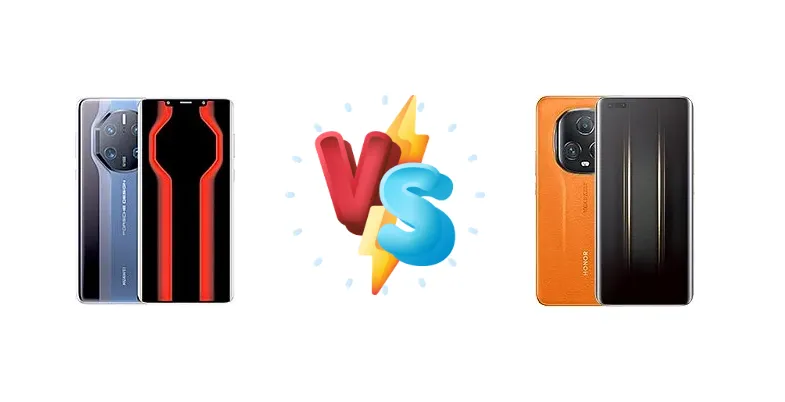
|
🏆 Quick Verdict
The Honor Magic5 Ultimate edges out the Mate 50 RS Porsche Design thanks to its superior Snapdragon 8 Gen 2 chipset, slightly better battery life, and more versatile camera system. However, the Mate 50 RS offers a unique Porsche Design aesthetic and a strong overall package for those prioritizing luxury.
| PHONES | ||
|---|---|---|
| Phone Names | Huawei Mate 50 RS Porsche Design | Honor Magic5 Ultimate |
| Network | ||
|---|---|---|
| 2G bands | GSM 850 / 900 / 1800 / 1900 | GSM 850 / 900 / 1800 / 1900 |
| 3G bands | HSDPA 800 / 850 / 900 / 1700(AWS) / 1900 / 2100 | HSDPA 800 / 850 / 900 / 1700(AWS) / 1900 / 2100 |
| 4G bands | 1, 2, 3, 4, 5, 7, 8, 12, 17, 18, 19, 20, 26, 28, 34, 38, 39, 40, 41 | 1, 2, 3, 4, 5, 7, 8, 12, 17, 18, 19, 20, 26, 28, 34, 38, 39, 40, 41 |
| 5G bands | - | 1, 3, 5, 8, 28, 38, 41, 77, 78, 79 SA/NSA |
| Speed | HSPA, LTE | HSPA, LTE, 5G |
| Technology | GSM / CDMA / HSPA / CDMA2000 / LTE | GSM / CDMA / HSPA / EVDO / LTE / 5G |
| CDMA2000 1x | CDMA2000 1xEV-DO | |
| Launch | ||
|---|---|---|
| Announced | 2022, September 06 | 2023, March 06 |
| Status | Available. Released 2022, September 21 | Available. Released 2023, March 20 |
| Body | ||
|---|---|---|
| Build | Glass front, ceramic back, aluminum frame | Glass front, eco leather back |
| Dimensions | 162.1 x 75.5 x 9.9 mm (6.38 x 2.97 x 0.39 in) | 162.9 x 76.7 x 8.8 mm (6.41 x 3.02 x 0.35 in) |
| SIM | · Nano-SIM· Nano-SIM + Nano-SIM | Nano-SIM + Nano-SIM |
| Weight | 232 g (8.18 oz) | 217 g (7.65 oz) |
| IP68 dust/water resistant (up to 6m for 30 min) | IP68 dust/water resistant (up to 1.5m for 30 min) | |
| Display | ||
|---|---|---|
| Protection | Huawei Kunlun Glass | Glass/ceramic coating |
| Resolution | 1212 x 2616 pixels, 19.5:9 ratio (~428 ppi density) | 1312 x 2848 pixels, 19.5:9 ratio (~460 ppi density) |
| Size | 6.74 inches, 111.8 cm2 (~91.3% screen-to-body ratio) | 6.81 inches, 113.7 cm2 (~91.0% screen-to-body ratio) |
| Type | OLED, 1B colors, 120Hz | LTPO OLED, 1B colors, 120Hz, HDR10+, 1800 nits (peak) |
| Platform | ||
|---|---|---|
| CPU | Octa-core (1x3.19 GHz Cortex-X2 & 3x2.75 GHz Cortex-A710 & 4x2.0 GHz Cortex-A510) | Octa-core (1x3.2 GHz Cortex-X3 & 2x2.8 GHz Cortex-A715 & 2x2.8 GHz Cortex-A710 & 3x2.0 GHz Cortex-A510) |
| Chipset | Qualcomm SM8475 Snapdragon 8+ Gen 1 4G (4 nm) | Qualcomm SM8550-AB Snapdragon 8 Gen 2 (4 nm) |
| GPU | Adreno 730 | Adreno 740 |
| OS | HarmonyOS 3.0 | Android 13, MagicOS 7.1 |
| Memory | ||
|---|---|---|
| Card slot | Nano Memory (uses shared SIM slot) | No |
| Internal | 512GB 12GB RAM | 512GB 16GB RAM |
| UFS 3.1 | UFS 4.0 | |
| Main Camera | ||
|---|---|---|
| Features | Laser AF, color spectrum sensor, LED flash, panorama, HDR | Laser AF, color spectrum sensor, LED flash, HDR, panorama |
| Single | 13 MP, f/2.4, 18mm (ultrawide) TOF 3D, (depth/biometrics sensor) | 12 MP, f/2.4, 100˚ (ultrawide), 1.22µm TOF 3D, (depth/biometrics sensor) |
| Triple | 50 MP, f/1.4-f/4.0, 24mm (wide), PDAF, OIS 48 MP, f/3.0, 90mm (periscope telephoto macro), PDAF, OIS, 3.5x optical zoom 13 MP, f/2.2, 13mm, 120˚ (ultrawide), PDAF | 50 MP, f/1.6, 23mm (wide), 1/1.12" 1.4µm, multi-directional PDAF, OIS 50 MP, f/3.0, 90mm (periscope telephoto), PDAF, OIS, 3.5x optical zoom 50 MP, f/2.0, 13mm, 122˚ (ultrawide), 1/2.5", AF TOF 3D (depth) |
| Video | 4K@30/60fps, 1080p@30/60/120/240/480fps, 720p@960fps, 720p@3840fps, HDR, gyro-EIS | 4K@30/60fps, 1080p@30/60fps, gyro-EIS, HDR10, 10-bit video |
| Selfie camera | ||
|---|---|---|
| Features | HDR, panorama | HDR |
| Single | 13 MP, f/2.4, 18mm (ultrawide) TOF 3D, (depth/biometrics sensor) | 12 MP, f/2.4, 100˚ (ultrawide), 1.22µm TOF 3D, (depth/biometrics sensor) |
| Video | 4K@30/60fps, 1080p@30/60/240fps | 4K@30fps, 1080p@30/60fps |
| Sound | ||
|---|---|---|
| 3.5mm jack | No | No |
| 35mm jack | No | No |
| Loudspeaker | Yes, with stereo speakers | Yes, with stereo speakers |
| 32-bit/384kHz audio | 24-bit audio stereo recording | |
| Comms | ||
|---|---|---|
| Bluetooth | 5.2, A2DP, LE | 5.2, A2DP, LE, aptX HD |
| Infrared port | Yes | Yes |
| NFC | Yes | Yes |
| Positioning | GPS (L1+L5), GLONASS (L1), BDS (B1I+B1c+B2a), GALILEO (E1+E5a), QZSS (L1+L5), NavIC (L5) | GPS (L1+L5), GLONASS (L1), BDS (B1I+B1c+B2a), GALILEO (E1+E5a) |
| Radio | No | No |
| USB | USB Type-C 3.1, OTG, Display Port 1.2 | USB Type-C 3.1, DisplayPort 1.2, OTG |
| WLAN | Wi-Fi 802.11 a/b/g/n/ac/6, dual-band, Wi-Fi Direct | Wi-Fi 802.11 a/b/g/n/ac/6e, dual-band, Wi-Fi Direct |
| Features | ||
|---|---|---|
| Sensors | Face ID, fingerprint (under display, optical), accelerometer, gyro, proximity, barometer, compass | Fingerprint (under display, ultrasonic), Face ID, accelerometer, gyro, proximity, compass |
| BDS Satellite Message (sending only) | Ultra Wideband (UWB) support | |
| Battery | ||
|---|---|---|
| Charging | 66W wired 50W wireless 5W reverse wireless | 66W wired 50W wireless Reverse wireless 5W reverse wired |
| Type | Li-Po 4700 mAh | Si/C Li-Ion 5450 mAh |
| Misc | ||
|---|---|---|
| Colors | Ink Blue, Purple | Black, Orange |
| Models | DCO-AL00 | PGT-AN20 |
| Price | About 1880 EUR | About 900 EUR |
Huawei Mate 50 RS Porsche Design
- Unique Porsche Design
- Excellent build quality
- Strong camera performance
- XMAGE image processing
- Snapdragon 8+ Gen 1 (slightly older chipset)
- Limited software ecosystem due to Huawei restrictions
- Higher price point
Honor Magic5 Ultimate
- Snapdragon 8 Gen 2 (superior performance)
- Versatile camera system with periscope lens
- Slightly better battery life
- More complete Android experience
- Design less distinctive than Porsche Design
- Honor's UI might not appeal to everyone
Display Comparison
Both phones feature stunning OLED displays with high refresh rates (120Hz). The Magic5 Ultimate's display is slightly larger (6.67 inches vs 6.6 inches) and potentially brighter, offering a marginally more immersive viewing experience. Color accuracy is excellent on both, but the Magic5 Ultimate might have a slight edge in peak brightness for outdoor visibility.
Camera Comparison
The Magic5 Ultimate boasts a more versatile camera system, particularly with its periscope telephoto lens offering greater zoom capabilities. Both phones capture excellent images in various lighting conditions, but the Magic5 Ultimate's image processing tends to be more natural. The Mate 50 RS's XMAGE image processing is more vibrant and saturated.
Performance
The Honor Magic5 Ultimate's Snapdragon 8 Gen 2 provides a noticeable performance advantage over the Mate 50 RS's Snapdragon 8+ Gen 1. While both are incredibly fast, the Gen 2 offers improved efficiency and handles demanding tasks like gaming and video editing with greater ease. Expect smoother multitasking and faster app loading times on the Magic5 Ultimate.
Battery Life
Both phones offer decent battery life, easily lasting a full day with moderate usage. The Magic5 Ultimate has a slightly larger battery capacity (5100mAh vs 4700mAh) and benefits from the more efficient Snapdragon 8 Gen 2, potentially providing slightly longer battery life and faster charging speeds.
Buying Guide
The Huawei Mate 50 RS Porsche Design is ideal for users who value exclusivity, a luxurious design, and are willing to accept limitations due to Huawei's software ecosystem. The Honor Magic5 Ultimate is perfect for those seeking top-tier performance, a versatile camera, and a more complete Android experience at a slightly more accessible price point.