
Huawei Mate 40E 4G vs Huawei P30 Pro New Edition: A Clash of Titans
| Phones Images | |||||
|---|---|---|---|---|---|
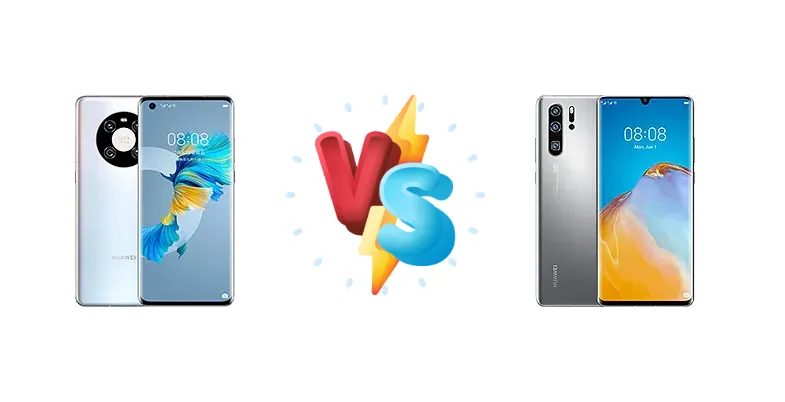
|
🏆 Quick Verdict
The Mate 40E 4G edges out the P30 Pro New Edition thanks to its slightly more powerful chipset and faster wired charging. However, the P30 Pro's superior camera system and established reputation make it a strong contender, especially for photography enthusiasts. Ultimately, the choice depends on your priorities.
| PHONES | ||
|---|---|---|
| Phone Names | Huawei Mate 40E 4G | Huawei P30 Pro New Edition |
| Network | ||
|---|---|---|
| 2G bands | GSM 850 / 900 / 1800 / 1900 | GSM 850 / 900 / 1800 / 1900 |
| 3G bands | HSDPA 800 / 850 / 900 / 1700(AWS) / 1900 / 2100 | HSDPA 800 / 850 / 900 / 1700(AWS) / 1900 / 2100 |
| 4G bands | 1, 2, 3, 4, 5, 6, 7, 8, 9, 12, 17, 18, 19, 20, 26, 34, 38, 39, 40, 41 | LTE |
| Speed | HSPA, LTE | HSPA 42.2/5.76 Mbps, LTE Cat21 1400/200 Mbps |
| Technology | GSM / CDMA / HSPA / EVDO / LTE | GSM / HSPA / LTE |
| CDMA2000 1xEV-DO | - | |
| Launch | ||
|---|---|---|
| Announced | 2021, June 28 | 2020, May 12. Released 2020, June 01 |
| Status | Available. Released 2021, June 29 | Discontinued |
| Body | ||
|---|---|---|
| Build | Glass front, glass back, aluminum frame | Glass front (Aluminosilicate glass), glass back (Aluminosilicate glass), aluminum frame |
| Dimensions | 158.6 x 72.5 x 8.8 mm (6.24 x 2.85 x 0.35 in) | 158 x 73.4 x 8.4 mm (6.22 x 2.89 x 0.33 in) |
| SIM | Nano-SIM + Nano-SIM | · Nano-SIM· Nano-SIM + Nano-SIM |
| Weight | 188 g (6.63 oz) | 192 g (6.77 oz) |
| IP53, dust and splash resistant | IP68 dust/water resistant (up to 2m for 30 mins) | |
| Display | ||
|---|---|---|
| Resolution | 1080 x 2376 pixels (~402 ppi density) | 1080 x 2340 pixels, 19.5:9 ratio (~398 ppi density) |
| Size | 6.5 inches, 102.7 cm2 (~89.3% screen-to-body ratio) | 6.47 inches, 102.8 cm2 (~88.6% screen-to-body ratio) |
| Type | OLED, HDR10, 90Hz | OLED, HDR10 |
| Platform | ||
|---|---|---|
| CPU | Octa-core (2x2.86 GHz Cortex-A76 & 2x2.36 GHz Cortex-A76 & 4x1.95 GHz Cortex-A55) | Octa-core (2x2.6 GHz Cortex-A76 & 2x1.92 GHz Cortex-A76 & 4x1.8 GHz Cortex-A55) |
| Chipset | Kirin 990E (7 nm+) | Kirin 980 (7 nm) |
| GPU | Mali-G76 MP14 | Mali-G76 MP10 |
| OS | HarmonyOS 2.0 | Android 10, EMUI 10.1, Google Play Services |
| Memory | ||
|---|---|---|
| Card slot | Nano Memory (uses shared SIM slot) | Nano Memory (uses shared SIM slot) |
| Internal | 128GB 8GB RAM, 256GB 8GB RAM | 128GB 6GB RAM, 256GB 8GB RAM |
| UFS 3.1 | UFS 3.0 | |
| Main Camera | ||
|---|---|---|
| Features | Laser AF, color spectrum sensor, Leica optics, LED flash, panorama, HDR | Leica optics, color spectrum sensor, dual-LED dual-tone flash, panorama, HDR |
| Single | 13 MP, f/2.4, 18mm (ultrawide) | - |
| Triple | 64 MP, f/1.9, 27mm (wide), PDAF 8 MP, f/2.4, 85mm (telephoto), PDAF, OIS, 3x optical zoom 16 MP, f/2.2, 17mm (ultrawide) | 40 MP, f/1.6, 27mm (wide), 1/1.7", PDAF, OIS 8 MP, f/3.4, 125mm (periscope telephoto), 1/4.0", PDAF, OIS, 5x optical zoom, 10x hybrid zoom 20 MP, f/2.2, 16mm (ultrawide), 1/2.7", PDAF TOF 3D, (depth) |
| Video | 4K, 1080p, gyro-EIS | 4K@30fps, 1080p@60fps, 1080p@30fps (gyro-EIS), 720p@960fps |
| Selfie camera | ||
|---|---|---|
| Features | HDR, panorama | HDR |
| Single | 13 MP, f/2.4, 18mm (ultrawide) | 32 MP, f/2.0, 26mm (wide), 1/2.8", 0.8µm |
| Video | 4K, 720p@240fps | 1080p@30fps |
| Sound | ||
|---|---|---|
| 3.5mm jack | Yes | No |
| 35mm jack | Yes | No |
| Loudspeaker | Yes | Yes |
| 32-bit/384kHz audio | 32-bit/384kHz audio | |
| Comms | ||
|---|---|---|
| Bluetooth | 5.2, A2DP, LE | 5.0, A2DP, aptX HD, LE |
| Infrared port | Yes | Yes |
| NFC | Yes | Yes |
| Positioning | GPS (L1+L5), GLONASS (L1), BDS (B1I+B1c+B2a+B2b), GALILEO (E1+E5a+E5b), QZSS (L1+L5), NavIC | GPS (L1+L5), GLONASS (L1), BDS (B1), GALILEO (E1+E5a), QZSS (L1+L5) |
| Radio | No | No |
| USB | USB Type-C 3.1, OTG | USB Type-C 3.1 |
| WLAN | Wi-Fi 802.11 a/b/g/n/ac/6, dual-band, Wi-Fi Direct | Wi-Fi 802.11 a/b/g/n/ac, dual-band, Wi-Fi Direct |
| Features | ||
|---|---|---|
| Sensors | Fingerprint (under display, optical), accelerometer, gyro, proximity, compass | Fingerprint (under display, optical), accelerometer, gyro, proximity, compass |
| Battery | ||
|---|---|---|
| Charging | 40W wired 40W wireless 5W reverse wired | 40W wired, 70% in 30 min 15W wireless Reverse wireless |
| Type | Li-Po 4200 mAh | Li-Po 4200 mAh |
| Misc | ||
|---|---|---|
| Colors | Silver, White, Black | Aurora, Black, Silver Frost |
| Models | OCE-AL50 | - |
| Price | About 550 EUR | About 820 EUR |
Huawei Mate 40E 4G
- More powerful Kirin 990E chipset
- Faster 40W wired charging
- Reverse wireless charging
- Generally more affordable
- Camera not as impressive as P30 Pro
- Design may be less premium
- 4G connectivity only
Huawei P30 Pro New Edition
- Exceptional camera system with Leica optics
- Premium design and build quality
- Established reputation
- Slightly larger display
- Older Kirin 980 chipset
- Slower charging speeds (wired)
- Higher price point
Display Comparison
Both phones feature OLED displays, offering vibrant colors and deep blacks. The P30 Pro has a slightly curved display which some may prefer for aesthetics, while the Mate 40E 4G likely has a flatter display, potentially making it easier to use with screen protectors. Resolution is similar, but the P30 Pro's slightly larger size might offer a more immersive viewing experience.
Camera Comparison
The P30 Pro New Edition remains a camera powerhouse. Its Leica-engineered triple-lens system, including a periscope telephoto lens, delivers exceptional zoom capabilities and impressive image quality. The Mate 40E 4G has a capable camera setup, but it doesn't quite match the P30 Pro's versatility and low-light performance.
Performance
The Mate 40E 4G's Kirin 990E chipset holds a slight advantage over the P30 Pro's Kirin 980. While both are capable, the 990E offers a bit more processing power, resulting in smoother multitasking and potentially better gaming performance. However, real-world differences may be subtle for everyday use.
Battery Life
Both phones offer decent battery life, easily lasting a full day for moderate users. The Mate 40E 4G boasts faster 40W wired charging, while the P30 Pro offers 40W wired and 15W wireless charging. The Mate 40E also has reverse wireless charging.
Buying Guide
The Huawei Mate 40E 4G is ideal for users prioritizing performance and fast charging within a mid-range budget. The Huawei P30 Pro New Edition is a better fit for those who value a top-tier camera system and a more refined, premium feel, even if it's a slightly older model.