
Huawei Mate 40 RS Porsche Design vs. Sony Xperia 1 III: A Flagship Face-Off
| Phones Images | |||||
|---|---|---|---|---|---|
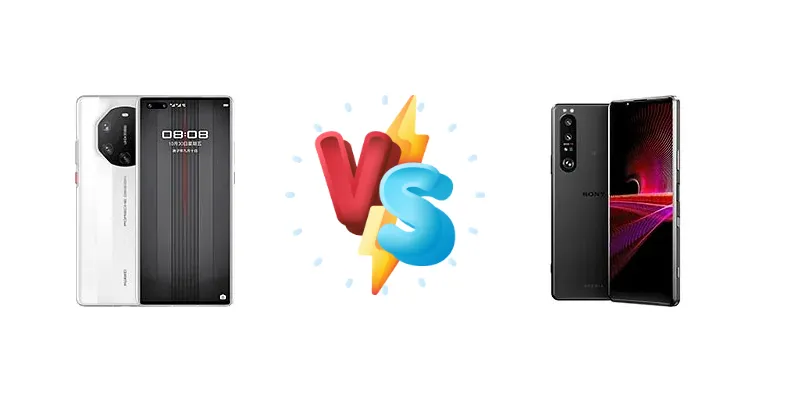
|
🏆 Quick Verdict
For the average user prioritizing all-around performance and future-proofing, the Sony Xperia 1 III emerges as the stronger choice. Its Snapdragon 888 chipset, coupled with a robust 82-hour endurance rating, provides a smoother, more reliable experience, especially for demanding tasks like gaming and video editing. While the Huawei boasts faster charging, the Sony’s overall package is more balanced.
| PHONES | ||
|---|---|---|
| Phone Names | Huawei Mate 40 RS Porsche Design | Sony Xperia 1 III |
| Network | ||
|---|---|---|
| 2G bands | GSM 850 / 900 / 1800 / 1900 | GSM 850 / 900 / 1800 / 1900 |
| 3G bands | HSDPA 800 / 850 / 900 / 1700(AWS) / 1900 / 2100 | HSDPA 800 / 850 / 900 / 1700(AWS) / 1900 / 2100 |
| 4G bands | 1, 2, 3, 4, 5, 6, 7, 8, 9, 12, 17, 18, 19, 20, 26, 34, 38, 39, 40, 41 | 1, 2, 3, 4, 5, 7, 8, 12, 13, 17, 19, 20, 25, 26, 28, 29, 32, 34, 38, 39, 40, 41, 46, 66 - Europe |
| 5G bands | 1, 3, 28, 38, 40, 41, 77, 78, 79, 80, 84 SA/NSA/Sub6 | 1, 3, 5, 7, 8, 20, 28, 38, 40, 41, 77, 78 SA/NSA/Sub6 - Europe |
| Speed | HSPA, LTE, 5G | HSPA, LTE, 5G |
| Technology | GSM / HSPA / LTE / 5G | GSM / HSPA / LTE / 5G |
| - | SA/NSA/Sub6/mmWave - USA (specific) | |
| Launch | ||
|---|---|---|
| Announced | 2020, October 22 | 2021, April 14 |
| Status | Available. Released 2020, November 04 | Available. Released 2021, August 25 |
| Body | ||
|---|---|---|
| Build | Glass front, ceramic back, aluminum frame | Glass front (Gorilla Glass Victus), glass back (Gorilla Glass 6), aluminum frame |
| Dimensions | 162.9 x 75.5 x 10.1 mm (6.41 x 2.97 x 0.40 in) | 165 x 71 x 8.2 mm (6.50 x 2.80 x 0.32 in) |
| SIM | · Nano-SIM· Nano-SIM + Nano-SIM | Nano-SIM + Nano-SIM |
| Weight | 234 g (8.25 oz) | 186 g / 187.1 g (mmWave) (6.56 oz) |
| IP68 dust/water resistant | IP65/IP68 dust/water resistant (up to 1.5m for 30 min) | |
| Display | ||
|---|---|---|
| Protection | - | Corning Gorilla Glass Victus |
| Resolution | 1344 x 2772 pixels, 18.5:9 ratio (~456 ppi density) | 1644 x 3840 pixels, 21:9 ratio (~643 ppi density) |
| Size | 6.76 inches, 115.7 cm2 (~94.1% screen-to-body ratio) | 6.5 inches, 98.6 cm2 (~84.2% screen-to-body ratio) |
| Type | OLED, HDR10, 90Hz | OLED, 1B colors, 120Hz, HDR BT.2020 |
| - | Runs at 1096 x 2560 pixels except for select use cases | |
| Platform | ||
|---|---|---|
| CPU | Octa-core (1x3.13 GHz Cortex-A77 & 3x2.54 GHz Cortex-A77 & 4x2.05 GHz Cortex-A55) | Octa-core (1x2.84 GHz Cortex-X1 & 3x2.42 GHz Cortex-A78 & 4x1.80 GHz Cortex-A55) |
| Chipset | Kirin 9000 5G (5 nm) | Qualcomm SM8350 Snapdragon 888 5G (5 nm) |
| GPU | Mali-G78 MP24 | Adreno 660 |
| OS | Android 10, EMUI 11, no Google Play Services | Android 11, upgradable to Android 13 |
| Memory | ||
|---|---|---|
| Card slot | Nano Memory (uses shared SIM slot) | microSDXC (uses shared SIM slot) |
| Internal | 256GB 8GB RAM, 256GB 12GB RAM, 512GB 12GB RAM | 256GB 12GB RAM, 512GB 12GB RAM |
| SFS 1.0 | UFS 3.X | |
| Main Camera | ||
|---|---|---|
| Features | Laser AF, color spectrum sensor, Leica optics, LED flash, panorama, HDR | Zeiss optics, Zeiss T* lens coating, color spectrum sensor, LED flash, panorama, HDR, eye tracking |
| Quad | 50 MP, f/1.9, 23mm (wide), 1/1.28", 1.22µm, multi-directional PDAF, OIS 12 MP, f/2.4, (telephoto), PDAF, OIS, 3x optical zoom 8 MP, f/4.4, 240mm (periscope telephoto), PDAF, OIS, 10x optical zoom 20 MP, f/1.8, 18mm (ultrawide), PDAF TOF 3D, (depth) | - |
| Single | - | 8 MP, f/2.0, 24mm (wide), 1/4", 1.12µm |
| Triple | - | 12 MP, f/1.7, 24mm (wide), 1/1.7", 1.8µm, dual pixel PDAF, OIS 12 MP, f/2.3, 70mm (telephoto), f/2.8, 105mm (telephoto), 1/2.9", dual pixel PDAF, 3x/4.4x optical zoom, OIS 12 MP, f/2.2, 124˚, 16mm (ultrawide), 1/2.6", dual pixel PDAF 0.3 MP, TOF 3D, (depth) |
| Video | 4K@30/60fps, 1080p@30/60/120/240/480fps, 720p@960fps, 720p@3840fps, HDR, gyro-EIS | 4K@24/25/30/60/120fps HDR, 1080p@30/60/120fps; 5-axis gyro-EIS, OIS |
| Selfie camera | ||
|---|---|---|
| Features | HDR, panorama | HDR |
| Single | 13 MP, f/2.4, 18mm (ultrawide) TOF 3D, (depth/biometrics sensor) | 8 MP, f/2.0, 24mm (wide), 1/4.0", 1.12µm |
| Video | 4K@30/60fps, 1080p@30/60/240fps | 1080p@30fps, 5-axis gyro-EIS |
| Sound | ||
|---|---|---|
| 3.5mm jack | No | Yes |
| 35mm jack | No | Yes |
| Loudspeaker | Yes, with stereo speakers | Yes, with stereo speakers |
| 32-bit/384kHz audio | 24-bit/192kHz audio Dynamic vibration system | |
| Comms | ||
|---|---|---|
| Bluetooth | 5.2, A2DP, LE | 5.2, A2DP, LE, aptX HD, aptX Adaptive |
| Infrared port | Yes | - |
| NFC | Yes | Yes |
| Positioning | GPS (L1+L5), GLONASS (L1), BDS (B1I+B1c+B2a+B2b), GALILEO (E1+E5a+E5b), QZSS (L1+L5), NavIC | GPS, GLONASS, BDS, GALILEO, QZSS |
| Radio | No | No |
| USB | USB Type-C 3.1, OTG | USB Type-C 3.1, OTG, video output |
| WLAN | Wi-Fi 802.11 a/b/g/n/ac/6, dual-band, Wi-Fi Direct | Wi-Fi 802.11 a/b/g/n/ac/6, dual-band, Wi-Fi Direct, DLNA |
| Features | ||
|---|---|---|
| Sensors | Face ID, fingerprint (under display, optical), accelerometer, gyro, proximity, barometer, compass, infrared thermometer | Fingerprint (side-mounted), accelerometer, gyro, proximity, barometer, compass |
| - | Native Sony Alpha camera support | |
| Battery | ||
|---|---|---|
| Charging | 66W wired 50W wireless 5W reverse wireless | 30W wired, PD, 50% in 30 min Wireless Reverse wireless |
| Type | Li-Po 4400 mAh | Li-Po 4500 mAh |
| Misc | ||
|---|---|---|
| Colors | Ceramic White, Ceramic Black, Collector Edition | Frosted Black, Frosted Gray, Frosted Purple |
| Models | NOP-AN00 | XQBC62/V, XQBC52V.UKCX, SO-51B, SOG03, A101SO, XQ-BC62, XQ-BC72, XQ-BC52, XQ-BC01, XQ-BC11, XQ-BC21, XQ-BC72 |
| Price | About 1400 EUR | € 505.26 / $ 903.43 |
| Tests | ||
|---|---|---|
| Battery life | - | Endurance rating 82h |
| Camera | - | Photo / Video |
| Display | - | Contrast ratio: Infinite (nominal) |
| Loudspeaker | - | -26.5 LUFS (Good) |
| Performance | - | AnTuTu: 607423 (v8) GeekBench: 3515 (v5.1) GFXBench: 54fps (ES 3.1 onscreen) |
Huawei Mate 40 RS Porsche Design
- Blazing-fast 66W wired charging
- Luxurious Porsche Design aesthetic
- 50W wireless charging capability
- Potential software limitations due to geopolitical factors
- Lack of detailed camera specifications
Sony Xperia 1 III
- Excellent 82-hour battery endurance
- Powerful Snapdragon 888 processor
- Professional-grade video recording capabilities
- Slower charging speeds compared to Huawei
- Less distinctive design compared to Porsche Design
Display Comparison
The Sony Xperia 1 III features a 6.5-inch display capable of reaching 620 nits of peak brightness, ensuring excellent visibility even in direct sunlight. While the Huawei’s display specs aren’t provided, the Porsche Design branding suggests a high-quality panel. However, the Xperia 1 III’s infinite contrast ratio (nominal) indicates a superior viewing experience with deeper blacks. The Xperia 1 III’s focus on color accuracy, a hallmark of Sony’s displays, is likely to appeal to professionals needing precise color representation. The lack of PWM dimming information for the Huawei raises potential concerns for users sensitive to flicker, while Sony’s implementation is generally well-regarded.
Camera Comparison
Both devices are positioned as camera powerhouses, but approach photography and videography differently. The context data only states 'Photo / Video' for both, lacking specifics. However, Sony’s history strongly suggests a focus on manual controls and professional video features on the Xperia 1 III, including 4K 120fps recording. The Huawei, while likely capable, traditionally leans towards AI-driven image processing. Without sensor size details, it’s difficult to make a definitive judgment, but Sony’s expertise in image sensor technology suggests a competitive advantage. The absence of details regarding OIS and lens apertures on both devices hinders a complete assessment.
Performance
The core of the performance difference lies in the chipsets. The Sony Xperia 1 III utilizes the Qualcomm Snapdragon 888 5G (5nm), while the Huawei Mate 40 RS Porsche Design is powered by the Kirin 9000 5G (also 5nm). The Snapdragon 888’s Cortex-X1 prime core, clocked at 2.84 GHz, offers a performance advantage over the Kirin 9000’s Cortex-A77 core at 3.13 GHz, particularly in single-core tasks. The Xperia 1 III’s architecture, with three Cortex-A78 cores at 2.42 GHz, provides a more balanced performance profile than the Kirin 9000’s configuration. Both utilize 5nm fabrication, but Qualcomm’s optimizations generally lead to better thermal management, reducing the likelihood of performance throttling during extended gaming sessions. The Xperia 1 III’s LPDDR5 RAM further contributes to its responsiveness.
Battery Life
The Sony Xperia 1 III boasts an impressive endurance rating of 82 hours, indicating excellent battery life. While the exact battery capacity isn’t specified, this rating suggests efficient power management. The Huawei Mate 40 RS Porsche Design counters with significantly faster charging: 66W wired, 50W wireless, and 5W reverse wireless. The Xperia 1 III offers 30W wired charging with PD and 50% charge in 30 minutes, alongside wireless and reverse wireless charging, but falls short of the Huawei’s speeds. The Huawei’s charging advantage is ideal for users who need quick top-ups, while the Xperia 1 III prioritizes longevity between charges.
Buying Guide
Buy the Huawei Mate 40 RS Porsche Design if you demand the fastest possible wired and wireless charging speeds, and appreciate a unique, luxury aesthetic. It’s ideal for users who frequently top up their phones and value a statement piece. Buy the Sony Xperia 1 III if you are a content creator, particularly focused on video, or a power user who needs long battery life and a consistently high level of performance without thermal throttling. It’s the better choice for those who prioritize a professional-grade multimedia experience.