
Huawei Mate 40 RS Porsche Design vs. iPhone 12 Pro Max: A Clash of Titans
| Phones Images | |||||
|---|---|---|---|---|---|
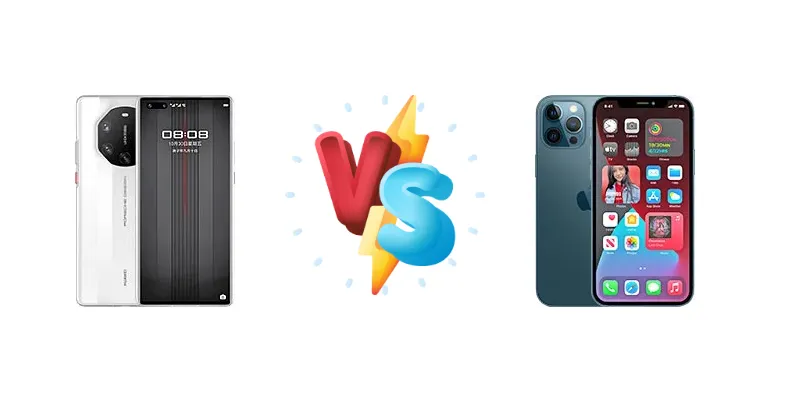
|
🏆 Quick Verdict
For the average user prioritizing ecosystem integration and consistent software updates, the iPhone 12 Pro Max is the safer bet. However, the Huawei Mate 40 RS Porsche Design offers significantly faster charging and a potentially more powerful chipset, appealing to power users willing to navigate the complexities of the Huawei ecosystem.
| PHONES | ||
|---|---|---|
| Phone Names | Huawei Mate 40 RS Porsche Design | Apple iPhone 12 Pro Max |
| Network | ||
|---|---|---|
| 2G bands | GSM 850 / 900 / 1800 / 1900 | GSM 850 / 900 / 1800 / 1900 |
| 3G bands | HSDPA 800 / 850 / 900 / 1700(AWS) / 1900 / 2100 | HSDPA 850 / 900 / 1700(AWS) / 1900 / 2100 |
| 4G bands | 1, 2, 3, 4, 5, 6, 7, 8, 9, 12, 17, 18, 19, 20, 26, 34, 38, 39, 40, 41 | 1, 2, 3, 4, 5, 7, 8, 12, 13, 14, 17, 18, 19, 20, 25, 26, 28, 29, 30, 32, 34, 38, 39, 40, 41, 42, 46, 48, 66, 71 - A2342 |
| 5G bands | 1, 3, 28, 38, 40, 41, 77, 78, 79, 80, 84 SA/NSA/Sub6 | 1, 2, 3, 5, 7, 8, 12, 20, 25, 28, 38, 40, 41, 66, 71, 77, 78, 79, 260, 261 Sub6/mmWave - A2342 |
| Speed | HSPA, LTE, 5G | HSPA, LTE, 5G, EV-DO Rev.A 3.1 Mbps |
| Technology | GSM / HSPA / LTE / 5G | GSM / CDMA / HSPA / EVDO / LTE / 5G |
| - | 1, 2, 3, 5, 7, 8, 12, 20, 25, 28, 38, 40, 41, 66, 77, 78, 79 Sub6 - A2410, A2411, A2412 | |
| Launch | ||
|---|---|---|
| Announced | 2020, October 22 | 2020, October 13 |
| Status | Available. Released 2020, November 04 | Available. Released 2020, November 13 |
| Body | ||
|---|---|---|
| Build | Glass front, ceramic back, aluminum frame | Glass front, glass back, stainless steel frame |
| Dimensions | 162.9 x 75.5 x 10.1 mm (6.41 x 2.97 x 0.40 in) | 160.8 x 78.1 x 7.4 mm (6.33 x 3.07 x 0.29 in) |
| SIM | · Nano-SIM· Nano-SIM + Nano-SIM | · Nano-SIM + eSIM· Nano-SIM + Nano-SIM (China) |
| Weight | 234 g (8.25 oz) | 228 g (8.04 oz) |
| IP68 dust/water resistant | IP68 dust/water resistant (up to 6m for 30 min) Apple Pay (Visa, MasterCard, AMEX certified) | |
| Display | ||
|---|---|---|
| Protection | - | Ceramic Shield glass |
| Resolution | 1344 x 2772 pixels, 18.5:9 ratio (~456 ppi density) | 1284 x 2778 pixels, 19.5:9 ratio (~458 ppi density) |
| Size | 6.76 inches, 115.7 cm2 (~94.1% screen-to-body ratio) | 6.7 inches, 109.8 cm2 (~87.4% screen-to-body ratio) |
| Type | OLED, HDR10, 90Hz | Super Retina XDR OLED, HDR10, Dolby Vision, 800 nits (HBM), 1200 nits (peak) |
| Platform | ||
|---|---|---|
| CPU | Octa-core (1x3.13 GHz Cortex-A77 & 3x2.54 GHz Cortex-A77 & 4x2.05 GHz Cortex-A55) | Hexa-core (2x3.1 GHz Firestorm + 4x1.8 GHz Icestorm) |
| Chipset | Kirin 9000 5G (5 nm) | Apple A14 Bionic (5 nm) |
| GPU | Mali-G78 MP24 | Apple GPU (4-core graphics) |
| OS | Android 10, EMUI 11, no Google Play Services | iOS 14.1, upgradable to iOS 26.1 |
| Memory | ||
|---|---|---|
| Card slot | Nano Memory (uses shared SIM slot) | No |
| Internal | 256GB 8GB RAM, 256GB 12GB RAM, 512GB 12GB RAM | 128GB 6GB RAM, 256GB 6GB RAM, 512GB 6GB RAM |
| SFS 1.0 | NVMe | |
| Main Camera | ||
|---|---|---|
| Features | Laser AF, color spectrum sensor, Leica optics, LED flash, panorama, HDR | Dual-LED dual-tone flash, HDR (photo/panorama) |
| Quad | 50 MP, f/1.9, 23mm (wide), 1/1.28", 1.22µm, multi-directional PDAF, OIS 12 MP, f/2.4, (telephoto), PDAF, OIS, 3x optical zoom 8 MP, f/4.4, 240mm (periscope telephoto), PDAF, OIS, 10x optical zoom 20 MP, f/1.8, 18mm (ultrawide), PDAF TOF 3D, (depth) | - |
| Triple | - | 12 MP, f/1.6, 26mm (wide), 1/1.9", 1.7µm, dual pixel PDAF, sensor-shift OIS 12 MP, f/2.2, 65mm (telephoto), 1/3.4", 1.0µm, PDAF, OIS, 2.5x optical zoom 12 MP, f/2.4, 13mm, 120˚ (ultrawide), 1/3.4", 1.0µm TOF 3D LiDAR scanner (depth) |
| Video | 4K@30/60fps, 1080p@30/60/120/240/480fps, 720p@960fps, 720p@3840fps, HDR, gyro-EIS | 4K@24/25/30/60fps, 1080p@25/30/60/120/240fps, 10‑bit HDR, Dolby Vision HDR (up to 60fps), stereo sound rec. |
| Selfie camera | ||
|---|---|---|
| Features | HDR, panorama | HDR |
| Single | 13 MP, f/2.4, 18mm (ultrawide) TOF 3D, (depth/biometrics sensor) | 12 MP, f/2.2, 23mm (wide), 1/3.6", 1.0µm SL 3D, (depth/biometrics sensor) |
| Video | 4K@30/60fps, 1080p@30/60/240fps | 4K@24/25/30/60fps, 1080p@25/30/60/120fps, gyro-EIS |
| Sound | ||
|---|---|---|
| 3.5mm jack | No | No |
| 35mm jack | No | No |
| Loudspeaker | Yes, with stereo speakers | Yes, with stereo speakers |
| 32-bit/384kHz audio | - | |
| Comms | ||
|---|---|---|
| Bluetooth | 5.2, A2DP, LE | 5.0, A2DP, LE |
| Infrared port | Yes | - |
| NFC | Yes | Yes |
| Positioning | GPS (L1+L5), GLONASS (L1), BDS (B1I+B1c+B2a+B2b), GALILEO (E1+E5a+E5b), QZSS (L1+L5), NavIC | GPS, GLONASS, GALILEO, QZSS |
| Radio | No | No |
| USB | USB Type-C 3.1, OTG | Lightning, USB 2.0 |
| WLAN | Wi-Fi 802.11 a/b/g/n/ac/6, dual-band, Wi-Fi Direct | Wi-Fi 802.11 a/b/g/n/ac/6, dual-band, hotspot |
| Features | ||
|---|---|---|
| Sensors | Face ID, fingerprint (under display, optical), accelerometer, gyro, proximity, barometer, compass, infrared thermometer | Face ID, accelerometer, gyro, proximity, compass, barometer |
| - | Ultra Wideband (UWB) support | |
| Battery | ||
|---|---|---|
| Charging | 66W wired 50W wireless 5W reverse wireless | Wired, PD2.0, 50% in 30 min 15W wireless (MagSafe) 15W wireless (Qi2) - requires iOS 17.4 update |
| Type | Li-Po 4400 mAh | Li-Ion 3687 mAh (14.13 Wh) |
| Misc | ||
|---|---|---|
| Colors | Ceramic White, Ceramic Black, Collector Edition | Silver, Graphite, Gold, Pacific Blue |
| Models | NOP-AN00 | A2411, A2342, A2410, A2412, iPhone13,4 |
| Price | About 1400 EUR | $ 328.00 / C$ 549.75 / £ 270.67 / € 339.00 |
| SAR EU | - | 0.99 W/kg (head) 0.99 W/kg (body) |
| Pricing | ||
|---|---|---|
| 128GB 6GB RAM | - | $ 599.99 |
| 256GB 6GB RAM | - | $ 728.45 |
| 512GB 6GB RAM | - | $ 886.67 |
| RENEWED | - | $ 627.00 |
| Tests | ||
|---|---|---|
| Battery life | - | Endurance rating 95h |
| Camera | - | Photo / Video |
| Display | - | Contrast ratio: Infinite (nominal) |
| Loudspeaker | - | -23.8 LUFS (Very good) |
| Performance | - | AnTuTu: 638584 (v8) GeekBench: 4240 (v5.1) GFXBench: 55fps (ES 3.1 onscreen) |
Huawei Mate 40 RS Porsche Design
- Significantly faster wired and wireless charging (66W/50W)
- Potentially higher peak CPU performance with Kirin 9000
- Reverse wireless charging capability
- Software ecosystem limitations and potential lack of updates
- Uncertainty regarding long-term support
- Higher price point
Apple iPhone 12 Pro Max
- Seamless integration with the Apple ecosystem
- Long-term software support and updates
- Excellent video recording capabilities
- Slower charging speeds (15W wireless, slower wired)
- Less powerful chipset compared to the Kirin 9000 (potentially)
- Higher cost for increased storage
Display Comparison
The iPhone 12 Pro Max boasts a measured peak brightness of 822 nits, ensuring excellent visibility outdoors. While the Mate 40 RS Porsche Design’s display specifications aren’t provided, Huawei typically employs OLED panels with comparable or superior brightness. The iPhone’s ‘infinite’ contrast ratio, typical of OLED technology, delivers deep blacks and vibrant colors. The lack of LTPO technology in either device means refresh rates are fixed, unlike some competitors, but the iPhone’s color accuracy is renowned, making it ideal for content creation. The iPhone’s larger screen size also provides a more immersive viewing experience.
Camera Comparison
Both phones excel in photography and videography, but their approaches differ. The context data doesn’t detail the camera specs of the Mate 40 RS Porsche Design, but Huawei historically focuses on large sensor sizes and computational photography. The iPhone 12 Pro Max’s camera system is known for its natural color reproduction and excellent video stabilization. The absence of specific sensor details for the Huawei makes a direct comparison difficult, but its image processing tends to be more aggressive, boosting saturation and contrast. Both devices offer excellent low-light performance, leveraging their respective image processing algorithms. The iPhone’s video capabilities are particularly strong, with ProRes video recording available on higher storage models.
Performance
Both devices utilize 5nm fabrication processes for their respective chipsets – the Apple A14 Bionic and the Huawei Kirin 9000. However, their architectural approaches differ significantly. The A14’s hexa-core configuration (2x3.1 GHz Firestorm + 4x1.8 GHz Icestorm) prioritizes sustained performance with its high-performance cores. The Kirin 9000’s octa-core setup (1x3.13 GHz Cortex-A77 & 3x2.54 GHz Cortex-A77 & 4x2.05 GHz Cortex-A55) aims for a balance between power and efficiency. While raw clock speeds are comparable, Apple’s chip design and software optimization often translate to superior real-world performance, particularly in tasks optimized for the Neural Engine. The iPhone 12 Pro Max’s 6GB of RAM is matched by the Mate 40 RS Porsche Design, but the Kirin 9000’s potential for higher peak performance could be advantageous for demanding applications.
Battery Life
Both the Huawei Mate 40 RS Porsche Design and the iPhone 12 Pro Max achieve an endurance rating of 95 hours, suggesting similar overall battery life. However, the charging capabilities are drastically different. The Huawei supports 66W wired charging, allowing for a full charge in under an hour, and a remarkable 50W wireless charging. The iPhone 12 Pro Max is limited to slower wired charging (50% in 30 minutes via PD2.0) and 15W wireless charging (MagSafe/Qi2). This makes the Huawei significantly more convenient for users who frequently need to top up their battery quickly. The 5W reverse wireless charging on the Huawei adds another layer of utility.
Buying Guide
Buy the Huawei Mate 40 RS Porsche Design if you prioritize blazing-fast 66W wired and 50W wireless charging, and are comfortable with a less mainstream software experience. Its Kirin 9000 offers raw processing power. Buy the Apple iPhone 12 Pro Max if you value seamless integration with the Apple ecosystem, long-term software support, and a refined, user-friendly experience, even if it means sacrificing charging speed.