
Huawei Mate 40 Pro 4G vs Mate 30E Pro 5G: A Clash of Flagships
| Phones Images | |||||
|---|---|---|---|---|---|
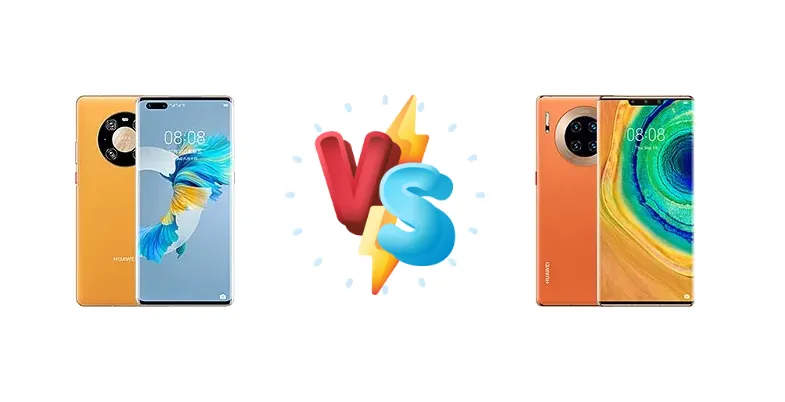
|
🏆 Quick Verdict
The Mate 40 Pro 4G takes the crown thanks to its significantly more powerful Kirin 9000 chipset, faster charging, and generally superior camera system. While the Mate 30E Pro 5G offers 5G connectivity, the Mate 40 Pro's performance and features justify its position as the better choice.
| PHONES | ||
|---|---|---|
| Phone Names | Huawei Mate 40 Pro 4G | Huawei Mate 30E Pro 5G |
| Network | ||
|---|---|---|
| 2G bands | GSM 850 / 900 / 1800 / 1900 | GSM 850 / 900 / 1800 / 1900 |
| 3G bands | HSDPA 800 / 850 / 900 / 1700(AWS) / 1900 / 2100 | HSDPA 800 / 850 / 900 / 1700(AWS) / 1900 / 2100 |
| 4G bands | 1, 2, 3, 4, 5, 6, 7, 8, 9, 12, 17, 18, 19, 20, 26, 34, 38, 39, 40, 41 | 1, 2, 3, 4, 5, 6, 7, 8, 9, 12, 17, 18, 19, 20, 26, 28, 34, 38, 39, 40, 41 |
| 5G bands | - | 1, 3, 28, 41, 77, 78, 79 NSA/Sub6 |
| Speed | HSPA, LTE | HSPA, LTE, 5G (2+ Gbps DL) |
| Technology | GSM / CDMA / HSPA / EVDO / LTE | GSM / HSPA / LTE / 5G |
| CDMA2000 1xEV-DO | - | |
| Launch | ||
|---|---|---|
| Announced | 2021, June 28 | 2020, October 22. Released 2020, November 01 |
| Status | Available. Released 2021, July 09 | Discontinued |
| Body | ||
|---|---|---|
| Build | Glass front, glass back or eco leather back, aluminum frame | Glass front, glass back, aluminum frame |
| Dimensions | 162.9 x 75.5 x 9.1 mm (Glass) / 9.5mm (Leather) | 158.1 x 73.1 x 8.8 mm (6.22 x 2.88 x 0.35 in) |
| SIM | Nano-SIM + Nano-SIM | Nano-SIM + Nano-SIM |
| Weight | 212 g (7.48 oz) | 198 g (6.98 oz) |
| IP68 dust/water resistant | IP68 dust/water resistant (up to 2m for 30 mins) | |
| Display | ||
|---|---|---|
| Resolution | 1344 x 2772 pixels, 18.5:9 ratio (~456 ppi density) | 1176 x 2400 pixels, 18.5:9 ratio (~409 ppi density) |
| Size | 6.76 inches, 115.7 cm2 (~94.1% screen-to-body ratio) | 6.53 inches, 108.7 cm2 (~94.1% screen-to-body ratio) |
| Type | OLED, HDR10, 90Hz | OLED, HDR10 |
| Platform | ||
|---|---|---|
| CPU | Octa-core (1x3.13 GHz Cortex-A77 & 3x2.54 GHz Cortex-A77 & 4x2.05 GHz Cortex-A55) | Octa-core (2x2.86 GHz Cortex-A76 & 2x2.36 GHz Cortex-A76 & 4x1.95 GHz Cortex-A55) |
| Chipset | Kirin 9000 (5 nm) | Kirin 990E 5G (7 nm+) |
| GPU | Mali-G78 MP24 | Mali-G76 MP14 |
| OS | HarmonyOS 2.0 | Android 10, EMUI 11, no Google Play Services |
| Memory | ||
|---|---|---|
| Card slot | Nano Memory (uses shared SIM slot) | Nano Memory (uses shared SIM slot) |
| Internal | 128GB 8GB RAM, 256GB 8GB RAM, 512GB 8GB RAM | 128GB 8GB RAM, 256GB 8GB RAM |
| UFS 3.1 | UFS 3.0 | |
| Main Camera | ||
|---|---|---|
| Features | Laser AF, color spectrum sensor, Leica optics, LED flash, panorama, HDR | Leica optics, color spectrum sensor, dual-LED dual-tone flash, panorama, HDR |
| Single | 13 MP, f/2.4, 18mm (ultrawide) TOF 3D, (depth/biometrics sensor) | - |
| Triple | 50 MP, f/1.9, 23mm (wide), 1/1.28", 1.22µm, multi-directional PDAF 12 MP, f/3.4, 125mm (periscope telephoto), PDAF, OIS, 5x optical zoom 20 MP, f/1.8, 18mm (ultrawide), PDAF | 40 MP, f/1.6, 27mm (wide), 1/1.7", PDAF, OIS 8 MP, f/2.4, 80mm (telephoto), 1/4.0", PDAF, OIS, 3x optical zoom 40 MP, f/1.8, 18mm (ultrawide), 1/1.54", PDAF TOF 3D, (depth) |
| Video | 4K@30/60fps, 1080p@30/60/120/240/480fps, 720p@960fps, 720p@3840fps, HDR, gyro-EIS | 4K@30/60fps, 1080p@30/60/120fps, 1080p@960fps, 720p@7680fps, gyro-EIS |
| Selfie camera | ||
|---|---|---|
| Features | HDR, panorama | HDR, panorama |
| Single | 13 MP, f/2.4, 18mm (ultrawide) TOF 3D, (depth/biometrics sensor) | 32 MP, f/2.0, 26mm (wide), 1/2.8", 0.8µm TOF 3D, (depth/biometrics sensor) |
| Video | 4K@30/60fps, 1080p@30/60/240fps | 1080p@30fps |
| Sound | ||
|---|---|---|
| 3.5mm jack | No | No |
| 35mm jack | No | No |
| Loudspeaker | Yes, with stereo speakers | Yes |
| 32-bit/384kHz audio | 32-bit/384kHz audio | |
| Comms | ||
|---|---|---|
| Bluetooth | 5.2, A2DP, LE | 5.1, A2DP, LE |
| Infrared port | Yes | Yes |
| NFC | Yes | Yes |
| Positioning | GPS (L1+L5), GLONASS (L1), BDS (B1I+B1c+B2a+B2b), GALILEO (E1+E5a+E5b), QZSS (L1+L5), NavIC | GPS (L1+L5), GLONASS (L1), BDS (B1), GALILEO (E1+E5a), QZSS (L1+L5) |
| Radio | No | No |
| USB | USB Type-C 3.1, OTG | USB Type-C 3.1, OTG |
| WLAN | Wi-Fi 802.11 a/b/g/n/ac/6, dual-band, Wi-Fi Direct | Wi-Fi 802.11 a/b/g/n/ac, dual-band, DLNA, Wi-Fi Direct |
| Features | ||
|---|---|---|
| Sensors | Face ID, fingerprint (under display, optical), accelerometer, gyro, proximity, barometer, compass | Face ID, fingerprint (under display, optical), accelerometer, gyro, proximity, barometer, compass |
| Battery | ||
|---|---|---|
| Charging | 66W wired 50W wireless 5W reverse wireless | 40W wired 27W wireless Reverse wireless |
| Type | Li-Po 4400 mAh | Li-Po 4500 mAh |
| Misc | ||
|---|---|---|
| Colors | Mystic Silver, White, Black, Green, Yellow | Black, Space Silver, Cosmic Purple, Emerald Green, Orange, Forest Green |
| Models | NOH-AL00, NOH-AL10 | LIO-AN00m |
| Price | About 800 EUR | About 680 EUR |
Huawei Mate 40 Pro 4G
- Superior Performance (Kirin 9000)
- Exceptional Camera System
- Faster Charging (66W)
- Premium Design
- Reverse Wireless Charging
- No Google Services (Requires Workaround)
- 4G Connectivity Only
- Higher Price
Huawei Mate 30E Pro 5G
- 5G Connectivity
- More Affordable
- Flat Display (Easier to Use)
- Decent Camera
- Slower Performance (Kirin 990E)
- Slower Charging (40W)
- Less Versatile Camera
- Older Chipset
Display Comparison
Both phones feature OLED displays with excellent color accuracy and brightness. The Mate 40 Pro 4G has a slightly higher resolution and a curved display, offering a more immersive viewing experience. The Mate 30E Pro 5G's display is flat, which some users may prefer for ease of use.
Camera Comparison
The Mate 40 Pro 4G boasts a more versatile and higher-quality camera system. Its larger sensor and advanced image processing algorithms result in superior image quality, especially in low-light conditions. The Mate 30E Pro 5G's camera is still good, but it doesn't match the Mate 40 Pro's capabilities.
Performance
The Kirin 9000 in the Mate 40 Pro 4G is a substantial upgrade over the Kirin 990E in the Mate 30E Pro 5G. Expect noticeably faster app loading times, smoother multitasking, and better performance in demanding games on the Mate 40 Pro 4G. The Mate 30E Pro 5G is still capable, but it shows its age in comparison.
Battery Life
The Mate 40 Pro 4G has a larger battery capacity and significantly faster charging speeds (both wired and wireless) than the Mate 30E Pro 5G. This translates to longer battery life and quicker top-ups.
Buying Guide
The Huawei Mate 40 Pro 4G is ideal for users prioritizing raw performance, exceptional camera quality, and fast charging. It's a great choice for power users and photography enthusiasts. The Mate 30E Pro 5G is better suited for those who need 5G connectivity and are on a tighter budget, accepting slightly lower performance in exchange.