
Huawei Mate 30E Pro 5G vs. Apple iPhone 12 Pro Max: A Detailed Comparison of Flagship Power
| Phones Images | |||||
|---|---|---|---|---|---|
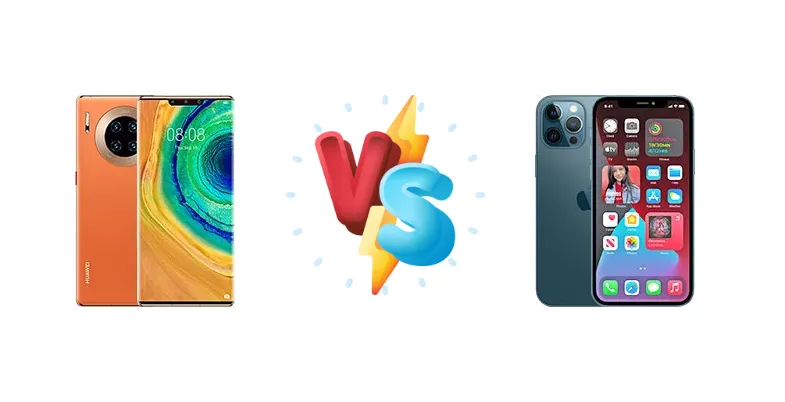
|
🏆 Quick Verdict
For the average user prioritizing a polished software experience, strong resale value, and consistently excellent camera performance, the Apple iPhone 12 Pro Max is the superior choice. However, the Huawei Mate 30E Pro 5G presents a viable alternative for those seeking faster wired charging and a more open ecosystem, particularly at a potentially lower price point.
| PHONES | ||
|---|---|---|
| Phone Names | Huawei Mate 30E Pro 5G | Apple iPhone 12 Pro Max |
| Network | ||
|---|---|---|
| 2G bands | GSM 850 / 900 / 1800 / 1900 | GSM 850 / 900 / 1800 / 1900 |
| 3G bands | HSDPA 800 / 850 / 900 / 1700(AWS) / 1900 / 2100 | HSDPA 850 / 900 / 1700(AWS) / 1900 / 2100 |
| 4G bands | 1, 2, 3, 4, 5, 6, 7, 8, 9, 12, 17, 18, 19, 20, 26, 28, 34, 38, 39, 40, 41 | 1, 2, 3, 4, 5, 7, 8, 12, 13, 14, 17, 18, 19, 20, 25, 26, 28, 29, 30, 32, 34, 38, 39, 40, 41, 42, 46, 48, 66, 71 - A2342 |
| 5G bands | 1, 3, 28, 41, 77, 78, 79 NSA/Sub6 | 1, 2, 3, 5, 7, 8, 12, 20, 25, 28, 38, 40, 41, 66, 71, 77, 78, 79, 260, 261 Sub6/mmWave - A2342 |
| Speed | HSPA, LTE, 5G (2+ Gbps DL) | HSPA, LTE, 5G, EV-DO Rev.A 3.1 Mbps |
| Technology | GSM / HSPA / LTE / 5G | GSM / CDMA / HSPA / EVDO / LTE / 5G |
| - | 1, 2, 3, 5, 7, 8, 12, 20, 25, 28, 38, 40, 41, 66, 77, 78, 79 Sub6 - A2410, A2411, A2412 | |
| Launch | ||
|---|---|---|
| Announced | 2020, October 22. Released 2020, November 01 | 2020, October 13 |
| Status | Discontinued | Available. Released 2020, November 13 |
| Body | ||
|---|---|---|
| Build | Glass front, glass back, aluminum frame | Glass front, glass back, stainless steel frame |
| Dimensions | 158.1 x 73.1 x 8.8 mm (6.22 x 2.88 x 0.35 in) | 160.8 x 78.1 x 7.4 mm (6.33 x 3.07 x 0.29 in) |
| SIM | Nano-SIM + Nano-SIM | · Nano-SIM + eSIM· Nano-SIM + Nano-SIM (China) |
| Weight | 198 g (6.98 oz) | 228 g (8.04 oz) |
| IP68 dust/water resistant (up to 2m for 30 mins) | IP68 dust/water resistant (up to 6m for 30 min) Apple Pay (Visa, MasterCard, AMEX certified) | |
| Display | ||
|---|---|---|
| Protection | - | Ceramic Shield glass |
| Resolution | 1176 x 2400 pixels, 18.5:9 ratio (~409 ppi density) | 1284 x 2778 pixels, 19.5:9 ratio (~458 ppi density) |
| Size | 6.53 inches, 108.7 cm2 (~94.1% screen-to-body ratio) | 6.7 inches, 109.8 cm2 (~87.4% screen-to-body ratio) |
| Type | OLED, HDR10 | Super Retina XDR OLED, HDR10, Dolby Vision, 800 nits (HBM), 1200 nits (peak) |
| Platform | ||
|---|---|---|
| CPU | Octa-core (2x2.86 GHz Cortex-A76 & 2x2.36 GHz Cortex-A76 & 4x1.95 GHz Cortex-A55) | Hexa-core (2x3.1 GHz Firestorm + 4x1.8 GHz Icestorm) |
| Chipset | Kirin 990E 5G (7 nm+) | Apple A14 Bionic (5 nm) |
| GPU | Mali-G76 MP14 | Apple GPU (4-core graphics) |
| OS | Android 10, EMUI 11, no Google Play Services | iOS 14.1, upgradable to iOS 26.1 |
| Memory | ||
|---|---|---|
| Card slot | Nano Memory (uses shared SIM slot) | No |
| Internal | 128GB 8GB RAM, 256GB 8GB RAM | 128GB 6GB RAM, 256GB 6GB RAM, 512GB 6GB RAM |
| UFS 3.0 | NVMe | |
| Main Camera | ||
|---|---|---|
| Features | Leica optics, color spectrum sensor, dual-LED dual-tone flash, panorama, HDR | Dual-LED dual-tone flash, HDR (photo/panorama) |
| Triple | 40 MP, f/1.6, 27mm (wide), 1/1.7", PDAF, OIS 8 MP, f/2.4, 80mm (telephoto), 1/4.0", PDAF, OIS, 3x optical zoom 40 MP, f/1.8, 18mm (ultrawide), 1/1.54", PDAF TOF 3D, (depth) | 12 MP, f/1.6, 26mm (wide), 1/1.9", 1.7µm, dual pixel PDAF, sensor-shift OIS 12 MP, f/2.2, 65mm (telephoto), 1/3.4", 1.0µm, PDAF, OIS, 2.5x optical zoom 12 MP, f/2.4, 13mm, 120˚ (ultrawide), 1/3.4", 1.0µm TOF 3D LiDAR scanner (depth) |
| Video | 4K@30/60fps, 1080p@30/60/120fps, 1080p@960fps, 720p@7680fps, gyro-EIS | 4K@24/25/30/60fps, 1080p@25/30/60/120/240fps, 10‑bit HDR, Dolby Vision HDR (up to 60fps), stereo sound rec. |
| Selfie camera | ||
|---|---|---|
| Features | HDR, panorama | HDR |
| Single | 32 MP, f/2.0, 26mm (wide), 1/2.8", 0.8µm TOF 3D, (depth/biometrics sensor) | 12 MP, f/2.2, 23mm (wide), 1/3.6", 1.0µm SL 3D, (depth/biometrics sensor) |
| Video | 1080p@30fps | 4K@24/25/30/60fps, 1080p@25/30/60/120fps, gyro-EIS |
| Sound | ||
|---|---|---|
| 3.5mm jack | No | No |
| 35mm jack | No | No |
| Loudspeaker | Yes | Yes, with stereo speakers |
| 32-bit/384kHz audio | - | |
| Comms | ||
|---|---|---|
| Bluetooth | 5.1, A2DP, LE | 5.0, A2DP, LE |
| Infrared port | Yes | - |
| NFC | Yes | Yes |
| Positioning | GPS (L1+L5), GLONASS (L1), BDS (B1), GALILEO (E1+E5a), QZSS (L1+L5) | GPS, GLONASS, GALILEO, QZSS |
| Radio | No | No |
| USB | USB Type-C 3.1, OTG | Lightning, USB 2.0 |
| WLAN | Wi-Fi 802.11 a/b/g/n/ac, dual-band, DLNA, Wi-Fi Direct | Wi-Fi 802.11 a/b/g/n/ac/6, dual-band, hotspot |
| Features | ||
|---|---|---|
| Sensors | Face ID, fingerprint (under display, optical), accelerometer, gyro, proximity, barometer, compass | Face ID, accelerometer, gyro, proximity, compass, barometer |
| - | Ultra Wideband (UWB) support | |
| Battery | ||
|---|---|---|
| Charging | 40W wired 27W wireless Reverse wireless | Wired, PD2.0, 50% in 30 min 15W wireless (MagSafe) 15W wireless (Qi2) - requires iOS 17.4 update |
| Type | Li-Po 4500 mAh | Li-Ion 3687 mAh (14.13 Wh) |
| Misc | ||
|---|---|---|
| Colors | Black, Space Silver, Cosmic Purple, Emerald Green, Orange, Forest Green | Silver, Graphite, Gold, Pacific Blue |
| Models | LIO-AN00m | A2411, A2342, A2410, A2412, iPhone13,4 |
| Price | About 680 EUR | $ 328.00 / C$ 549.75 / £ 270.67 / € 339.00 |
| SAR EU | - | 0.99 W/kg (head) 0.99 W/kg (body) |
| Pricing | ||
|---|---|---|
| 128GB 6GB RAM | - | $ 599.99 |
| 256GB 6GB RAM | - | $ 728.45 |
| 512GB 6GB RAM | - | $ 886.67 |
| RENEWED | - | $ 627.00 |
| Tests | ||
|---|---|---|
| Battery life | - | Endurance rating 95h |
| Camera | - | Photo / Video |
| Display | - | Contrast ratio: Infinite (nominal) |
| Loudspeaker | - | -23.8 LUFS (Very good) |
| Performance | - | AnTuTu: 638584 (v8) GeekBench: 4240 (v5.1) GFXBench: 55fps (ES 3.1 onscreen) |
Huawei Mate 30E Pro 5G
- 40W SuperCharge for incredibly fast wired charging.
- Reverse wireless charging for topping up accessories.
- Android OS offers greater customization and file management.
- Potentially lower price point compared to the iPhone.
- Software support and updates may be less consistent than Apple.
- Lack of access to the Apple ecosystem and its services.
Apple iPhone 12 Pro Max
- Exceptional camera performance with consistent results.
- Seamless iOS experience with long-term software support.
- Strong resale value and brand recognition.
- Optimized performance and efficient power management.
- Slower wired charging compared to the Huawei Mate 30E Pro 5G.
- Limited customization options compared to Android.
Display Comparison
The iPhone 12 Pro Max boasts a measured peak brightness of 822 nits, ensuring excellent visibility even in direct sunlight. While the Mate 30E Pro 5G’s display specifications aren’t provided, Huawei typically employs OLED panels with vibrant colors. The iPhone’s infinite (nominal) contrast ratio delivers deeper blacks and a more dynamic image. The lack of LTPO technology in either device means refresh rates are capped at 60Hz, a notable omission compared to newer flagships. The iPhone’s display benefits from Apple’s color calibration, offering greater accuracy for content creation.
Camera Comparison
Both devices excel in camera performance, but approach it differently. The iPhone 12 Pro Max is renowned for its computational photography, delivering consistently accurate colors and excellent dynamic range. While specific sensor details for the Mate 30E Pro 5G are unavailable, Huawei historically focuses on large sensor sizes and advanced image processing algorithms. The iPhone’s video recording capabilities are particularly strong, offering cinematic mode and ProRes video recording (on higher storage models). The Mate 30E Pro 5G likely offers a wider range of shooting modes and customization options, appealing to photography enthusiasts who prefer manual control. The absence of detailed camera specs for the Huawei makes a direct sensor comparison impossible, but Apple’s consistent image processing is a key differentiator.
Performance
Apple’s A14 Bionic, fabricated on a 5nm process, demonstrably outperforms the Huawei Kirin 990E 5G (7nm+). The A14’s hexa-core architecture, with its 3.1 GHz Firestorm cores, provides a significant advantage in single-core performance, crucial for responsive app launches and smooth multitasking. While the Kirin 990E’s octa-core setup offers more cores, the A14’s superior IPC (Instructions Per Clock) and architectural efficiency translate to better real-world performance. The iPhone 12 Pro Max’s 6GB of RAM is comparable to the Mate 30E Pro 5G, but Apple’s software optimization allows it to manage memory more efficiently, minimizing app reloading. The 5nm node of the A14 also contributes to better thermal management, reducing the likelihood of throttling during sustained workloads.
Battery Life
Both the Huawei Mate 30E Pro 5G and the iPhone 12 Pro Max achieve an endurance rating of 95 hours, suggesting comparable overall battery life. However, their charging capabilities differ significantly. The Mate 30E Pro 5G supports 40W wired charging, allowing for a much faster 0-100% charge compared to the iPhone’s PD2.0 charging, which reaches 50% in 30 minutes. The Huawei also offers 27W wireless charging and reverse wireless charging, features absent on the iPhone 12 Pro Max, which is limited to 15W wireless charging via MagSafe or Qi2 (with iOS 17.4). While the iPhone’s software optimization contributes to efficient power management, the Mate 30E Pro 5G’s faster charging speeds provide a more convenient user experience.
Buying Guide
Buy the Huawei Mate 30E Pro 5G if you need exceptionally fast 40W wired charging, prefer the flexibility of the Android operating system, and prioritize a potentially lower upfront cost. Buy the Apple iPhone 12 Pro Max if you prefer a seamless iOS experience, value long-term software support, and demand consistently high-quality photo and video capture, alongside a robust app ecosystem.