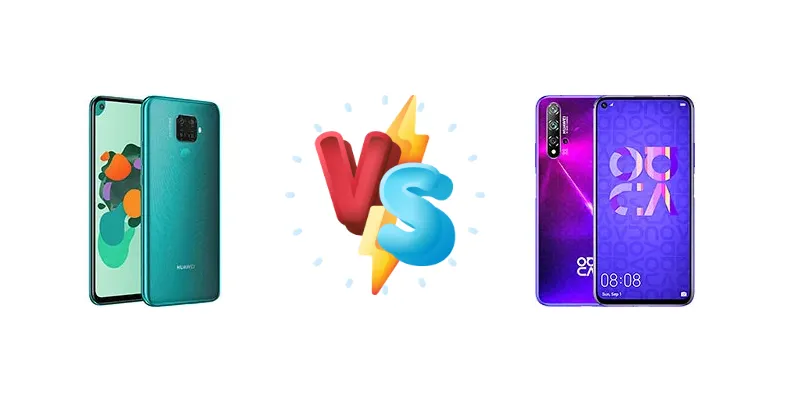
The Huawei Nova 5T and Mate 30 Lite represent distinct approaches to the mid-range smartphone market. The Nova 5T, launched with a focus on performance, boasted the flagship Kirin 980 chipset. The Mate 30 Lite, positioned as a more accessible option, utilizes the Kirin 810. This comparison dissects the key differences to determine which device delivers the best experience for your needs.
🏆 Quick Verdict
For users prioritizing raw performance and faster charging, the Huawei Nova 5T is the clear winner. Its Kirin 980 chipset provides a noticeable boost in CPU and GPU capabilities. However, the Mate 30 Lite offers a compelling value proposition for those seeking a solid all-around experience at a potentially lower price point.
| Network |
|---|
| 2G bands | GSM 850 / 900 / 1800 / 1900 | GSM 850 / 900 / 1800 / 1900 |
| 3G bands | HSDPA 800 / 850 / 900 / 1700(AWS) / 2100 | HSDPA 800 / 850 / 900 / 1700(AWS) / 1900 / 2100 |
| 4G bands | LTE | 1, 2, 3, 4, 5, 7, 8, 18, 19, 20, 26, 28, 38, 40, 41 |
| Speed | HSPA, LTE | HSPA, LTE |
| Technology | GSM / HSPA / LTE | GSM / HSPA / LTE |
| Launch |
|---|
| Announced | Not announced yet | 2019, August 27. Released 2019, September 05 |
| Status | Cancelled | Discontinued |
| Body |
|---|
| Build | - | Glass front, glass back, aluminum frame |
| Dimensions | 156.1 x 73.9 x 8.3 mm (6.15 x 2.91 x 0.33 in) | 154.3 x 74 x 7.8 mm (6.07 x 2.91 x 0.31 in) |
| SIM | · Nano-SIM· Nano-SIM + Nano-SIM | Nano-SIM + Nano-SIM |
| Weight | 178 g (6.28 oz) | 174 g (6.14 oz) |
| Display |
|---|
| Resolution | 1080 x 2340 pixels, 19.5:9 ratio (~412 ppi density) | 1080 x 2340 pixels, 19.5:9 ratio (~412 ppi density) |
| Size | 6.26 inches, 96.2 cm2 (~83.4% screen-to-body ratio) | 6.26 inches, 96.2 cm2 (~84.2% screen-to-body ratio) |
| Type | IPS LCD | IPS LCD |
| Platform |
|---|
| CPU | Octa-core (2x2.27 GHz Cortex-A76 & 6x1.88 GHz Cortex-A55) | Octa-core (2x2.6 GHz Cortex-A76 & 2x1.92 GHz Cortex-A76 & 4x1.8 GHz Cortex-A55) |
| Chipset | Kirin 810 (7 nm) | Kirin 980 (7 nm) |
| GPU | Mali-G52 MP6 | Mali-G76 MP10 |
| OS | Android 9.0 (Pie), EMUI 9.1 | Android 9.0 (Pie), upgradable to Android 10, EMUI 10 |
| Memory |
|---|
| Card slot | Nano Memory (uses shared SIM slot) | No |
| Internal | 128GB 6GB RAM | 128GB 6GB RAM, 128GB 8GB RAM |
| | - | UFS 2.1 |
| Main Camera |
|---|
| Features | LED flash, HDR, panorama | LED flash, HDR, panorama |
| Quad | 48 MP, f/1.8, 26mm (wide), 1/2.0", 0.8µm, PDAF
8 MP, f/2.2, 13mm (ultrawide)
2 MP (macro)
Auxiliary lens | 48 MP, f/1.8, 28mm (wide), 1/2.0", 0.8µm, PDAF
16 MP, f/2.2, 13mm (ultrawide), 1/3.1"
2 MP (macro)
Auxiliary lens |
| Video | 4K@30fps, 1080p@30fps | 4K@30fps, 1080p@30/60fps; gyro-EIS |
| Selfie camera |
|---|
| Features | HDR | HDR |
| Single | 32 MP, f/2.0, 26mm (wide), 1/2.8", 0.8µm | 32 MP, f/2.0, 26mm (wide), 1/2.8", 0.8µm |
| Video | 1080p@30fps | 1080p@30fps, gyro-EIS |
| Sound |
|---|
| 3.5mm jack | Yes | No |
| 35mm jack | Yes | No |
| Loudspeaker | Yes | Yes |
| | - | 32-bit/192kHz audio |
| Comms |
|---|
| Bluetooth | 5.0, A2DP, LE | 5.0, A2DP, aptX HD, LE |
| NFC | No | Yes |
| Positioning | GPS, GLONASS, GALILEO, QZSS, BDS | GPS (L1+L5), GLONASS (L1), BDS (B1), GALILEO (E1+E5a), QZSS (L1+L5) |
| Radio | FM radio | No |
| USB | USB Type-C 2.0, OTG | USB Type-C 2.0, OTG |
| WLAN | Wi-Fi 802.11 a/b/g/n/ac, dual-band, Wi-Fi Direct | Wi-Fi 802.11 a/b/g/n/ac, dual-band, Wi-Fi Direct |
| Features |
|---|
| Sensors | Fingerprint (rear-mounted), accelerometer, gyro, proximity, compass | Fingerprint (side-mounted), accelerometer, gyro, proximity, compass |
| Battery |
|---|
| Charging | 20W wired | 22.5W wired, 50% in 24 min |
| Type | Li-Po 4000 mAh, non-removable | Li-Po 3750 mAh, non-removable |
| Misc |
|---|
| Colors | Black, Aurora, Emerald Green | Black, Crush Blue, Midsummer Purple, Crush Green |
| Models | SPL-AL00, SPL-TL00 | YAL-L21, YAL-L61, YAL-L71, YAL-L61D |
| Price | About 400 EUR | About 340 EUR |
| Tests |
|---|
| Performance | - |
AnTuTu: 313024 (v7), 395503 (v8)
GeekBench: 10013 (v4.4), 2504 (v5.1)
GFXBench: 29fps (ES 3.1 onscreen) |
Huawei Mate 30 Lite
- More affordable price point
- Decent performance for everyday tasks
- Reliable battery life
- Less powerful chipset compared to Nova 5T
- Slower charging speed
- Potentially less refined camera processing
Huawei nova 5T
- Significantly faster processor (Kirin 980)
- Faster 22.5W charging
- Superior gaming performance
- Potentially higher price
- May not offer a substantial camera upgrade over the Mate 30 Lite in all scenarios
- Slightly older model
Display Comparison
While both devices likely feature LCD panels (data not provided), the core difference lies in the processing power driving them. Display quality is likely similar, but the Kirin 980 in the Nova 5T can handle more complex graphical rendering, potentially leading to smoother animations and a more responsive user interface. Bezels and color accuracy are assumed to be comparable given their market positioning.
Camera Comparison
Without detailed camera specs, a direct comparison is limited. However, the Kirin 980’s superior image signal processor (ISP) in the Nova 5T likely results in better image processing, particularly in low-light conditions. The Nova 5T likely offers more sophisticated features like improved HDR and potentially better video stabilization. The presence of a dedicated Neural Processing Unit (NPU) in the Kirin 980 further enhances AI-powered camera features. While both phones likely include standard features like portrait mode, the Nova 5T’s processing power allows for more refined bokeh effects.
Performance
The Kirin 980 in the Nova 5T is the dominant force here. Its octa-core CPU configuration (2x2.6 GHz Cortex-A76 & 2x1.92 GHz Cortex-A76 & 4x1.8 GHz Cortex-A55) significantly outpaces the Mate 30 Lite’s Kirin 810 (2x2.27 GHz Cortex-A76 & 6x1.88 GHz Cortex-A55). The Nova 5T’s dual Cortex-A76 cores clocked at 2.6GHz provide a substantial advantage in single-core performance, crucial for app launch speeds and general responsiveness. The Kirin 980 also benefits from a more powerful GPU, translating to better gaming performance. While both chipsets are fabricated on a 7nm process, the Kirin 980’s architecture is more advanced.
Battery Life
The Mate 30 Lite’s 20W charging is respectable, but the Nova 5T’s 22.5W charging, capable of reaching 50% charge in just 24 minutes, offers a noticeable convenience advantage. While battery capacity isn’t specified, the Nova 5T’s more efficient chipset could potentially offset a slightly smaller battery size, resulting in comparable real-world battery life. The faster charging speed is a significant benefit for users who frequently need to top up their phones quickly.
Buying Guide
Buy the Huawei Mate 30 Lite if you need a reliable daily driver with a decent camera and prioritize affordability. It’s ideal for casual users, social media enthusiasts, and those who don’t demand the absolute highest performance. Buy the Huawei nova 5T if you prefer a smoother, more responsive experience, especially for gaming and demanding applications. It’s the better choice for power users and those who want a phone that will remain capable for longer.
Frequently Asked Questions
❓ Will the Kirin 810 in the Mate 30 Lite struggle with graphically intensive games like PUBG or Call of Duty?
While the Kirin 810 can handle these games, you’ll likely need to lower graphics settings to achieve a consistently smooth frame rate. The Kirin 980 in the Nova 5T offers a significantly better gaming experience, allowing for higher settings and more stable performance.
❓ How much faster is the charging on the Nova 5T compared to the Mate 30 Lite in a typical use case?
The Nova 5T’s 22.5W charging can add approximately 10-15% battery life in the time it takes the Mate 30 Lite’s 20W charger to add 5-8%. The 50% in 24 minutes claim for the Nova 5T is a substantial advantage for users who need a quick power boost.
❓ Does the Nova 5T's more powerful processor translate to noticeably faster app loading times?
Yes, the Kirin 980’s superior CPU performance results in quicker app launch times and a more responsive user interface overall. This difference is particularly noticeable with larger, more complex applications.