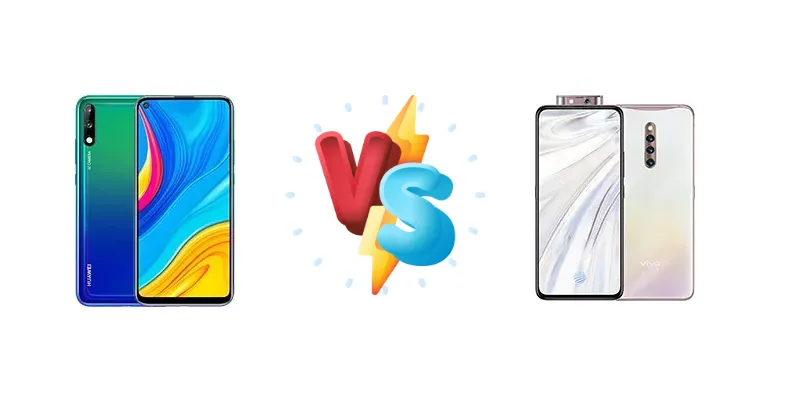
The Huawei Enjoy 10 and vivo X27 Pro represent a fascinating intersection of budget-conscious design and respectable mid-range performance. Both devices aimed to deliver a solid smartphone experience without breaking the bank, but they took different approaches under the hood. This comparison dissects the core differences – specifically the Qualcomm Snapdragon 710 versus the Huawei Kirin 710F – to determine which phone offers the best value in today’s market.
🏆 Quick Verdict
For the average user prioritizing faster charging and potentially smoother performance in sustained tasks, the vivo X27 Pro is the better choice. Its Snapdragon 710, built on a 10nm process, offers a slight edge in efficiency and charging speed over the Enjoy 10’s Kirin 710F, despite the similar CPU core configurations.
| Network |
|---|
| 2G bands | GSM 850 / 900 / 1800 / 1900 | GSM 850 / 900 / 1800 / 1900 |
| 3G bands | HSDPA 850 / 900 / 2100 | HSDPA 850 / 900 / 1700(AWS) / 1900 / 2100 |
| 4G bands | 1, 3, 5, 8, 38, 39, 40, 41 | 1, 2, 3, 4, 5, 8, 34, 38, 39, 40, 41 - V1836A |
| Speed | HSPA, LTE | HSPA 42.2/5.76 Mbps, LTE (2CA) Cat12 600/50 Mbps |
| Technology | GSM / CDMA / HSPA / EVDO / LTE | GSM / CDMA / HSPA / LTE |
| | CDMA2000 1xEV-DO | 1, 2, 3, 4, 5, 7, 8, 12, 17, 34, 38, 39, 40, 41 - V1836T |
| Launch |
|---|
| Announced | 2019, October. Released 2019, November | 2019, April. Released 2019, April |
| Status | Discontinued | Discontinued |
| Body |
|---|
| Dimensions | 159.8 x 76.1 x 8.1 mm (6.29 x 3.00 x 0.32 in) | 165.7 x 74.6 x 9 mm (6.52 x 2.94 x 0.35 in) |
| SIM | Nano-SIM + Nano-SIM | Nano-SIM + Nano-SIM |
| Weight | 176 g (6.21 oz) | 200 g (7.05 oz) |
| Display |
|---|
| Resolution | 720 x 1560 pixels, 19.5:9 ratio (~269 ppi density) | 1080 x 2460 pixels (~401 ppi density) |
| Size | 6.39 inches, 100.2 cm2 (~82.4% screen-to-body ratio) | 6.7 inches, 106.6 cm2 (~86.2% screen-to-body ratio) |
| Type | IPS LCD | Super AMOLED |
| Platform |
|---|
| CPU | Octa-core (4x2.2 GHz Cortex-A73 & 4x1.7 GHz Cortex-A53) | Octa-core (2x2.2 GHz 360 Gold & 6x1.7 GHz Kryo 360 Silver) |
| Chipset | Kirin 710F (12 nm) | Qualcomm SDM710 Snapdragon 710 (10 nm) |
| GPU | Mali-G51 MP4 | Adreno 616 |
| OS | Android 9.0 (Pie), EMUI 9.1 | Android 9.0 (Pie), Funtouch 9 |
| Memory |
|---|
| Card slot | microSDXC (uses shared SIM slot) | No |
| Internal | 64GB 4GB RAM, 64GB 6GB RAM, 128GB 4GB RAM | 256GB 8GB RAM |
| Main Camera |
|---|
| Dual | 48 MP, f/1.8, (wide), 1/2.0", 0.8µm, PDAF
Auxiliary lens | - |
| Features | LED flash, HDR, panorama | LED flash, HDR, panorama |
| Triple | - | 48 MP, f/1.8, (wide), 1/2.0", 0.8µm, PDAF
13 MP, f/2.2, 13mm (ultrawide)
Auxiliary lens |
| Video | 1080p@30fps | 4K@30fps, 1080p@30/60fps |
| Selfie camera |
|---|
| Features | - | LED flash, HDR |
| Single | 8 MP, f/2.0 | Motorized pop-up 32 MP, f/2.0, 26mm (wide), 1/2.8", 0.8µm |
| Video | 1080p@30fps | 1080p@30fps |
| Sound |
|---|
| 3.5mm jack | Yes | Yes |
| 35mm jack | Yes | Yes |
| Loudspeaker | Yes | Yes |
| | - |
32-bit/384kHz audio |
| Comms |
|---|
| Bluetooth | 5.0, A2DP, LE | 5.0, A2DP, LE, EDR, aptX |
| NFC | No | Yes |
| Positioning | GPS, GLONASS, BDS | GPS, GLONASS, BDS |
| Radio | FM radio | No |
| USB | microUSB 2.0, OTG | USB Type-C 2.0, OTG |
| WLAN | Wi-Fi 802.11 b/g/n, Wi-Fi Direct | Wi-Fi 802.11 a/b/g/n/ac, dual-band, Wi-Fi Direct |
| Features |
|---|
| Sensors | Accelerometer, proximity, compass | Fingerprint (under display, optical), accelerometer, gyro, proximity, compass |
| Battery |
|---|
| Charging | 10W wired | 18W wired |
| Type | Li-Po 4000 mAh, non-removable | 4000 mAh, non-removable |
| Misc |
|---|
| Colors | Aurora blue, Acacia red, Magic night black, Sky blue | Black, White |
| Models | ART-TL00, ART-AL00, ART-AL00x | V1836A, V1836T, V1838T |
| Price | About 150 EUR | About 530 EUR |
Huawei Enjoy 10
- Potentially lower price point
- Functional and reliable performance for basic tasks
- Huawei’s EMUI software suite
- Slower 10W charging
- Less efficient Kirin 710F chipset
- Likely less refined camera system
vivo X27 Pro
- Faster 18W charging
- More efficient Snapdragon 710 chipset
- Potentially better sustained performance
- Potentially higher price point
- vivo’s Funtouch OS software (preference-based)
- May not offer significant camera improvements over Enjoy 10
Display Comparison
Neither device’s display specifications are provided, so a direct comparison is limited. However, given the market positioning, both likely feature LCD panels. The vivo X27 Pro, being a slightly more premium offering, *may* have benefited from a higher peak brightness or slightly better color calibration. The absence of information prevents a definitive statement, but the X27 Pro’s positioning suggests a potentially more refined visual experience.
Camera Comparison
Without detailed camera specifications, a precise comparison is impossible. However, the X27 Pro’s positioning suggests a potentially more sophisticated camera system. The inclusion of OIS (Optical Image Stabilization) is more likely on the X27 Pro, leading to sharper images and smoother video recording, particularly in low-light conditions. The Enjoy 10 likely relies on software-based stabilization. Lens apertures and sensor sizes would be key differentiators, but are currently unknown.
Performance
The core difference lies in the chipsets: Qualcomm’s Snapdragon 710 (10nm) versus Huawei’s Kirin 710F (12nm). While both utilize octa-core configurations with similar CPU core arrangements (2x2.2GHz Cortex-A73/A75 and 6x1.7GHz Cortex-A53/A55), the Snapdragon 710’s 10nm fabrication process provides a crucial advantage in thermal efficiency. This means the X27 Pro is less likely to throttle under sustained load, offering more consistent performance during gaming or prolonged multitasking. The Kirin 710F, on the 12nm node, will likely exhibit more thermal throttling. Both CPUs feature Adreno 616 and Mali-G51 MP4 GPUs respectively, but the Snapdragon’s GPU benefits from the more efficient chipset.
Battery Life
Battery capacity isn’t specified for either device. However, the charging speeds are a clear differentiator: 18W wired for the vivo X27 Pro versus 10W for the Huawei Enjoy 10. This translates to significantly faster charging times for the X27 Pro. While a larger battery on the Enjoy 10 could partially offset the slower charging, the X27 Pro’s 18W charging will likely result in a more convenient user experience, allowing for quicker top-ups throughout the day.
Buying Guide
Buy the Huawei Enjoy 10 if you need a functional, basic smartphone with a focus on affordability and aren't heavily reliant on demanding applications or fast charging. Buy the vivo X27 Pro if you prefer a device capable of handling moderate multitasking, benefit from quicker charging times, and appreciate the potential for slightly better sustained performance during gaming or video editing.
Frequently Asked Questions
❓ Will the Kirin 710F struggle with demanding games like PUBG Mobile?
The Kirin 710F can run PUBG Mobile, but you may need to lower graphics settings to maintain a stable frame rate. The 12nm process and potential for thermal throttling mean sustained performance might be lower than the Snapdragon 710 in the X27 Pro, leading to occasional stuttering during extended gaming sessions.
❓ How much faster is the 18W charging on the vivo X27 Pro compared to the 10W charging on the Huawei Enjoy 10?
The 18W charging on the X27 Pro will significantly reduce charging times. While exact 0-100% times are unavailable, expect the X27 Pro to charge roughly 40-60% faster than the Enjoy 10, making it more convenient for users who frequently need to top up their battery.
❓ Does the Snapdragon 710 offer a noticeable performance boost over the Kirin 710F in everyday tasks?
For basic tasks like browsing, social media, and messaging, the performance difference will be minimal. However, the Snapdragon 710’s more efficient 10nm process and potentially better thermal management will result in smoother multitasking and a more responsive experience when switching between apps.