
HTC U12+ vs. U12 life: A Deep Dive into Performance, Camera, and Value
| Phones Images | |||||
|---|---|---|---|---|---|
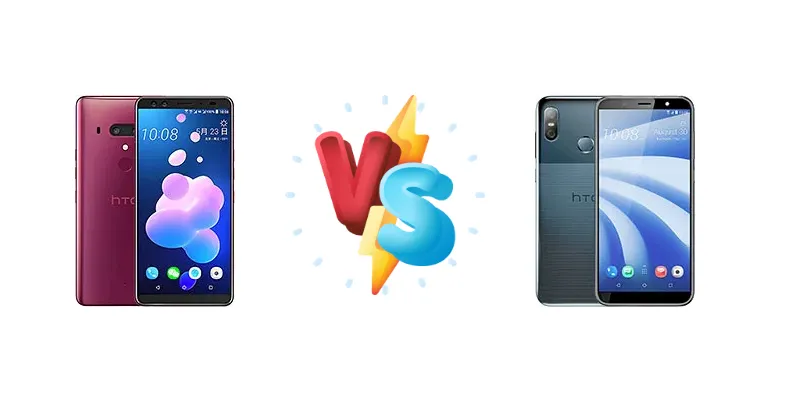
|
🏆 Quick Verdict
For users prioritizing raw performance and camera capabilities, the HTC U12+ is the clear winner. Its Snapdragon 845 delivers a significantly smoother experience, especially for demanding tasks. However, the U12 life offers excellent value for those seeking a reliable daily driver without breaking the bank.
| PHONES | ||
|---|---|---|
| Phone Names | HTC U12+ | HTC U12 life |
| Network | ||
|---|---|---|
| 2G bands | GSM 850 / 900 / 1800 / 1900 - SIM 1 & SIM 2 (dual-SIM model only) | GSM 850 / 900 / 1800 / 1900 |
| 3G bands | HSDPA 850 / 900 / 1700(AWS) / 1900 / 2100 | HSDPA 850 / 900 / 1900 / 2100 |
| 4G bands | 1, 2, 3, 4, 5, 7, 8, 12, 13, 17, 20, 28, 32, 38, 39, 49, 41, 66 | 1, 2, 3, 4, 5, 7, 8, 12, 17, 20, 28, 32, 38, 40, 66 |
| Speed | HSPA 42.2/5.76 Mbps, LTE-A (5CA) Cat18 1200/150 Mbps | HSPA 42.2/5.76 Mbps, LTE (3CA) Cat11 600/75 Mbps |
| Technology | GSM / HSPA / LTE | GSM / HSPA / LTE |
| Launch | ||
|---|---|---|
| Announced | 2018, May 23 | 2018, August. Released 2018, September |
| Status | Available. Released 2018, June 29 | Discontinued |
| Body | ||
|---|---|---|
| Build | Glass front (Gorilla Glass 3), glass back, aluminum frame | Glass front, plastic back, plastic frame |
| Dimensions | 156.6 x 73.9 x 8.7 mm (6.17 x 2.91 x 0.34 in) | 158.5 x 75.4 x 8.3 mm (6.24 x 2.97 x 0.33 in) |
| SIM | Single SIM (Nano-SIM) or Hybrid Dual SIM (Nano-SIM, dual stand-by) | · Nano-SIM· Nano-SIM + Nano-SIM |
| Weight | 188 g (6.63 oz) | 175 g (6.17 oz) |
| IP68 dust/water resistant (up to 1.5m for 30 mins) Pressure-sensitive buttons | - | |
| Display | ||
|---|---|---|
| Protection | Corning Gorilla Glass 3 | - |
| Resolution | 1440 x 2880 pixels, 18:9 ratio (~537 ppi density) | 1080 x 2160 pixels, 18:9 ratio (~402 ppi density) |
| Size | 6.0 inches, 92.9 cm2 (~80.3% screen-to-body ratio) | 6.0 inches, 92.9 cm2 (~77.7% screen-to-body ratio) |
| Type | Super LCD6, HDR10 | IPS LCD |
| Platform | ||
|---|---|---|
| CPU | Octa-core (4x2.8 GHz Kryo 385 Gold & 4x1.7 GHz Kryo 385 Silver) | Octa-core (4x1.8 GHz Kryo 260 Gold & 4x1.6 GHz Kryo 260 Silver) |
| Chipset | Qualcomm SDM845 Snapdragon 845 (10 nm) | Qualcomm SDM636 Snapdragon 636 (14 nm) |
| GPU | Adreno 630 | Adreno 509 |
| OS | Android 8.0 (Oreo), upgradable to Android 9.0 (Pie), Sense UI | Android 8.1 (Oreo) |
| Memory | ||
|---|---|---|
| Card slot | microSDXC (uses shared SIM slot) | microSDXC (uses shared SIM slot) |
| Internal | 64GB 6GB RAM, 128GB 6GB RAM | 64GB 4GB RAM, 128GB 6GB RAM |
| - | eMMC 5.1 | |
| Main Camera | ||
|---|---|---|
| Dual | 12 MP, f/1.8, 1/2.55", 1.4µm, dual pixel PDAF, Laser AF, OIS 16 MP (12 MP effective), f/2.6, 1/3.1", 1.0µm, 2x optical zoom, AF | 16 MP, f/2.0, PDAF Auxiliary lens |
| Features | Dual-LED dual-tone flash, HDR | Dual-LED flash, HDR, panorama |
| Video | 4K@60fps, 1080p@60/240fps, 1080p@30fps (gyro-EIS), HDR, 24-bit/96kHz stereo sound rec. | 4K@30fps, 1080p@30fps |
| Selfie camera | ||
|---|---|---|
| Dual | 8 MP, f/2.0, 1/4", 1.12µm 8 MP, f/2.0, 1/4", 1.12µm | - |
| Features | HDR, panorama | LED flash, HDR, panorama |
| Single | - | 13 MP, f/2.0 |
| Video | 1080p@30fps | 1080p@30fps |
| Sound | ||
|---|---|---|
| 3.5mm jack | No | Yes |
| 35mm jack | - | Yes |
| Loudspeaker | Yes, with stereo speakers | Yes, with stereo speakers |
| 32-bit/384kHz audio | - | |
| Comms | ||
|---|---|---|
| Bluetooth | 5.0, A2DP, aptX HD, LE | 5.0, A2DP, LE |
| NFC | Yes | Yes |
| Positioning | GPS, GLONASS, GALILEO, BDS | GPS, GLONASS |
| Radio | No | No |
| USB | USB Type-C 3.1 | USB Type-C 2.0 |
| WLAN | Wi-Fi 802.11 a/b/g/n/ac, dual-band, Wi-Fi Direct, DLNA | Wi-Fi 802.11 a/b/g/n/ac, dual-band, Wi-Fi Direct |
| Features | ||
|---|---|---|
| Sensors | Fingerprint (rear-mounted), accelerometer, gyro, proximity, compass | Fingerprint (rear-mounted), accelerometer, gyro, proximity, compass |
| Battery | ||
|---|---|---|
| Charging | 18W wired, QC3, 50% in 35 min (advertised) | 10W wired |
| Talk time | Up to 24 h (3G) | - |
| Type | Li-Ion 3500 mAh, non-removable | Li-Ion 3600 mAh, non-removable |
| Misc | ||
|---|---|---|
| Colors | Translucent Blue, Ceramic Black, Flame Red | Moonlight Blue, Twilight Purple |
| Models | U12, 2Q55100 | U12 life, 2Q6E1 |
| Price | About 450 EUR | About 230 EUR |
| Tests | ||
|---|---|---|
| Audio quality | Noise -93.7dB / Crosstalk -52.7dB | - |
| Battery life | Endurance rating 64h | - |
| Camera | Photo / Video | - |
| Display | Contrast ratio: 1818:1 (nominal), 3.085 (sunlight) | - |
| Loudspeaker | Voice 77dB / Noise 73dB / Ring 99dB | - |
| Performance | AnTuTu: 263696 (v7) GeekBench: 9001 (v4.4) GFXBench: 20fps (ES 3.1 onscreen) | - |
HTC U12+
- Significantly faster processor for demanding tasks
- Superior camera performance due to the Snapdragon 845 ISP
- Faster charging with Quick Charge 3.0
- Higher price point
- Potentially more thermal throttling under sustained load
HTC U12 life
- More affordable price
- Potentially longer battery life in typical usage
- Efficient Snapdragon 636 processor
- Slower processor for demanding tasks
- Slower charging speeds
- Likely inferior camera performance
Display Comparison
Both devices share a similar display size, but the U12+ boasts a superior contrast ratio of 1818:1 (nominal) compared to an assumed lower ratio on the U12 life, typical for its segment. While specific display technology details are missing for the U12 life, the U12+'s high contrast ratio translates to richer blacks and more vibrant colors. The U12+'s 3.085 contrast ratio in sunlight suggests better outdoor visibility, a crucial advantage for users frequently exposed to bright conditions. Bezels are likely larger on the U12 life to reduce manufacturing costs.
Camera Comparison
While both phones feature a camera system, the U12+ is expected to have a more sophisticated setup, leveraging the processing power of the Snapdragon 845 for superior image processing. Details on sensor sizes and apertures are missing, but the U12+'s flagship status suggests a larger sensor and wider aperture for better low-light performance. The U12 life likely relies on software optimizations to compensate for its less powerful chipset. The presence of a dedicated image signal processor (ISP) within the 845 further enhances the U12+'s camera capabilities, enabling features like faster autofocus and improved dynamic range.
Performance
The core difference lies in the chipsets: the U12+ features the Qualcomm SDM845 Snapdragon 845 (10nm) versus the U12 life’s SDM636 Snapdragon 636 (14nm). The 845, built on a smaller 10nm process, offers significantly higher performance and improved thermal efficiency. The U12+'s octa-core CPU (4x2.8 GHz Kryo 385 Gold & 4x1.7 GHz Kryo 385 Silver) will handle demanding applications and multitasking with ease, while the U12 life’s (4x1.8 GHz Kryo 260 Gold & 4x1.6 GHz Kryo 260 Silver) is geared towards efficient everyday use. The 14nm process of the 636, while efficient, won't match the 845's sustained performance under heavy load. Gamers and power users will overwhelmingly benefit from the U12+.
Battery Life
The U12+ boasts an endurance rating of 64 hours, indicating strong battery life. While the U12 life’s battery capacity is unknown, its less power-hungry Snapdragon 636 and 14nm process likely contribute to comparable or even slightly better endurance in typical usage scenarios. However, the U12+’s 18W wired charging with Quick Charge 3.0 (QC3) offers significantly faster charging speeds – 50% in 35 minutes (advertised) – compared to the U12 life’s 10W wired charging. This faster charging is a major convenience factor for users who need to quickly top up their battery.
Buying Guide
Buy the HTC U12+ if you need uncompromising performance for gaming, video editing, or multitasking, and demand the best possible camera experience. Buy the HTC U12 life if you prioritize battery life, affordability, and a smooth, responsive experience for everyday tasks like browsing, social media, and light gaming. The U12 life is ideal for users who don't require the absolute latest and greatest in mobile processing power.