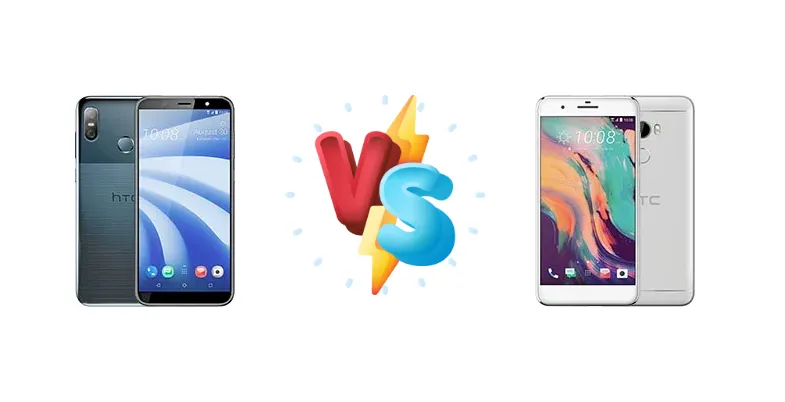
The HTC U12 life and One X10 represent different eras of HTC's smartphone strategy. The One X10, released earlier, aimed for affordability, while the U12 life sought to deliver a more refined experience with a newer chipset. This comparison dissects the key differences between these two devices, focusing on how their core hardware impacts real-world usage.
🏆 Quick Verdict
For most users, the HTC U12 life is the superior choice. Its Qualcomm Snapdragon 636 chipset provides significantly better performance and efficiency compared to the MediaTek Helio P10 in the One X10. While both phones offer a basic Android experience, the U12 life’s modern architecture translates to a smoother, more responsive user experience.
| Network |
|---|
| 2G bands | GSM 850 / 900 / 1800 / 1900 | GSM 850 / 900 / 1800 / 1900 - SIM 1 & SIM 2 (dual-SIM model only) |
| 3G bands | HSDPA 850 / 900 / 1900 / 2100 | HSDPA 850 / 900 / 1900 / 2100 |
| 4G bands | 1, 2, 3, 4, 5, 7, 8, 12, 17, 20, 28, 32, 38, 40, 66 | 1, 3, 5, 7, 8, 20, 28, 38, 40 |
| Speed | HSPA 42.2/5.76 Mbps, LTE (3CA) Cat11 600/75 Mbps | HSPA 42.2/5.76 Mbps, LTE (2CA) Cat6 300/50 Mbps |
| Technology | GSM / HSPA / LTE | GSM / HSPA / LTE |
| Launch |
|---|
| Announced | 2018, August. Released 2018, September | 2017, April. Released 2017, July |
| Status | Discontinued | Discontinued |
| Body |
|---|
| Build | Glass front, plastic back, plastic frame | - |
| Dimensions | 158.5 x 75.4 x 8.3 mm (6.24 x 2.97 x 0.33 in) | 152.9 x 75.6 x 8.2 mm (6.02 x 2.98 x 0.32 in) |
| SIM | · Nano-SIM· Nano-SIM + Nano-SIM | · Nano-SIM· Nano-SIM + Nano-SIM |
| Weight | 175 g (6.17 oz) | 175 g (6.17 oz) |
| Display |
|---|
| Protection | - | Corning Gorilla Glass (unspecified version) |
| Resolution | 1080 x 2160 pixels, 18:9 ratio (~402 ppi density) | 1080 x 1920 pixels, 16:9 ratio (~401 ppi density) |
| Size | 6.0 inches, 92.9 cm2 (~77.7% screen-to-body ratio) | 5.5 inches, 83.4 cm2 (~72.1% screen-to-body ratio) |
| Type | IPS LCD | Super LCD |
| Platform |
|---|
| CPU | Octa-core (4x1.8 GHz Kryo 260 Gold & 4x1.6 GHz Kryo 260 Silver) | Octa-core (4x1.8 GHz Cortex-A53 & 4x1.0 GHz Cortex-A53) |
| Chipset | Qualcomm SDM636 Snapdragon 636 (14 nm) | Mediatek MT6755 Helio P10 (28 nm) |
| GPU | Adreno 509 | Mali-T860MP2 |
| OS | Android 8.1 (Oreo) | Android OS |
| Memory |
|---|
| Card slot | microSDXC (uses shared SIM slot) | microSDXC |
| Internal | 64GB 4GB RAM, 128GB 6GB RAM | 32GB 3GB RAM |
| | eMMC 5.1 | eMMC 5.1 |
| Main Camera |
|---|
| Dual | 16 MP, f/2.0, PDAF
Auxiliary lens | - |
| Features | Dual-LED flash, HDR, panorama | Dual-LED dual-tone flash, HDR, panorama |
| Single | - | 16 MP, f/2.0, 26mm (wide), AF |
| Video | 4K@30fps, 1080p@30fps | 1080p@30fps |
| Selfie camera |
|---|
| Features | LED flash, HDR, panorama | - |
| Single | 13 MP, f/2.0 | 8 MP, f/2.2, 23mm (wide), 1/4.0", 1.12µm |
| Video | 1080p@30fps | 1080p@30fps |
| Sound |
|---|
| 3.5mm jack | Yes | Yes |
| 35mm jack | Yes | Yes |
| Loudspeaker | Yes, with stereo speakers | Yes |
| Comms |
|---|
| Bluetooth | 5.0, A2DP, LE | 4.2, A2DP |
| NFC | Yes | No |
| Positioning | GPS, GLONASS | GPS, GLONASS |
| Radio | No | FM radio |
| USB | USB Type-C 2.0 | microUSB 2.0 |
| WLAN | Wi-Fi 802.11 a/b/g/n/ac, dual-band, Wi-Fi Direct | Wi-Fi 802.11 a/b/g/n, Wi-Fi Direct, DLNA, hotspot |
| Features |
|---|
| Sensors | Fingerprint (rear-mounted), accelerometer, gyro, proximity, compass | Fingerprint (rear-mounted), accelerometer, gyro, proximity, compass |
| Battery |
|---|
| Charging | 10W wired | - |
| Stand-by | - | Up to 744 h (3G) |
| Talk time | - | Up to 25 h 30 min (3G) |
| Type | Li-Ion 3600 mAh, non-removable | Li-Ion 4000 mAh, non-removable |
| Misc |
|---|
| Colors | Moonlight Blue, Twilight Purple | Black, Silver |
| Models | U12 life, 2Q6E1 | One X10, 2PXH3 |
| Price | About 230 EUR | About 200 EUR |
HTC U12 life
- More powerful Snapdragon 636 processor
- Greater energy efficiency for longer battery life
- Likely improved camera image processing
- 10W charging is relatively slow
- May be harder to find new
HTC One X10
- Potentially lower price point
- Functional for basic smartphone tasks
- Simple and straightforward Android experience
- Outdated and inefficient Helio P10 processor
- Poor performance in demanding applications
- Likely shorter battery life
- Older software support
Display Comparison
Neither HTC provided display specs beyond resolution in their marketing. However, given the U12 life’s later release, it likely benefits from improved color accuracy and potentially higher brightness. The older One X10, built around the Helio P10, likely uses a less efficient panel. The difference in chipset power draw will also impact overall system battery life, indirectly affecting display-on time.
Camera Comparison
Without detailed camera specs, a direct comparison is difficult. However, the U12 life, being a newer device, likely benefits from improved image processing algorithms and potentially a more capable image sensor. The Helio P10’s ISP (Image Signal Processor) is less advanced, resulting in lower dynamic range and less detail in photos, especially in challenging lighting conditions. The U12 life’s chipset allows for faster image processing, leading to quicker capture times and potentially better low-light performance. The prevalence of 2MP macro/depth sensors on both devices suggests limited utility; the primary sensor quality is the key differentiator.
Performance
The core difference lies in the chipsets. The HTC U12 life’s Qualcomm Snapdragon 636, fabricated on a 14nm process, is a substantial upgrade over the One X10’s MediaTek Helio P10 (28nm). The Snapdragon 636’s Kryo 260 cores – four Gold and four Silver – offer a more efficient and powerful architecture than the Helio P10’s homogenous Cortex-A53 setup. The 636’s larger cache and improved instruction set will result in faster app loading times and smoother multitasking. The 28nm process of the Helio P10 is significantly less efficient, leading to more heat generation and potential throttling under sustained load. This impacts gaming and demanding applications.
Battery Life
While battery capacity isn’t specified, the Snapdragon 636’s 14nm process offers a significant efficiency advantage over the Helio P10’s 28nm process. This means the U12 life will likely deliver longer battery life on a similar capacity battery. Furthermore, the U12 life supports 10W wired charging, which, while not fast by today’s standards, is likely faster than the charging capabilities of the older One X10. The efficiency gains of the Snapdragon 636 translate to less power consumption during both active use and standby, extending overall usability.
Buying Guide
Buy the HTC U12 life if you prioritize a responsive user experience, better app performance, and future-proofing. It’s ideal for users who regularly use social media, browse the web, and occasionally play mobile games. Buy the HTC One X10 if your budget is extremely limited and you only need a phone for basic communication – calls, texts, and light web browsing. It’s a functional device, but its age and weaker processor will show in everyday tasks.
Frequently Asked Questions
❓ Will the HTC One X10 struggle with modern apps like Facebook or Instagram?
Yes, the MediaTek Helio P10 is a relatively weak processor and will likely exhibit noticeable lag and slowdown when running demanding apps like Facebook or Instagram, especially with multiple apps open simultaneously. The U12 life’s Snapdragon 636 handles these tasks with significantly more ease.
❓ Is the difference in performance between the Snapdragon 636 and Helio P10 noticeable in everyday use?
Absolutely. The Snapdragon 636 offers a much smoother and more responsive experience. Tasks like opening apps, scrolling through web pages, and switching between applications will feel noticeably faster on the U12 life. The Helio P10 in the One X10 will feel sluggish in comparison.
❓ Does the HTC U12 life support software updates beyond Android 8 or 9?
Software update support for both devices is limited given their age. However, the U12 life, having launched with a newer version of Android, is more likely to have received at least one major update compared to the One X10. Expect limited security patches on both devices at this point.