
HTC U11 vs Samsung Galaxy S23+: A Generational Leap in Android Flagships
| Phones Images | |||||
|---|---|---|---|---|---|
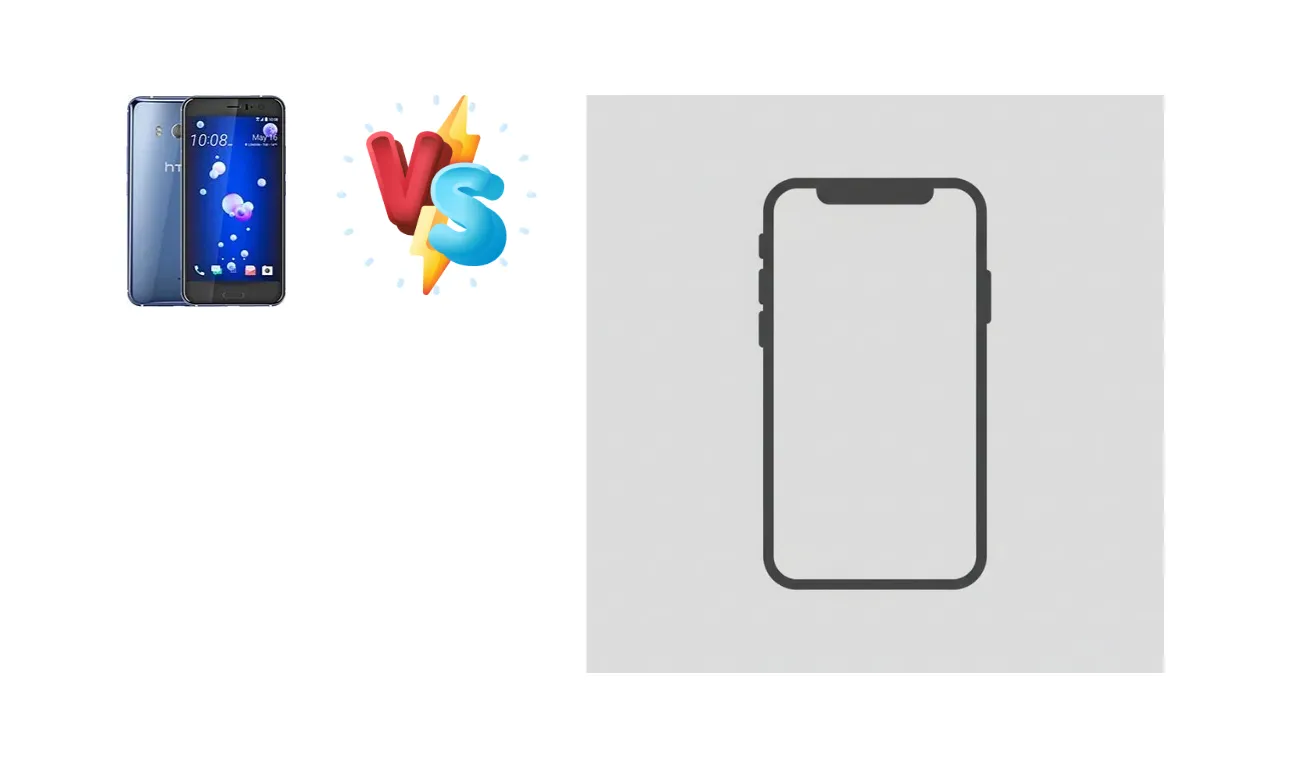
|
🏆 Quick Verdict
For the vast majority of users, the Samsung Galaxy S23+ is the clear winner. Its significantly improved battery life (111h endurance vs 73h), vastly superior chipset, and faster charging capabilities outweigh the U11’s potential affordability. The U11 remains a functional device, but the S23+ offers a modern experience.
| PHONES | ||
|---|---|---|
| Phone Names | HTC U11 | Samsung Galaxy S23+ |
| Network | ||
|---|---|---|
| 2G bands | GSM 850 / 900 / 1800 / 1900 - SIM 1 & SIM 2 (dual-SIM model only) | GSM 850 / 900 / 1800 / 1900 - SIM 1 & SIM 2 (Dual SIM model only) |
| 3G bands | HSDPA 850 / 900 / 1900 / 2100 | HSDPA 850 / 900 / 1700(AWS) / 1900 / 2100 |
| 4G bands | 1, 3, 4, 5, 7, 8, 12, 17, 20, 28, 32, 38, 39, 40, 41 | 1, 2, 3, 4, 5, 7, 8, 12, 13, 17, 18, 19, 20, 25, 26, 28, 32, 38, 39, 40, 41, 66 - International |
| 5G bands | - | 1, 2, 3, 5, 7, 8, 12, 20, 25, 28, 38, 40, 41, 66, 75, 77, 78 SA/NSA/Sub6 - International |
| Speed | HSPA 42.2/5.76 Mbps, LTE (4CA) Cat16 1024/75 Mbps | HSPA, LTE-A (up to 7CA), 5G |
| Technology | GSM / HSPA / LTE | GSM / CDMA / HSPA / EVDO / LTE / 5G |
| - | 1, 7, 28, 41, 66, 71, 78, 258, 260, 261 SA/NSA/Sub6/mmWave - USA | |
| Launch | ||
|---|---|---|
| Announced | 2017, May 16. Released 2017, June 10 | 2023, February 01 |
| Status | Discontinued | Available. Released 2023, February 17 |
| Body | ||
|---|---|---|
| Build | Glass front (Gorilla Glass 5), glass back, aluminum frame | Glass front (Gorilla Glass Victus 2), glass back (Gorilla Glass Victus 2), aluminum frame |
| Dimensions | 153.9 x 75.9 x 7.9 mm (6.06 x 2.99 x 0.31 in) | 157.8 x 76.2 x 7.6 mm (6.21 x 3.00 x 0.30 in) |
| SIM | · Nano-SIM· Nano-SIM + Nano-SIM | Nano-SIM and eSIM or Dual SIM (2 Nano-SIMs and eSIM, dual stand-by) |
| Weight | 169 g (5.96 oz) | 196 g (6.91 oz) |
| IP67 dust/water resistant (up to 1m for 30 mins) | IP68 dust/water resistant (up to 1.5m for 30 min) Armor aluminum frame with tougher drop and scratch resistance (advertised) | |
| Display | ||
|---|---|---|
| Protection | Corning Gorilla Glass 5 | Corning Gorilla Glass Victus 2 |
| Resolution | 1440 x 2560 pixels, 16:9 ratio (~534 ppi density) | 1080 x 2340 pixels, 19.5:9 ratio (~393 ppi density) |
| Size | 5.5 inches, 83.4 cm2 (~71.4% screen-to-body ratio) | 6.6 inches, 105.3 cm2 (~87.6% screen-to-body ratio) |
| Type | Super LCD5 | Dynamic AMOLED 2X, 120Hz, HDR10+, 1200 nits (HBM), 1750 nits (peak) |
| - | Always-on display | |
| Platform | ||
|---|---|---|
| CPU | Octa-core (4x2.45 GHz Kryo & 4x1.9 GHz Kryo) | Octa-core (1x3.36 GHz Cortex-X3 & 2x2.8 GHz Cortex-A715 & 2x2.8 GHz Cortex-A710 & 3x2.0 GHz Cortex-A510) |
| Chipset | Qualcomm MSM8998 Snapdragon 835 (10 nm) | Qualcomm SM8550-AC Snapdragon 8 Gen 2 (4 nm) |
| GPU | Adreno 540 | Adreno 740 |
| OS | Android 7.1 (Nougat), upgradable to Android 9.0 (Pie), Sense UI | Android 13, One UI 5.1 |
| Memory | ||
|---|---|---|
| Card slot | microSDXC (uses shared SIM slot) - dual SIM model only | No |
| Internal | 64GB 4GB RAM, 128GB 6GB RAM | 256GB 8GB RAM, 512GB 8GB RAM |
| - | UFS 4.0 | |
| Main Camera | ||
|---|---|---|
| Features | Dual-LED dual-tone flash, HDR, panorama | LED flash, auto-HDR, panorama |
| Single | 12 MP, f/1.7, 1/2.55", 1.4µm, dual pixel PDAF, 5-axis OIS | - |
| Triple | - | 50 MP, f/1.8, 24mm (wide), 1/1.56", 1.0µm, Dual Pixel PDAF, OIS 10 MP, f/2.4, 70mm (telephoto), 1/3.94", 1.0µm, PDAF, OIS, 3x optical zoom 12 MP, f/2.2, 13mm, 120˚ (ultrawide), 1/2.55" 1.4µm, Super Steady video |
| Video | 4K@30fps, 1080p@30/60/120fps, HDR, 24-bit/192kHz stereo sound rec. | 8K@24/30fps, 4K@30/60fps, 1080p@30/60/240fps, 1080p@960fps, HDR10+, stereo sound rec., gyro-EIS |
| Selfie camera | ||
|---|---|---|
| Features | - | Dual video call, Auto-HDR, HDR10+ |
| Single | 16 MP, f/2.0, 27mm (wide), 1/3.06", 1.0µm | 12 MP, f/2.2, 26mm (wide), Dual Pixel PDAF |
| Video | 1080p@30fps | 4K@30/60fps, 1080p@30fps |
| Sound | ||
|---|---|---|
| 3.5mm jack | No | No |
| 35mm jack | No | - |
| Loudspeaker | Yes, with stereo speakers | Yes, with stereo speakers |
| 24-bit/192kHz audio | 32-bit/384kHz audio Tuned by AKG | |
| Comms | ||
|---|---|---|
| Bluetooth | 4.2, A2DP, LE (5.0 after SW update) | 5.3, A2DP, LE |
| NFC | Yes | Yes |
| Positioning | GPS, GLONASS, BDS | GPS, GLONASS, BDS, GALILEO |
| Radio | No | No |
| USB | USB Type-C 3.1 | USB Type-C 3.2, OTG |
| WLAN | Wi-Fi 802.11 a/b/g/n/ac, dual-band, Wi-Fi Direct, DLNA | Wi-Fi 802.11 a/b/g/n/ac/6e, tri-band, Wi-Fi Direct |
| Features | ||
|---|---|---|
| Sensors | Fingerprint (front-mounted), accelerometer, gyro, proximity, compass | Fingerprint (under display, ultrasonic), accelerometer, gyro, proximity, compass, barometer |
| - | Samsung DeX, Samsung Wireless DeX (desktop experience support) Bixby natural language commands and dictation Samsung Pay (Visa, MasterCard certified) Ultra Wideband (UWB) support | |
| Battery | ||
|---|---|---|
| Charging | 18W wired, QC3 | 45W wired, PD3.0, 65% in 30 min (advertised) 15W wireless (Qi/PMA) 4.5W reverse wireless |
| Stand-by | Up to 336 h (3G) | - |
| Talk time | Up to 24 h 30 min (3G) | - |
| Type | Li-Ion 3000 mAh, non-removable | Li-Ion 4700 mAh, non-removable |
| Misc | ||
|---|---|---|
| Colors | Amazing Silver, Sapphire Blue, Brilliant Black, Ice White, Solar Red | Phantom Black, Cream, Green, Lavender, Graphite, Lime |
| Models | U11, HTV33, 2PZC100, 2PZC5, 601HT | SM-S916B, SM-S916B/DS, SM-S916U, SM-S916U1, SM-S916W, SM-S916N, SM-S9160, SM-S916E, SM-S916E/DS |
| Price | About 300 EUR | $ 780.00 / C$ 1,399.99 / £ 919.08 / € 1,185.89 / ₹ 94,999 |
| SAR | - | 0.95 W/kg (head) 1.04 W/kg (body) |
| SAR EU | - | 0.77 W/kg (head) 1.45 W/kg (body) |
| Tests | ||
|---|---|---|
| Audio quality | Noise -94.1 / Crosstalk -94.5 | - |
| Battery life | Endurance rating 73h | Endurance rating 111h |
| Camera | Photo / Video | Photo / Video |
| Display | - | Contrast ratio: Infinite (nominal) |
| Loudspeaker | Voice 68dB / Noise 73dB / Ring 79dB | -26.5 LUFS (Good) |
| Performance | GeekBench: 6393 (v4.4) GFXBench: 13fps (ES 3.1 onscreen) | AnTuTu: 1234077 (v9) GeekBench: 5073 (v5.1) GFXBench: 110fps (ES 3.1 onscreen) |
HTC U11
- Potentially more compact size
- Lower purchase price (used market)
- Headphone jack (likely, based on HTC's history)
- Outdated chipset and software
- Significantly shorter battery life
- Slower charging speeds
Samsung Galaxy S23+
- Superior performance with Snapdragon 8 Gen 2
- Excellent battery life and fast charging
- Modern camera system with advanced features
- Higher purchase price
- Larger size and weight
- May lack a headphone jack
Display Comparison
The context data lacks detailed display specs for the U11, but given its release year, it likely features an LCD panel with a standard refresh rate. The Galaxy S23+ boasts an 'Infinite' contrast ratio, indicating a high-quality AMOLED display. The S23+ likely incorporates LTPO technology, enabling variable refresh rates for improved power efficiency. While the U11 may have been competitive in its time, the S23+ offers a demonstrably superior viewing experience with richer colors, deeper blacks, and potentially better outdoor visibility.
Camera Comparison
Both devices offer photo and video capabilities, but the specifics are limited. The U11’s camera was well-regarded for its time, but the S23+ benefits from years of advancements in image processing and sensor technology. While sensor size isn't specified, the S23+ likely features a larger main sensor, capturing more light and detail. The S23+’s image processing algorithms are far more sophisticated, offering better dynamic range, noise reduction, and low-light performance. The U11’s camera will still take acceptable photos, but the S23+ provides a significantly more versatile and capable camera system.
Performance
The core difference lies in the chipsets. The HTC U11’s Snapdragon 835 (10nm) was a top performer in 2017, featuring an octa-core CPU. However, the Samsung Galaxy S23+’s Snapdragon 8 Gen 2 (4nm) represents a massive leap forward. The 4nm process node delivers significantly improved power efficiency and transistor density, resulting in higher performance and reduced thermal throttling. The S23+'s CPU configuration – a Cortex-X3 prime core alongside A715 and A710 performance cores – is architecturally more advanced, offering substantial gains in both single-core and multi-core performance. The S23+ will handle demanding games and applications with ease, while the U11 may struggle with newer titles.
Battery Life
The Galaxy S23+’s 111h endurance rating is a substantial improvement over the U11’s 73h. This difference is attributable to both a more efficient chipset (4nm vs 10nm) and likely a larger battery capacity (not specified in the data). The S23+ also boasts significantly faster charging – 45W wired with PD3.0, capable of reaching 65% charge in 30 minutes (advertised) – compared to the U11’s 18W QC3 charging. The addition of 15W wireless charging and 4.5W reverse wireless charging on the S23+ further enhances its convenience and usability.
Buying Guide
Buy the HTC U11 if you prioritize a compact form factor and are on an extremely tight budget, willing to accept compromises in performance, battery life, and software support. Buy the Samsung Galaxy S23+ if you demand all-day battery life, blazing-fast performance for demanding tasks like gaming and video editing, and a modern camera system with long-term software updates.