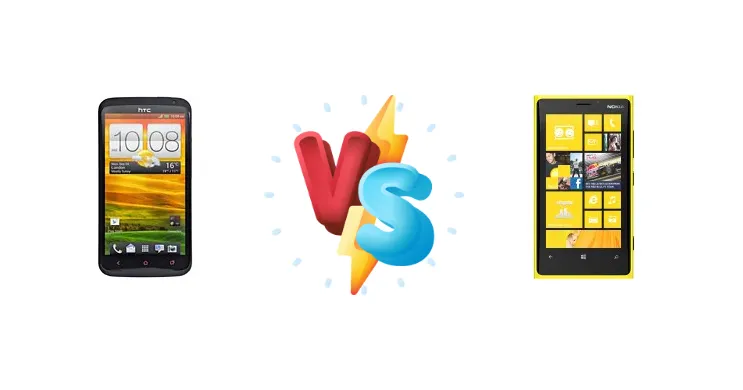
The HTC One X+ and Nokia Lumia 920 were top contenders in their respective ecosystems. The One X+ boasted a powerful NVIDIA Tegra processor and a stunning display, while the Lumia 920 championed wireless charging and a unique Windows Phone experience. Let's dive into a detailed comparison to see which phone truly shines.
🏆 Quick Verdict
The HTC One X+ offers superior performance and a better display, while the Lumia 920 provides wireless charging and a unique Windows Phone experience. For Android enthusiasts prioritizing speed, the One X+ wins. For those seeking a different OS and convenient charging, the Lumia 920 is a strong contender. Both offer similar battery life.
| Network |
|---|
| 2G bands | GSM 850 / 900 / 1800 / 1900 | GSM 850 / 900 / 1800 / 1900 - RM-821, RM-820 |
| 3G bands | HSDPA 850 / 900 / 1900 / 2100 | HSDPA 850 / 900 / 1900 / 2100 - RM-821, RM-820 |
| 4G bands | 4, 17 - AT&T | 1, 3, 7, 8, 20 - RM-821 |
| EDGE | - | No |
| GPRS | - | No |
| Speed | HSPA 21.1/5.76 Mbps - Global versionHSPA 42.2/5.76 Mbps, LTE Cat3 100/50 Mbps - AT&T version | HSPA 42.2/5.76 Mbps, LTE Cat3 100/50 Mbps |
| Technology | GSM / HSPA / LTE | GSM / HSPA / LTE |
| | HSDPA 850 / 1900 / 2100 - for AT&T | 4, 17 - RM-820 (AT&T) |
| Launch |
|---|
| Announced | 2012, October. Released 2012, November | 2012, September. Released 2012, November |
| Status | Discontinued | Discontinued |
| Body |
|---|
| Dimensions | 134.4 x 69.9 x 8.9 mm (5.29 x 2.75 x 0.35 in) | 130.3 x 70.8 x 10.7 mm, 99 cc (5.13 x 2.79 x 0.42 in) |
| SIM | Micro-SIM | Micro-SIM |
| Weight | 135 g (4.76 oz) | 185 g (6.53 oz) |
| Display |
|---|
| Protection | Corning Gorilla Glass | Corning Gorilla Glass 2 |
| Resolution | 720 x 1280 pixels, 16:9 ratio (~312 ppi density) | 768 x 1280 pixels, 5:3 ratio (~332 ppi density) |
| Size | 4.7 inches, 60.9 cm2 (~64.8% screen-to-body ratio) | 4.5 inches, 57.6 cm2 (~62.5% screen-to-body ratio) |
| Type | Super LCD2 | IPS LCD |
| | - | PureMotion HD+ ClearBlack display |
| Platform |
|---|
| CPU | Quad-core 1.7 GHz | Dual-core 1.5 GHz Krait |
| Chipset | NVIDIA Tegra 3 AP37 | Qualcomm MSM8960 Snapdragon S4 Plus |
| GPU | ULP GeForce 2 | Adreno 225 |
| OS | Android 4.1.1 (Jelly Bean), Sense UI 4 | Microsoft Windows Phone 8, upgradable to 8.1 |
| Memory |
|---|
| Call records | - | Yes |
| Card slot | No | No |
| Internal | 32GB 1GB RAM, 64GB 1GB RAM | 32GB 1GB RAM |
| Phonebook | - | Yes |
| Main Camera |
|---|
| Features | LED flash, HDR | Carl Zeiss optics, dual-LED flash |
| Single | 8 MP, AF | 8 MP, f/2.0, 26mm (wide), 1/3.0", AF, OIS |
| Video | 1080p@28ps | 1080p@30fps |
| Selfie camera |
|---|
| Single | 1.6 MP | 1.3 MP |
| Video | 720p@30fps | 720p@30fps |
| Sound |
|---|
| 3.5mm jack | Yes | Yes |
| 35mm jack | Yes | Yes |
| Loudspeaker | Yes | Yes |
| Comms |
|---|
| Bluetooth | 4.0, A2DP, aptX | 4.0, A2DP, EDR, LE/ aptX after WP8 Denim update |
| NFC | Yes | Yes |
| Positioning | GPS, A-GPS, GLONASS | GPS, A-GPS, GLONASS |
| Radio | Stereo FM radio, RDS | FM radio |
| USB | microUSB 2.0 (MHL TV-out) | microUSB 2.0 |
| WLAN | Wi-Fi 802.11 a/b/g/n, dual-band, DLNA, hotspot | Wi-Fi 802.11 a/b/g/n, dual-band, DLNA, hotspot |
| Features |
|---|
| Browser | - | No |
| Games | - | No |
| Java | - | No |
| Messaging | - | SMS |
| Sensors | Accelerometer, gyro, proximity, compass | Accelerometer, gyro, proximity, compass |
| | Dropbox (25 GB cloud storage)
DivX/XviD/MP4/H.264/WMV player
MP3/eAAC+/WMA/WAV player
Document viewer
Voice memo/dial/commands
Predictive text input | - |
| Battery |
|---|
| Charging | - | Wireless (Qi) |
| Music play | - | Up to 67 h |
| Stand-by | Up to 360 h | Up to 400 h (2G) / Up to 400 h (3G) |
| Talk time | Up to 12 h 45 min | Up to 17 h (2G) / Up to 10 h (3G) |
| Type | Non-removable Li-Ion 2100 mAh battery | Non-removable Li-Ion 2000 mAh battery (BP-4GW) |
| Misc |
|---|
| Colors | Stealth Black, Polar White | Black, Gray, Red, Yellow, White |
| Price | About 220 EUR | About 210 EUR |
| SAR | 0.86 W/kg (head) 0.72 W/kg (body) | 1.08 W/kg (head) 0.91 W/kg (body) |
| SAR EU | - | 0.70 W/kg (head) |
| Tests |
|---|
| Audio quality |
Noise -82.4dB / Crosstalk -81.5dB |
Noise -78.9dB / Crosstalk -75.0dB |
| Battery life |
Endurance rating 44h
|
Endurance rating 44h
|
| Camera |
Photo / Video |
Photo / Video |
| Display |
Contrast ratio: 1521 (nominal) |
Contrast ratio: 1065:1 (nominal) / 2.107:1 (sunlight) |
| Loudspeaker |
Voice 64dB / Noise 65dB / Ring 74dB
|
Voice 61dB / Noise 64dB / Ring 65dB
|
HTC One X+
- Superior Performance
- Excellent Display Contrast
- Sleek Design
- Android Ecosystem
- Camera not as good as Lumia 920
- No Wireless Charging
- Older Android Version
Nokia Lumia 920
- Wireless Charging
- Excellent Sunlight Readability
- Good Camera Performance
- Unique Windows Phone Experience
- Slower Performance
- Less Powerful Processor
- Windows Phone Ecosystem (limited app selection)
- Design less premium than One X+
Display Comparison
The HTC One X+ takes the display crown with a reported contrast ratio of 1521:1, significantly higher than the Lumia 920's 1065:1. However, the Lumia 920's standout feature is its exceptional sunlight readability, boasting a 2.107:1 contrast ratio, making it much easier to view outdoors. Both phones feature similar screen sizes and resolutions, but the One X+ offers a richer visual experience overall.
Camera Comparison
Both phones feature 'Photo / Video' capabilities, but the Lumia 920 is generally considered to have a superior camera system. Nokia's PureView technology, combined with its larger sensor, delivered excellent image quality, particularly in low-light conditions. The One X+’s camera was decent, but not as consistently impressive as the Lumia 920’s.
Performance
The HTC One X+’s quad-core 1.7 GHz NVIDIA Tegra 3 AP37 processor gives it a noticeable performance edge over the Lumia 920’s dual-core 1.5 GHz Qualcomm Snapdragon S4 Plus. Apps launch faster, multitasking is smoother, and demanding games run more effortlessly on the One X+. While the Lumia 920 is capable, it simply can't match the raw power of the One X+.
Battery Life
Both devices share the same endurance rating of 44 hours, suggesting comparable battery life in typical usage. However, the Lumia 920's wireless charging capability provides added convenience, allowing for easy top-ups without cables.
Buying Guide
The HTC One X+ is ideal for Android users who value performance and a vibrant display. The Nokia Lumia 920 is a good choice for those wanting to experience Windows Phone and appreciate wireless charging, especially if they prefer a more minimalist interface.
Frequently Asked Questions
❓ Which phone is better for gaming?
The HTC One X+ is significantly better for gaming due to its more powerful quad-core processor and dedicated GPU.
❓ Is the Windows Phone ecosystem worth considering?
The Windows Phone ecosystem is smaller than Android or iOS. App availability is more limited, but it offers a unique and clean user experience.
❓ Which phone has better low-light camera performance?
The Nokia Lumia 920 generally performs better in low-light conditions thanks to its PureView camera technology and larger sensor.