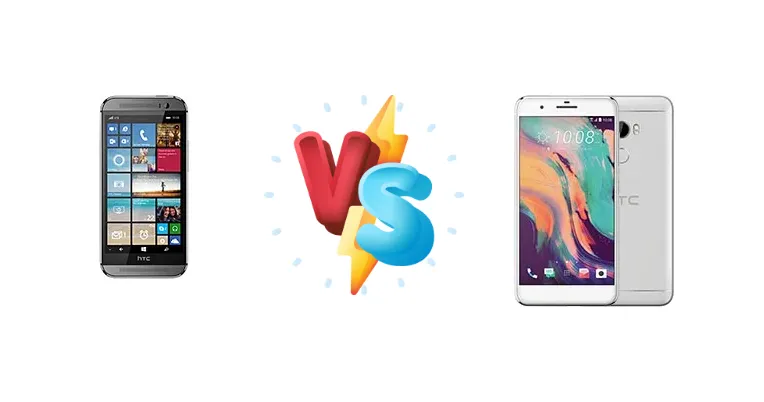
The HTC One series was renowned for its premium design and innovative features. But how do the HTC One (M8) for Windows, a unique Windows Phone offering, and the HTC One X10, a more mainstream Android device, stack up against each other? This comparison dives deep into their specs, performance, and overall value.
🏆 Quick Verdict
The HTC One (M8) for Windows boasts a superior chipset and a more refined design, despite its Windows OS. The X10 offers a more modern Android experience and slightly better battery life, but the M8's Snapdragon 801 still holds its own. Ultimately, the choice depends on your OS preference.
| Network |
|---|
| 2G bands | GSM 850 / 900 / 1800 / 1900 | GSM 850 / 900 / 1800 / 1900 - SIM 1 & SIM 2 (dual-SIM model only) |
| 3G bands | - | HSDPA 850 / 900 / 1900 / 2100 |
| 4G bands | - | 1, 3, 5, 7, 8, 20, 28, 38, 40 |
| EDGE | Yes | - |
| GPRS | Yes | - |
| Speed | HSPA, LTE Cat4 150/50 Mbps, EV-DO Rev.A 3.1 Mbps | HSPA 42.2/5.76 Mbps, LTE (2CA) Cat6 300/50 Mbps |
| Technology | GSM / CDMA / HSPA / EVDO | GSM / HSPA / LTE |
| | 3, 4, 7, 13 - Verizon | - |
| Launch |
|---|
| Announced | 2014, August. Released 2014, September | 2017, April. Released 2017, July |
| Status | Discontinued | Discontinued |
| Body |
|---|
| Dimensions | 146.4 x 70.6 x 9.4 mm (5.76 x 2.78 x 0.37 in) | 152.9 x 75.6 x 8.2 mm (6.02 x 2.98 x 0.32 in) |
| SIM | Nano-SIM | · Nano-SIM· Nano-SIM + Nano-SIM |
| Weight | 160 g (5.64 oz) | 175 g (6.17 oz) |
| Display |
|---|
| Protection | To be confirmed | Corning Gorilla Glass (unspecified version) |
| Resolution | 1080 x 1920 pixels, 16:9 ratio (~441 ppi density) | 1080 x 1920 pixels, 16:9 ratio (~401 ppi density) |
| Size | 5.0 inches, 68.9 cm2 (~66.7% screen-to-body ratio) | 5.5 inches, 83.4 cm2 (~72.1% screen-to-body ratio) |
| Type | Super LCD3 | Super LCD |
| Platform |
|---|
| CPU | Quad-core 2.3 GHz Krait 400 | Octa-core (4x1.8 GHz Cortex-A53 & 4x1.0 GHz Cortex-A53) |
| Chipset | Qualcomm MSM8974AB Snapdragon 801 (28 nm) | Mediatek MT6755 Helio P10 (28 nm) |
| GPU | Adreno 330 | Mali-T860MP2 |
| OS | Microsoft Windows Phone 8.1.1 | Android OS |
| Memory |
|---|
| Card slot | microSDXC (dedicated slot) | microSDXC |
| Internal | 32GB 2GB RAM | 32GB 3GB RAM |
| | eMMC 5.0 | eMMC 5.1 |
| Main Camera |
|---|
| Features | Dual-LED dual-tone flash, panorama, HDR | Dual-LED dual-tone flash, HDR, panorama |
| Single | 4 MP, f/2.0, 27mm (wide), 1/3.0", 2µm, AF
Auxiliary lens | 16 MP, f/2.0, 26mm (wide), AF |
| Video | 1080p@60fps, 720p@60fps, HDR, stereo sound rec. | 1080p@30fps |
| Selfie camera |
|---|
| Features | HDR | - |
| Single | 5 MP | 8 MP, f/2.2, 23mm (wide), 1/4.0", 1.12µm |
| Video | 1080p@30fps | 1080p@30fps |
| Sound |
|---|
| 3.5mm jack | Yes | Yes |
| 35mm jack | Yes | Yes |
| Loudspeaker | Yes, with stereo speakers | Yes |
| Comms |
|---|
| Bluetooth | 4.0, A2DP, aptX | 4.2, A2DP |
| Infrared port | Yes | - |
| NFC | Yes | No |
| Positioning | GPS, GLONASS | GPS, GLONASS |
| Radio | Stereo FM radio, RDS | FM radio |
| USB | microUSB 2.0 | microUSB 2.0 |
| WLAN | Wi-Fi 802.11 a/b/g/n/ac, dual-band, Wi-Fi Direct, DLNA, hotspot | Wi-Fi 802.11 a/b/g/n, Wi-Fi Direct, DLNA, hotspot |
| Features |
|---|
| Sensors | Accelerometer, gyro, proximity, compass, barometer | Fingerprint (rear-mounted), accelerometer, gyro, proximity, compass |
| Battery |
|---|
| Stand-by | Up to 387 h | Up to 744 h (3G) |
| Talk time | Up to 24 h | Up to 25 h 30 min (3G) |
| Type | Li-Ion 2600 mAh, non-removable | Li-Ion 4000 mAh, non-removable |
| Misc |
|---|
| Colors | Gunmetal Gray | Black, Silver |
| Models | - | One X10, 2PXH3 |
| Price | About 300 EUR | About 200 EUR |
HTC One (M8) for Windows (CDMA)
- Premium Design & Build Quality
- Powerful Snapdragon 801 Chipset
- Unique Duo Camera Features
- Compact Size
- Windows Phone OS (Limited App Selection)
- Smaller Battery
- CDMA Only
HTC One X10
- Larger Battery
- Expandable Storage (MicroSD)
- Android OS (Wide App Selection)
- Better Front-Facing Camera
- Weaker Processor
- Less Premium Design
- Mediatek Chipset (Potential Performance Concerns)
Display Comparison
The HTC One (M8) features a 5.0-inch Super LCD3 display with a 1080p resolution, offering vibrant colors and sharp details. The HTC One X10 sports a 5.3-inch AMOLED display, also with a 1080p resolution. AMOLED generally provides better contrast and deeper blacks, giving the X10 a slight edge in visual quality, though the M8's display is still excellent.
Camera Comparison
The HTC One (M8) has a dual 4MP rear camera system with Duo Camera features, allowing for depth-of-field effects. The HTC One X10 features a 24MP main rear camera and a 13MP front camera. While the X10's megapixel count is higher, the M8's Duo Camera offered unique creative possibilities. Image quality is generally good on both, but the X10's front camera is a clear winner for selfies.
Performance
Here's where the M8 shines. Its Qualcomm Snapdragon 801 chipset with a 2.3 GHz Krait 400 CPU significantly outperforms the X10's Mediatek Helio P10. While the X10's octa-core processor offers more cores, the Snapdragon 801's architecture and higher clock speed provide noticeably faster performance in demanding tasks and gaming. The Windows Phone OS also tends to feel snappier on the M8.
Battery Life
The HTC One X10 has a larger 3000mAh battery compared to the HTC One (M8)'s 2840mAh battery. This translates to slightly better battery life on the X10, typically lasting a full day with moderate use, while the M8 might require a top-up before the end of the day.
Buying Guide
The HTC One (M8) for Windows is ideal for users deeply invested in the Windows ecosystem and seeking a premium device with a unique OS. The HTC One X10 is a better choice for Android enthusiasts wanting a reliable, mid-range phone with a larger battery and expandable storage.
Frequently Asked Questions
❓ Is the HTC One (M8) for Windows still worth buying?
If you're a Windows Phone enthusiast and can find one in good condition, it's still a capable device with a premium feel. However, app support is limited.
❓ Which phone has better software support?
The HTC One X10, running Android, will have better software support and updates, although both are now quite outdated.