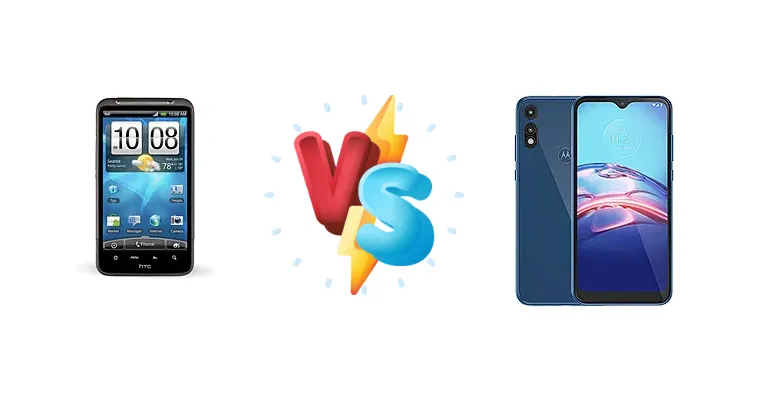
The HTC Inspire 4G was a notable device in its time, offering 4G connectivity in a compact form. Now, let's pit it against the modern Motorola Moto E (2020), a budget champion. Can a decade-old phone still compete with today's technology?
🏆 Quick Verdict
The Motorola Moto E (2020) decisively wins this comparison. Its significantly more powerful processor, improved camera, and modern features far outweigh the Inspire 4G's nostalgic appeal. While the Inspire 4G was good for its era, the Moto E (2020) offers vastly superior performance and value.
| Network |
|---|
| 2G bands | GSM 850 / 900 / 1800 / 1900 | GSM 850 / 900 / 1800 / 1900 |
| 3G bands | HSDPA 850 / 1900 | HSDPA 850 / 900 / 1700(AWS) / 1900 / 2100 |
| 4G bands | - | 1, 2, 3, 4, 5, 7, 8, 12, 13, 14, 17, 25, 26, 30, 66, 71 |
| Speed | HSPA 14.4/5.76 Mbps | HSPA, LTE |
| Technology | GSM / HSPA | GSM / CDMA / HSPA / EVDO / LTE |
| | - | CDMA2000 1xEV-DO |
| Launch |
|---|
| Announced | 2011, January. Released 2011, February | 2020, June 05. Released 2020, June 10 |
| Status | Discontinued | Discontinued |
| Body |
|---|
| Build | - | Glass front, plastic back, plastic frame |
| Dimensions | 122.9 x 68.1 x 11.7 mm (4.84 x 2.68 x 0.46 in) | 159.8 x 76.6 x 8.7 mm (6.29 x 3.02 x 0.34 in) |
| SIM | Mini-SIM | Nano-SIM |
| Weight | 163.9 g (5.75 oz) | 185 g (6.53 oz) |
| | - | Water-repellent coating |
| Display |
|---|
| Protection | Corning Gorilla Glass | - |
| Resolution | 480 x 800 pixels, 5:3 ratio (~217 ppi density) | 720 x 1520 pixels, 19:9 ratio (~271 ppi density) |
| Size | 4.3 inches, 52.6 cm2 (~62.9% screen-to-body ratio) | 6.2 inches, 95.9 cm2 (~78.4% screen-to-body ratio) |
| Type | S-LCD | IPS LCD |
| Platform |
|---|
| CPU | 1.0 GHz Scorpion | Octa-core (4x1.8 GHz Kryo 250 Gold & 4x1.8 GHz Kryo 250 Silver) |
| Chipset | Qualcomm MSM8255 Snapdragon S2 | Qualcomm SDM632 Snapdragon 632 (14 nm) |
| GPU | Adreno 205 | Adreno 506 |
| OS | Android 2.2 (Froyo), upgradable to 2.3 (Gingerbread), Sense UI | Android 10 |
| Memory |
|---|
| Card slot | microSDHC (dedicated slot), 8 GB included | microSDXC (dedicated slot) |
| Internal | 4GB 768MB RAM | 32GB 2GB RAM, 32GB 3GB RAM |
| | - | eMMC 5.1 |
| Main Camera |
|---|
| Dual | - | 13 MP, f/2.0, 1/3.1", 1.12µm, PDAF
Auxiliary lens |
| Features | Dual-LED flash | LED flash, HDR, panorama |
| Single | 8 MP, AF | - |
| Video | 720p | 1080p@30/60fps |
| Selfie camera |
|---|
| Features | - | HDR |
| Single | - | 5 MP, f/2.0, 1.12µm |
| Video | - | 1080p@30fps |
| | No | - |
| Sound |
|---|
| 3.5mm jack | Yes | Yes |
| 35mm jack | Yes | Yes |
| Loudspeaker | Yes | Yes |
| Comms |
|---|
| Bluetooth | 2.1, A2DP, EDR | 4.2, A2DP, LE |
| NFC | - | No |
| Positioning | GPS, A-GPS | GPS, GLONASS, GALILEO |
| Radio | Stereo FM radio, RDS | FM radio |
| USB | microUSB 2.0 | microUSB 2.0 |
| WLAN | Wi-Fi 802.11 b/g/n, DLNA, hotspot (charges may apply) | Wi-Fi 802.11 a/b/g/n, dual-band |
| Features |
|---|
| Browser | HTML, Adobe Flash | - |
| Sensors | Accelerometer, proximity, compass | Fingerprint (rear-mounted), accelerometer, proximity, compass |
| | Dedicated search key
MP3/AAC+/WAV/WMA9 player
DivX/Xvid/MP4/H.264/WMV9/player
Voice memo
Predictive text input | - |
| Battery |
|---|
| Stand-by | Up to 372 h | - |
| Talk time | Up to 6 h | - |
| Type | Removable Li-Ion 1230 mAh battery | Li-Po 3550 mAh |
| Misc |
|---|
| Colors | Black, Brown, Red | Midnight Blue |
| Models | - | XT2052DL |
| Price | About 120 EUR | About 90 EUR |
| SAR | 1.14 W/kg (head) | - |
HTC Inspire 4G
- Compact size
- Lightweight
- Nostalgic appeal
- Outdated processor
- Low resolution display
- Poor camera quality
- Short battery life
- Limited storage
Motorola Moto E (2020)
- Large display
- Powerful processor
- Good camera
- Long battery life
- Affordable price
- Modern features
- Plastic build quality
- Basic design
Display Comparison
The HTC Inspire 4G features a 3.7-inch S-LCD display, offering decent clarity for its time. The Moto E (2020) boasts a larger 6.2-inch HD+ display, providing a much more immersive viewing experience and better readability. The Moto E's higher resolution also contributes to sharper images and videos.
Camera Comparison
The HTC Inspire 4G's 8MP camera was adequate for its time, but struggles in low light. The Moto E (2020) features a 13MP main camera, producing noticeably better image quality, especially in challenging lighting conditions. The Moto E also benefits from modern camera software features.
Performance
This is where the Moto E (2020) truly shines. Its Snapdragon 632 chipset and Octa-core processor deliver significantly faster performance than the Inspire 4G's single-core 1.0 GHz Scorpion processor. Expect smoother multitasking, quicker app loading times, and a more responsive user experience on the Moto E.
Battery Life
The HTC Inspire 4G had a 1730 mAh battery, offering limited battery life. The Moto E (2020) packs a 4000 mAh battery, providing significantly longer usage time, easily lasting a full day with moderate use.
Buying Guide
Who should buy the HTC Inspire 4G? Likely only collectors or those seeking a very basic, small Android phone for extremely light use. Who should buy the Motorola Moto E (2020)? Anyone looking for an affordable, reliable smartphone for everyday tasks, social media, and basic photography.
Frequently Asked Questions
❓ Is the HTC Inspire 4G still usable in 2024?
While technically usable, the HTC Inspire 4G's outdated hardware and software make it a frustrating experience compared to modern smartphones. It's best suited for collectors or very basic tasks.
❓ What Android version does the Motorola Moto E (2020) run?
The Motorola Moto E (2020) typically shipped with Android 10 and is eligible for updates. Motorola is known for providing relatively timely updates for their budget devices.