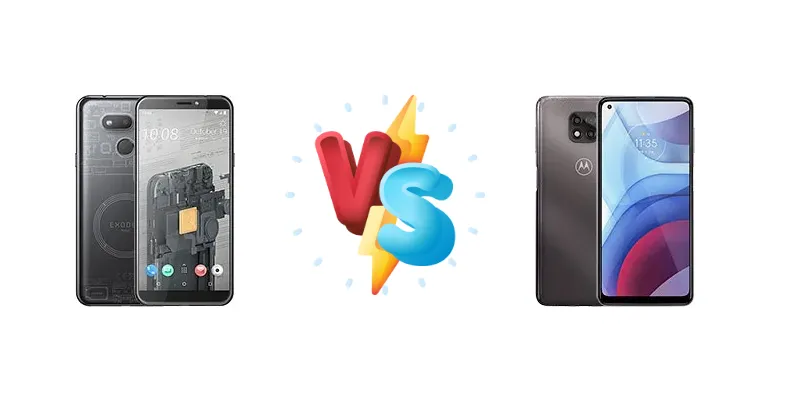
The HTC Exodus 1s, initially marketed with a focus on blockchain technology, and the Motorola Moto G Power (2021) represent different approaches to the budget smartphone market. While the Exodus 1s has faded from prominence, its underlying hardware remains relevant for comparison. This analysis focuses on the core performance and usability differences stemming from their respective chipsets and features, helping you determine which offers the best value in 2024.
🏆 Quick Verdict
For the average user, the Motorola Moto G Power (2021) is the clear winner. Its Snapdragon 662 chipset, built on an 11nm process, delivers significantly better performance and efficiency than the HTC Exodus 1s’ Snapdragon 435. While the Exodus 1s may appeal to niche blockchain enthusiasts, the Moto G Power provides a superior everyday experience.
| Network |
|---|
| 2G bands | GSM 850 / 900 / 1800 / 1900 | GSM 850 / 900 / 1800 / 1900 |
| 3G bands | HSDPA 850 / 900 / 1900 / 2100 | HSDPA 850 / 900 / 1700(AWS) / 1900 / 2100 |
| 4G bands | 1, 3, 5, 7, 8, 20, 28, 38, 40, 41 | 1, 2, 3, 4, 5, 7, 8, 12, 13, 14, 17, 25, 26, 29, 30, 38, 41, 66, 71 |
| Speed | HSPA 42.2/5.76 Mbps, LTE (2CA) Cat6 300/50 Mbps | HSPA, LTE |
| Technology | GSM / HSPA / LTE | GSM / CDMA / HSPA / EVDO / LTE |
| | - | CDMA2000 1xEV-DO |
| Launch |
|---|
| Announced | 2019, October 19. Released 2019, December | 2021, January 08 |
| Status | Discontinued | Available. Released 2021, January 14 |
| Body |
|---|
| Build | Glass front, plastic back, plastic frame | Glass front, plastic back, plastic frame |
| Dimensions | 154.2 x 72.7 x 8.3 mm (6.07 x 2.86 x 0.33 in) | 165.3 x 75.9 x 9.5 mm (6.51 x 2.99 x 0.37 in) |
| SIM | Nano-SIM + Nano-SIM | Nano-SIM |
| Weight | 150 g (5.29 oz) | 206.5 g (7.30 oz) |
| | - | Water-repellent coating |
| Display |
|---|
| Resolution | 720 x 1440 pixels, 18:9 ratio (~282 ppi density) | 720 x 1600 pixels, 20:9 ratio (~266 ppi density) |
| Size | 5.7 inches, 83.8 cm2 (~74.8% screen-to-body ratio) | 6.6 inches, 105.2 cm2 (~83.8% screen-to-body ratio) |
| Type | IPS LCD | IPS LCD |
| Platform |
|---|
| CPU | Octa-core 1.4 GHz Cortex-A53 | Octa-core (4x2.0 GHz Kryo 260 Gold & 4x1.8 GHz Kryo 260 Silver) |
| Chipset | Qualcomm SDM435 Snapdragon 435 (28 nm) | Qualcomm SM6115 Snapdragon 662 (11 nm) |
| GPU | Adreno 505 | Adreno 610 |
| OS | Android 8.1 (Oreo) | Android 10 |
| Memory |
|---|
| Card slot | No | microSDXC (dedicated slot) |
| Internal | 64GB 4GB RAM | 32GB 3GB RAM, 64GB 4GB RAM |
| | eMMC 5.1 | eMMC 5.1 |
| Main Camera |
|---|
| Features | LED flash, HDR, panorama | LED flash, HDR, panorama |
| Single | 13 MP, PDAF | - |
| Triple | - | 48 MP, f/1.7, (wide), 1/2.0", 0.8µm, PDAF
2 MP (macro)
Auxiliary lens |
| Video | 4K@30fps, 1080p@30fps | 1080p@30/60fps, gyro-EIS |
| Selfie camera |
|---|
| Features | LED flash, HDR | HDR |
| Single | 13 MP | 8 MP, f/2.0, 1.12µm |
| Video | 1080p@30fps | 1080p@30fps, gyro-EIS |
| Sound |
|---|
| 3.5mm jack | Yes | Yes |
| 35mm jack | Yes | Yes |
| Loudspeaker | Yes | Yes |
| Comms |
|---|
| Bluetooth | 5.0, A2DP | 5.0, A2DP, LE |
| NFC | No | No |
| Positioning | GPS, GLONASS, GALILEO, BDS | GPS, GLONASS, GALILEO |
| Radio | No | FM radio |
| USB | microUSB 2.0 | USB Type-C 2.0 |
| WLAN | Wi-Fi 802.11 a/b/g/n/ac, dual-band, Wi-Fi Direct | Wi-Fi 802.11 a/b/g/n/ac, dual-band, Wi-Fi Direct |
| Features |
|---|
| Sensors | Fingerprint (rear-mounted), accelerometer, proximity, compass | Fingerprint (side-mounted), accelerometer, gyro, proximity, compass, barometer |
| | Zion crypto wallet
Secure Enclave
Social Key Recovery (key sharding)
dApps (decentralized apps)
Bitcoin Full Node support | - |
| Battery |
|---|
| Charging | - | 15W wired |
| Type | Li-Ion 3075 mAh, non-removable | Li-Po 5000 mAh |
| Misc |
|---|
| Colors | Black | Flash Gray, Polar Silver |
| Price | About 220 EUR | About 60 EUR |
HTC Exodus 1s
- Potential for blockchain integration (niche appeal)
- May be available at a lower price point due to age
- Simple, straightforward Android experience
- Outdated Snapdragon 435 chipset
- Poor performance compared to modern alternatives
- Limited software support and updates
Motorola Moto G Power (2021)
- Significantly faster Snapdragon 662 chipset
- Improved power efficiency and battery life
- 15W fast charging support
- May have bloatware pre-installed
- Camera performance is adequate but not exceptional
- Build quality is typical for its price range
Display Comparison
Neither device is known for a standout display. Given the context data focuses on the chipsets, we can infer both likely utilize LCD panels common in this price bracket. The Exodus 1s, being an older model, likely has wider bezels. The Moto G Power (2021) benefits from a more recent design, potentially offering a slightly higher screen-to-body ratio. Color accuracy and peak brightness are likely comparable, falling within the typical range for budget LCDs.
Camera Comparison
Without detailed camera specs, it's difficult to make a definitive comparison. However, given the market positioning, the Moto G Power (2021) likely features a more modern image sensor and image signal processor (ISP) integrated within the Snapdragon 662. The Exodus 1s’ older chipset will have a less sophisticated ISP, resulting in lower image quality, particularly in low-light conditions. The presence of a 15W charger on the Moto G Power suggests a focus on usability, potentially extending to camera features like faster image processing. We can assume both phones include a standard macro lens, but its utility is limited on both devices.
Performance
The core difference lies in the chipsets. The Motorola Moto G Power (2021)'s Snapdragon 662, fabricated on an 11nm process, represents a substantial leap over the HTC Exodus 1s’ Snapdragon 435 (28nm). The 662’s octa-core CPU, with its Kryo 260 Gold and Silver cores clocked up to 2.0 GHz, provides significantly faster processing speeds for multitasking and app launches. The 435’s Cortex-A53 cores, limited to 1.4 GHz, will struggle with demanding applications. This translates to a noticeably smoother experience on the Moto G Power, especially when switching between apps or browsing the web. The 662 also features a more capable Adreno 610 GPU, offering better graphics performance for casual gaming.
Battery Life
The Moto G Power (2021) is named appropriately. While the exact battery capacity isn't provided, Motorola's 'Power' line is renowned for exceptional battery life. The Snapdragon 662’s 11nm process contributes to improved power efficiency compared to the 28nm Snapdragon 435 in the Exodus 1s. The 15W charging on the Moto G Power allows for a reasonable recharge time, while the Exodus 1s likely charges at a slower rate, further exacerbating the battery life disparity.
Buying Guide
Buy the HTC Exodus 1s if you specifically require a device with integrated blockchain features and are comfortable with its older chipset and limited software support. Buy the Motorola Moto G Power (2021) if you prioritize a smooth, responsive user experience, longer battery life, and a more modern chipset for everyday tasks and light gaming.
Frequently Asked Questions
❓ Will the Snapdragon 435 in the HTC Exodus 1s struggle with modern apps like TikTok or Instagram?
Yes, the Snapdragon 435 is a relatively weak chipset by today's standards. While it can run these apps, you'll likely experience noticeable lag, slow loading times, and occasional crashes, especially when multitasking. The Moto G Power (2021)'s Snapdragon 662 handles these apps with ease.
❓ Is the blockchain functionality of the HTC Exodus 1s still actively supported and useful in 2024?
Support for the Exodus 1s' blockchain features has diminished significantly. The initial hype surrounding the device has faded, and the ecosystem it was designed for is less active. Unless you have a specific and ongoing need for a blockchain-focused smartphone, this feature is unlikely to be a significant benefit.
❓ How does the Moto G Power (2021) perform with mobile gaming?
The Snapdragon 662 in the Moto G Power (2021) is capable of handling most casual mobile games at medium settings. More demanding titles like PUBG Mobile may require lower graphics settings to maintain a playable frame rate. The Exodus 1s’ Snapdragon 435 will struggle with even less demanding games.