
HTC Exodus 1 vs. U12+: A Detailed Comparison of Flagship Features
| Phones Images | |||||
|---|---|---|---|---|---|
|
🏆 Quick Verdict
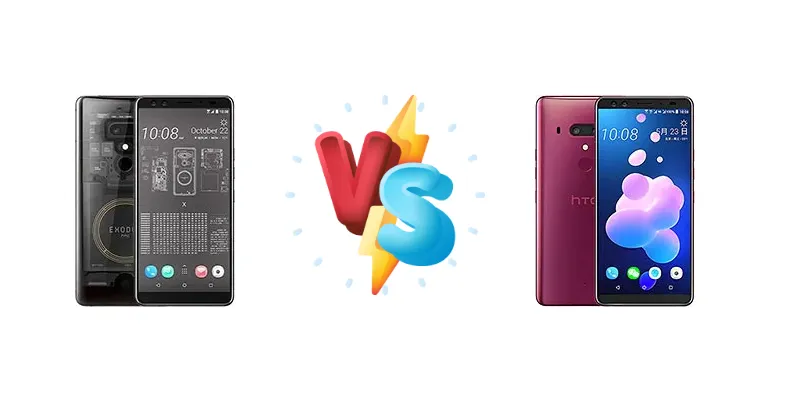
For the average user, the HTC U12+ is the superior choice. While the Exodus 1’s blockchain features are unique, the U12+ offers a demonstrably better display, longer battery life, and a more refined overall experience, all at a potentially similar price point given the age of both devices.
| PHONES | ||
|---|---|---|
| Phone Names | HTC Exodus 1 | HTC U12+ |
| Network | ||
|---|---|---|
| 2G bands | GSM 850 / 900 / 1800 / 1900 | GSM 850 / 900 / 1800 / 1900 - SIM 1 & SIM 2 (dual-SIM model only) |
| 3G bands | HSDPA 850 / 900 / 1700(AWS) / 1900 / 2100 | HSDPA 850 / 900 / 1700(AWS) / 1900 / 2100 |
| 4G bands | 4, 12, 17, 28, 20, 5, 8, 3, 1, 7, 32, 2, 13, 66, 39, 40, 38, 41 | 1, 2, 3, 4, 5, 7, 8, 12, 13, 17, 20, 28, 32, 38, 39, 49, 41, 66 |
| Speed | HSPA 42.2/5.76 Mbps, LTE (5CA) Cat18 1200/150 Mbps | HSPA 42.2/5.76 Mbps, LTE-A (5CA) Cat18 1200/150 Mbps |
| Technology | GSM / HSPA / LTE | GSM / HSPA / LTE |
| Launch | ||
|---|---|---|
| Announced | 2018, October 23. Released 2018, December 06 | 2018, May 23 |
| Status | Discontinued | Available. Released 2018, June 29 |
| Body | ||
|---|---|---|
| Build | - | Glass front (Gorilla Glass 3), glass back, aluminum frame |
| Dimensions | 156.6 x 73.9 x 8.7 mm (6.17 x 2.91 x 0.34 in) | 156.6 x 73.9 x 8.7 mm (6.17 x 2.91 x 0.34 in) |
| SIM | Nano-SIM + Nano-SIM | Single SIM (Nano-SIM) or Hybrid Dual SIM (Nano-SIM, dual stand-by) |
| Weight | 188 g (6.63 oz) | 188 g (6.63 oz) |
| IP68 dust/water resistant (up to 1.5m for 30 mins) | IP68 dust/water resistant (up to 1.5m for 30 mins) Pressure-sensitive buttons | |
| Display | ||
|---|---|---|
| Protection | - | Corning Gorilla Glass 3 |
| Resolution | 1440 x 2880 pixels, 18:9 ratio (~537 ppi density) | 1440 x 2880 pixels, 18:9 ratio (~537 ppi density) |
| Size | 6.0 inches, 92.9 cm2 (~80.3% screen-to-body ratio) | 6.0 inches, 92.9 cm2 (~80.3% screen-to-body ratio) |
| Type | Super LCD6 | Super LCD6, HDR10 |
| Platform | ||
|---|---|---|
| CPU | Octa-core (4x2.8 GHz Kryo 385 Gold & 4x1.7 GHz Kryo 385 Silver) | Octa-core (4x2.8 GHz Kryo 385 Gold & 4x1.7 GHz Kryo 385 Silver) |
| Chipset | Qualcomm SDM845 Snapdragon 845 (10 nm) | Qualcomm SDM845 Snapdragon 845 (10 nm) |
| GPU | Adreno 630 | Adreno 630 |
| OS | Android 8.1 (Oreo) | Android 8.0 (Oreo), upgradable to Android 9.0 (Pie), Sense UI |
| Memory | ||
|---|---|---|
| Card slot | No | microSDXC (uses shared SIM slot) |
| Internal | 128GB 6GB RAM | 64GB 6GB RAM, 128GB 6GB RAM |
| UFS 2.1 | - | |
| Main Camera | ||
|---|---|---|
| Dual | 12 MP, f/1.8, 1/2.55", 1.4µm, dual pixel PDAF, OIS 16 MP (12 MP effective), f/2.6, 1/3.1", 1.0µm, 2x optical zoom, AF | 12 MP, f/1.8, 1/2.55", 1.4µm, dual pixel PDAF, Laser AF, OIS 16 MP (12 MP effective), f/2.6, 1/3.1", 1.0µm, 2x optical zoom, AF |
| Features | Laser AF, Dual-LED dual-tone flash, HDR | Dual-LED dual-tone flash, HDR |
| Video | 4K@60fps, 1080p@60/240fps, 1080p@30fps (gyro-EIS), HDR, 24-bit/96kHz stereo sound rec. | 4K@60fps, 1080p@60/240fps, 1080p@30fps (gyro-EIS), HDR, 24-bit/96kHz stereo sound rec. |
| Selfie camera | ||
|---|---|---|
| Dual | 8 MP, f/2.0, 1/4.0", 1.12µm 8 MP, f/2.0, 1/4.0", 1.12µm | 8 MP, f/2.0, 1/4", 1.12µm 8 MP, f/2.0, 1/4", 1.12µm |
| Features | HDR, panorama | HDR, panorama |
| Video | 1080p@30fps | 1080p@30fps |
| Sound | ||
|---|---|---|
| 3.5mm jack | No | No |
| 35mm jack | No | - |
| Loudspeaker | Yes, with stereo speakers | Yes, with stereo speakers |
| 32-bit/384kHz audio | 32-bit/384kHz audio | |
| Comms | ||
|---|---|---|
| Bluetooth | 5.0, A2DP, aptX HD, LE | 5.0, A2DP, aptX HD, LE |
| NFC | No | Yes |
| Positioning | GPS, GLONASS, GALILEO, BDS | GPS, GLONASS, GALILEO, BDS |
| Radio | No | No |
| USB | USB Type-C 3.1 | USB Type-C 3.1 |
| WLAN | Wi-Fi 802.11 a/b/g/n/ac, dual-band, Wi-Fi Direct | Wi-Fi 802.11 a/b/g/n/ac, dual-band, Wi-Fi Direct, DLNA |
| Features | ||
|---|---|---|
| Sensors | Fingerprint (rear-mounted), accelerometer, gyro, proximity, compass | Fingerprint (rear-mounted), accelerometer, gyro, proximity, compass |
| Zion crypto wallet Secure Enclave Social Key Recovery (key sharding) dApps (decentralized apps) | - | |
| Battery | ||
|---|---|---|
| Charging | 18W wired, QC3, 50% in 35 min | 18W wired, QC3, 50% in 35 min (advertised) |
| Talk time | - | Up to 24 h (3G) |
| Type | Li-Ion 3500 mAh, non-removable | Li-Ion 3500 mAh, non-removable |
| Misc | ||
|---|---|---|
| Colors | Black | Translucent Blue, Ceramic Black, Flame Red |
| Models | - | U12, 2Q55100 |
| Price | About BTC 0.15/ETH 4.78(crypto curr) | About 450 EUR |
| Tests | ||
|---|---|---|
| Audio quality | - | Noise -93.7dB / Crosstalk -52.7dB |
| Battery life | - | Endurance rating 64h |
| Camera | - | Photo / Video |
| Display | - | Contrast ratio: 1818:1 (nominal), 3.085 (sunlight) |
| Loudspeaker | - | Voice 77dB / Noise 73dB / Ring 99dB |
| Performance | - | AnTuTu: 263696 (v7) GeekBench: 9001 (v4.4) GFXBench: 20fps (ES 3.1 onscreen) |
HTC Exodus 1
- Unique blockchain features for crypto enthusiasts
- Secure enclave for private key storage
- Snapdragon 845 provides flagship performance
- Likely inferior display quality compared to U12+
- Potentially limited software support
- Niche appeal may limit resale value
HTC U12+
- Excellent display with high contrast ratios
- Longer battery life (64h endurance rating)
- More refined user experience
- Lacks dedicated blockchain features
- May be difficult to find new
- Software updates may be limited given age
Display Comparison
The HTC U12+ boasts a significant advantage in display technology. While both phones lack detailed display specifications in the provided data, the U12+’s reported contrast ratios of 1818:1 (nominal) and 3.085 (sunlight) indicate a superior panel capable of handling bright outdoor conditions and delivering richer colors. The Exodus 1, lacking these figures, likely relies on a standard LCD or OLED panel, potentially resulting in lower peak brightness and less vibrant visuals. This difference is crucial for media consumption and everyday usability.
Camera Comparison
The provided data lacks detailed camera specifications for both devices. However, given the U12+’s positioning as a flagship, it likely features a more sophisticated camera system with larger sensors and improved image processing algorithms. The Exodus 1, focused on security, likely prioritizes camera functionality less. Without sensor size or aperture information, it’s difficult to make a definitive statement, but the U12+’s marketing and price point suggest a superior photographic experience. The inclusion of a 2MP macro camera on either device is unlikely to significantly impact overall image quality.
Performance
Both the HTC Exodus 1 and U12+ are powered by the Qualcomm Snapdragon 845 (10nm) with an identical CPU configuration: Octa-core (4x2.8 GHz Kryo 385 Gold & 4x1.7 GHz Kryo 385 Silver). This means raw processing power will be virtually indistinguishable between the two. However, the U12+’s potentially better thermal management (based on HTC’s flagship experience) could lead to slightly sustained performance during extended gaming sessions. The 10nm process node is efficient, but sustained loads can still generate heat, impacting clock speeds.
Battery Life
The HTC U12+ claims an endurance rating of 64 hours, a substantial advantage over the Exodus 1. Both devices support 18W wired charging with QC3, achieving 50% charge in approximately 35 minutes. However, the U12+’s superior endurance suggests a larger battery capacity or more efficient power management. This translates to a longer time between charges, a critical factor for users who rely heavily on their smartphones throughout the day.
Buying Guide
Buy the HTC Exodus 1 if you are a cryptocurrency enthusiast prioritizing on-device security and control of your digital assets, and are willing to accept compromises in display quality and potentially software support. Buy the HTC U12+ if you prioritize a vibrant, high-contrast display, all-day battery life, and a more polished user experience, and have no specific need for blockchain functionality.