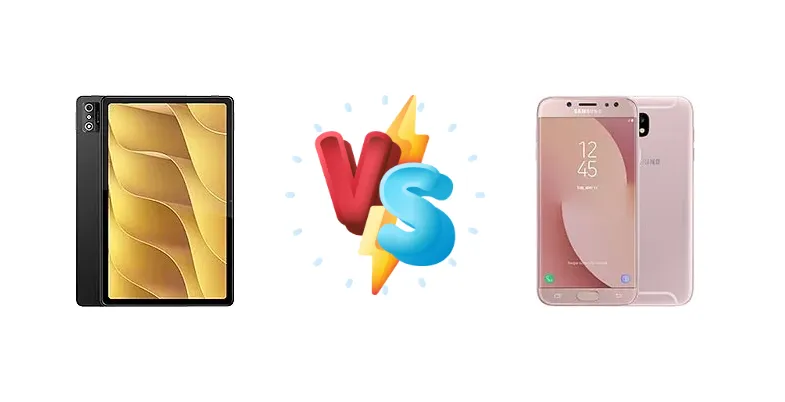
The HTC A104 and Samsung Galaxy J7 (2017) represent different approaches to the budget smartphone market. The J7, released in 2017, prioritized battery life and a reliable experience, while the A104, a more recent device, leverages a newer chipset architecture for potential performance gains. This comparison dissects their key differences to determine which device offers the best value in today's market.
🏆 Quick Verdict
For the average user prioritizing longevity and proven battery performance, the Samsung Galaxy J7 (2017) remains a surprisingly capable choice. Its 108-hour endurance rating is a significant advantage. However, the HTC A104’s Unisoc T606 offers a more modern CPU architecture, potentially benefiting users who prioritize responsiveness in newer apps.
| Network |
|---|
| 2G bands | GSM 850 / 900 / 1800 / 1900 | GSM 850 / 900 / 1800 / 1900 - SIM 1 & SIM 2 |
| 3G bands | HSDPA 850 / 900 / 1700(AWS) / 1900 / 2100 | HSDPA 850 / 900 / 1900 / 2100 |
| 4G bands | 1, 2, 3, 4, 5, 7, 8, 12, 17, 20, 28, 38, 40, 41 | 1, 3, 5, 7, 8, 20, 28, 40 |
| Speed | HSPA, LTE | HSPA 42.2/5.76 Mbps, LTE (2CA) Cat6 300/50 Mbps |
| Technology | GSM / HSPA / LTE | GSM / HSPA / LTE |
| Launch |
|---|
| Announced | 2023, July 12 | 2017, June. Released 2017, July |
| Status | Available. Released 2023, July | Discontinued |
| Body |
|---|
| Build | - | Glass front, aluminum back, aluminum frame |
| Dimensions | 245.6 x 155.4 x 8 mm (9.67 x 6.12 x 0.31 in) | 152.5 x 74.8 x 8 mm (6.00 x 2.94 x 0.31 in) |
| SIM | Nano-SIM + Nano-SIM | Nano-SIM + Nano-SIM |
| Weight | 460 g (1.01 lb) | 181 g (6.38 oz) |
| Display |
|---|
| Resolution | 1200 x 2000 pixels, 5:3 ratio (~225 ppi density) | 1080 x 1920 pixels, 16:9 ratio (~401 ppi density) |
| Size | 10.36 inches, 305.5 cm2 (~80.0% screen-to-body ratio) | 5.5 inches, 83.4 cm2 (~73.1% screen-to-body ratio) |
| Type | IPS LCD | Super AMOLED |
| | - | Always-on display |
| Platform |
|---|
| CPU | Octa-core (2x1.6 GHz Cortex-A75 & 6x1.6 GHz Cortex-A55) | Octa-core 1.6 GHz Cortex-A53 |
| Chipset | Unisoc T606 (12 nm) | Exynos 7870 Octa (14 nm) |
| GPU | Mali-G57 MP1 | Mali-T830 MP1 |
| OS | Android 13 | Android 7.0 (Nougat), upgradable to Android 9.0 (Pie), One UI |
| Memory |
|---|
| Card slot | microSDXC (uses shared SIM slot) | microSDXC (dedicated slot) |
| Internal | 128GB 8GB RAM | 16GB 3GB RAM, 32GB 3GB RAM, 64GB 3GB RAM |
| | - | eMMC 5.1 |
| Main Camera |
|---|
| Features | LED flash | LED flash, panorama, HDR |
| Single | 5 MP, f/2.2, AF | 13 MP, f/1.7, 27mm (wide), 1/3.1", 1.12µm, AF |
| Video | 1080p | 1080p@30fps |
| Selfie camera |
|---|
| Features | - | LED flash |
| Single | 5 MP, f/2.2 | 13 MP, f/1.9, 28mm (wide), 1/3.1", 1.12µm |
| Video | 1080p | 1080p@30fps |
| Sound |
|---|
| 3.5mm jack | - | Yes |
| 35mm jack | No | Yes |
| Loudspeaker | Yes, with stereo speakers (4 speakers) | Yes |
| Comms |
|---|
| Bluetooth | 5.0, A2DP, LE | 4.1, A2DP, LE |
| NFC | No | Yes |
| Positioning | GPS, GLONASS, GALILEO | GPS, GLONASS, BDS |
| Radio | No | FM radio |
| USB | USB Type-C 2.0, OTG, magnetic connector | microUSB 2.0, OTG |
| WLAN | Wi-Fi 802.11 a/b/g/n/ac, dual-band | Wi-Fi 802.11 a/b/g/n/ac, dual-band, Wi-Fi Direct |
| Features |
|---|
| Sensors | Accelerometer, gyro | Fingerprint (front-mounted), accelerometer, gyro, proximity, compass |
| | - | ANT+ |
| Battery |
|---|
| Charging | 10W wired | - |
| Music play | - | Up to 91 h |
| Talk time | - | Up to 24 h (3G) |
| Type | 7000 mAh | Li-Ion 3600 mAh, non-removable |
| Misc |
|---|
| Colors | Black, Silver | Black, Blue, Gold, Rose Gold |
| Models | - | SM-J730F, SM-J730FM, SM-S727VL, SM-J730K |
| Price | About 180 EUR | About 200 EUR |
| SAR EU | - | 0.57 W/kg (head) 1.33 W/kg (body) |
| Tests |
|---|
| Audio quality | - |
Noise -92.8dB / Crosstalk -92.3dB |
| Battery life | - |
Endurance rating 108h
|
| Camera | - |
Photo / Video |
| Display | - |
Contrast ratio: Infinite (nominal), 3.812 (sunlight) |
| Loudspeaker | - |
Voice 67dB / Noise 71dB / Ring 83dB
|
| Performance | - |
GeekBench: 3779 (v4.4)
GFXBench: 1.9fps (ES 3.1 onscreen) |
HTC A104
- More modern CPU architecture (Unisoc T606)
- Potentially better efficiency with 12nm process
- Likely to receive more software updates (being a newer device)
- Limited information on display specifications
- Slower 10W charging
- Camera specs are unknown
Samsung Galaxy J7 (2017)
- Exceptional 108-hour endurance rating
- Proven reliability and battery performance
- Samsung’s established display quality
- Older chipset (Exynos 7870)
- Less efficient 14nm process
- Limited future software support
Display Comparison
Both the HTC A104 and Samsung Galaxy J7 (2017) share an identical contrast ratio specification of 'Infinite (nominal), 3.812 (sunlight)'. This suggests similar display quality in terms of outdoor visibility. However, the A104’s display specifications are not detailed enough to assess its resolution or panel technology, leaving the J7 as the more predictable option in terms of display experience, given Samsung’s historical strength in display manufacturing. The lack of information on the A104’s display makes it difficult to assess its color accuracy or viewing angles.
Camera Comparison
Both devices are listed with 'Photo / Video' capabilities, offering minimal insight. Without specific sensor details or megapixel counts, a direct comparison is impossible. It’s likely the J7, given Samsung’s camera expertise, delivers a more refined image processing experience. The absence of detailed camera specs on both devices suggests they are not primary selling points, and users should expect basic photography performance. The inclusion of a 2MP macro lens on either device would be largely inconsequential given its limited resolution and image quality.
Performance
The core difference lies in the chipsets. The HTC A104 utilizes the Unisoc T606 (12 nm), featuring a combination of Cortex-A75 and Cortex-A55 cores. This architecture, while not flagship-level, represents a more modern design than the Samsung Galaxy J7 (2017)’s Exynos 7870 Octa (14 nm) which relies solely on Cortex-A53 cores. The A75 cores in the A104 offer significantly higher single-core performance, translating to snappier app launches and a more responsive user interface. However, the Exynos 7870’s 14nm process, while older, may offer better sustained performance under heavy load due to potentially more efficient thermal characteristics. The A104’s 12nm process *should* be more efficient, but the overall system design impacts thermal performance.
Battery Life
The Samsung Galaxy J7 (2017) boasts an impressive endurance rating of 108 hours, a testament to its optimized power consumption and likely larger battery capacity (though the exact mAh is unspecified). The HTC A104, with its 10W wired charging, suggests a slower charging speed. While the Unisoc T606’s 12nm process *should* contribute to better efficiency, the J7’s established endurance rating is a significant advantage for users who prioritize long-lasting battery life. The A104’s slower charging will require more time to replenish the battery, potentially offsetting any efficiency gains.
Buying Guide
Buy the HTC A104 if you need a device with a more contemporary chipset for smoother multitasking and compatibility with newer software updates. Buy the Samsung Galaxy J7 (2017) if you prioritize exceptional battery life and a device that’s already proven its reliability over time, even if it means sacrificing some processing power and future software support.
Frequently Asked Questions
❓ Does the Exynos 7870 in the Galaxy J7 (2017) overheat during prolonged gaming sessions?
While the Exynos 7870 isn't a powerhouse, its 14nm process and relatively modest performance profile mean it's unlikely to experience significant overheating during typical gaming. However, demanding titles at high settings may lead to some thermal throttling, reducing sustained performance. It's a more conservative chip than the Unisoc T606, prioritizing stability over peak performance.
❓ Is the 10W charging on the HTC A104 significantly slower than what's available on newer smartphones?
Yes, 10W charging is considerably slower than the 18W, 25W, or even 65W charging found on many modern smartphones. Expect a full charge to take several hours. This is a trade-off for the A104’s lower price point and potentially more efficient chipset, but it requires planning and patience when it comes to recharging.
❓ How does the Unisoc T606 handle multitasking compared to the Exynos 7870?
The Unisoc T606, with its Cortex-A75 cores, should offer a smoother multitasking experience than the Exynos 7870’s Cortex-A53 cores. The A75 cores provide a significant boost in single-core performance, which directly impacts app responsiveness and the ability to switch between applications quickly. However, the amount of RAM in each device will also play a crucial role.