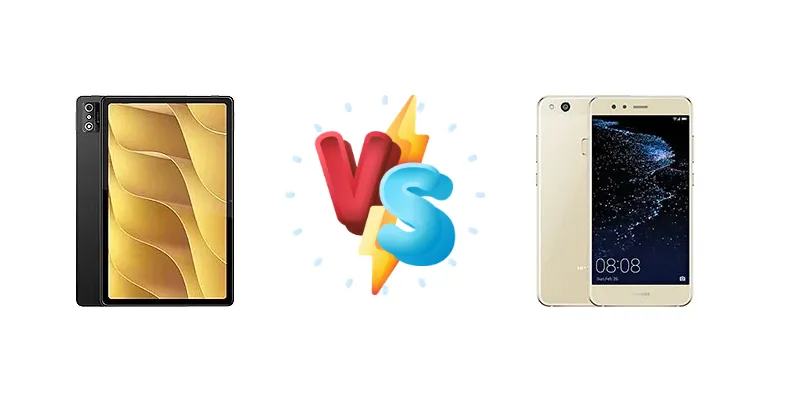
The HTC A104 and Huawei P10 Lite represent compelling options in the sub-$200 smartphone market. While both aim to deliver essential functionality at an accessible price, they diverge significantly in their internal hardware. This comparison dissects the key differences between the Unisoc T606-powered A104 and the Kirin 658-equipped P10 Lite, helping you determine which device best suits your needs.
🏆 Quick Verdict
For most users, the Huawei P10 Lite edges out the HTC A104 due to its faster 18W charging and proven 62-hour endurance rating. However, the A104’s newer Unisoc T606 chipset offers a potential long-term advantage in software support and potentially optimized power efficiency, making it a viable choice for those prioritizing future-proofing.
| Network |
|---|
| 2G bands | GSM 850 / 900 / 1800 / 1900 | GSM 850 / 900 / 1800 / 1900 - SIM 1 & SIM 2 (dual-SIM model only) |
| 3G bands | HSDPA 850 / 900 / 1700(AWS) / 1900 / 2100 | HSDPA 850 / 900 / 1900 / 2100 |
| 4G bands | 1, 2, 3, 4, 5, 7, 8, 12, 17, 20, 28, 38, 40, 41 | 1, 3, 7, 8, 20 |
| Speed | HSPA, LTE | HSPA 42.2/5.76 Mbps, LTE (2CA) Cat6 300/50 Mbps |
| Technology | GSM / HSPA / LTE | GSM / HSPA / LTE |
| Launch |
|---|
| Announced | 2023, July 12 | 2017, February. Released 2017, March |
| Status | Available. Released 2023, July | Discontinued |
| Body |
|---|
| Build | - | Glass front, glass back, aluminum frame |
| Dimensions | 245.6 x 155.4 x 8 mm (9.67 x 6.12 x 0.31 in) | 146.5 x 72 x 7.2 mm (5.77 x 2.83 x 0.28 in) |
| SIM | Nano-SIM + Nano-SIM | · Nano-SIM· Nano-SIM + Nano-SIM |
| Weight | 460 g (1.01 lb) | 146 g (5.15 oz) |
| Display |
|---|
| Resolution | 1200 x 2000 pixels, 5:3 ratio (~225 ppi density) | 1080 x 1920 pixels, 16:9 ratio (~424 ppi density) |
| Size | 10.36 inches, 305.5 cm2 (~80.0% screen-to-body ratio) | 5.2 inches, 74.5 cm2 (~70.7% screen-to-body ratio) |
| Type | IPS LCD | IPS LCD |
| Platform |
|---|
| CPU | Octa-core (2x1.6 GHz Cortex-A75 & 6x1.6 GHz Cortex-A55) | Octa-core (4x2.1 GHz Cortex-A53 & 4x1.7 GHz Cortex-A53) |
| Chipset | Unisoc T606 (12 nm) | Kirin 658 (16 nm) |
| GPU | Mali-G57 MP1 | Mali-T830 MP2 |
| OS | Android 13 | Android 7.0 (Nougat), upgradable to Android 8.0 (Oreo), EMUI 8 |
| Memory |
|---|
| Card slot | microSDXC (uses shared SIM slot) | microSDXC (uses shared SIM slot) |
| Internal | 128GB 8GB RAM | 32GB 3GB RAM, 32GB 4GB RAM, 64GB 4GB RAM |
| | - | eMMC 5.1 |
| Main Camera |
|---|
| Features | LED flash | LED flash, HDR, panorama |
| Single | 5 MP, f/2.2, AF | 12 MP, f/2.2, 1/2.8", 1.25µm, PDAF |
| Video | 1080p | 1080p@30fps |
| Selfie camera |
|---|
| Single | 5 MP, f/2.2 | 8 MP, f/2.0, AF |
| Video | 1080p | 1080p@30fps |
| Sound |
|---|
| 3.5mm jack | - | Yes |
| 35mm jack | No | Yes |
| Loudspeaker | Yes, with stereo speakers (4 speakers) | Yes |
| Comms |
|---|
| Bluetooth | 5.0, A2DP, LE | 4.1, A2DP, EDR, LE |
| NFC | No | Yes (WAS-LX1A, WAS-LX1) |
| Positioning | GPS, GLONASS, GALILEO | GPS, GLONASS, GALILEO, BDS |
| Radio | No | FM radio |
| USB | USB Type-C 2.0, OTG, magnetic connector | microUSB 2.0 |
| WLAN | Wi-Fi 802.11 a/b/g/n/ac, dual-band | Wi-Fi 802.11 a/b/g/n/ac, dual-band, Wi-Fi Direct (Western Europe, Korea)Wi-Fi 802.11 b/g/n, Wi-Fi Direct (ROW) |
| Features |
|---|
| Sensors | Accelerometer, gyro | Fingerprint (rear-mounted), accelerometer, gyro, proximity, compass |
| Battery |
|---|
| Charging | 10W wired | 18W wired |
| Type | 7000 mAh | Li-Po 3000 mAh, non-removable |
| Misc |
|---|
| Colors | Black, Silver | Pearl White, Graphite Black, Platinum Gold, Sapphire Blue |
| Models | - | WAS-LX1, WAS-LX2, WAS-LX3, WAS-LX1A, WAS-LX2J, WAS-L03T, WAS-AL00, WAS-TL10 |
| Price | About 180 EUR | About 230 EUR |
| Tests |
|---|
| Audio quality | - |
Noise -88.2dB / Crosstalk -84.3dB |
| Battery life | - |
Endurance rating 62h
|
| Camera | - |
Photo / Video |
| Display | - |
Contrast ratio: 1595:1 (nominal), 2.974 (sunlight) |
| Loudspeaker | - |
Voice 68dB / Noise 72dB / Ring 80dB
|
| Performance | - |
GeekBench: 3344 (v4.4)
GFXBench: 3fps (ES 3.1 onscreen) |
HTC A104
- More modern chipset architecture (Unisoc T606)
- Potentially better power efficiency due to 12nm process
- Potential for longer software support
- Slower 10W charging
- Missing display specifications (resolution, panel type)
- Unknown battery capacity
Huawei P10 Lite
- Faster 18W charging
- Proven 62-hour endurance rating
- Good display contrast ratio
- Older chipset (Kirin 658)
- Less efficient 16nm process
- Solely Cortex-A53 cores
Display Comparison
Both the HTC A104 and Huawei P10 Lite share a similar display profile, boasting a contrast ratio of 1595:1 (nominal) and 2.974 (sunlight). This suggests comparable visibility in bright outdoor conditions. However, detailed information regarding panel type (IPS, TFT) and resolution is missing for the A104, making a definitive assessment of color accuracy and sharpness impossible. The P10 Lite’s contrast ratio indicates a decent viewing experience, but neither device is likely to compete with higher-end displays.
Camera Comparison
Both devices are listed as having 'Photo / Video' capabilities, but lack specific details regarding sensor size, aperture, or features like Optical Image Stabilization (OIS). Given the price point, it’s reasonable to expect basic camera performance. The absence of details makes a direct comparison impossible, but focusing on megapixel count alone would be misleading. Image processing algorithms will likely play a larger role in the final image quality than raw sensor specifications.
Performance
The core difference lies in the chipsets. The HTC A104 utilizes the Unisoc T606, a 12nm processor featuring a mix of Cortex-A75 and A55 cores. This architecture, while not flagship-level, offers a more modern design than the Huawei P10 Lite’s Kirin 658, which is built on a 16nm process and relies solely on Cortex-A53 cores. The Kirin 658’s 2.1 GHz clock speed on its four high-performance cores is higher than the A104’s 1.6 GHz Cortex-A75, but the A75’s architectural improvements should provide better single-core performance. The Unisoc T606’s more efficient 12nm process could also translate to better thermal management and potentially longer sustained performance under load.
Battery Life
The Huawei P10 Lite boasts an endurance rating of 62 hours, a significant advantage. While the A104’s battery capacity is unknown, the P10 Lite’s 18W wired charging is considerably faster than the A104’s 10W charging. This means the P10 Lite can replenish its battery much quicker, reducing downtime. The 62-hour endurance rating suggests optimized power management, potentially offsetting any capacity difference between the two devices.
Buying Guide
Buy the HTC A104 if you prioritize a more modern chipset architecture and potential for longer software support, even if it means slower charging. You'll benefit from the Cortex-A75 cores for slightly improved responsiveness. Buy the Huawei P10 Lite if you value faster charging speeds and a well-established battery performance profile, making it ideal for users who frequently find themselves away from a power outlet.
Frequently Asked Questions
❓ Is the Unisoc T606 in the HTC A104 capable of handling demanding games like PUBG Mobile?
While the Unisoc T606 is not a high-end gaming chip, it should be capable of running PUBG Mobile at medium settings. The Cortex-A75 cores provide a performance boost over older designs, but expect some frame drops during intense action. The P10 Lite’s Kirin 658 may offer similar performance, but the A104’s newer architecture could provide better sustained performance due to improved thermal efficiency.
❓ How long does it realistically take to fully charge the Huawei P10 Lite with the 18W charger?
While Huawei claims 18W charging, real-world charging times will vary. Expect a full charge from 0% to 100% to take approximately 1 hour and 45 minutes to 2 hours, depending on usage during charging. This is significantly faster than the HTC A104’s 10W charging, which could take over 3 hours for a full charge.
❓ Does the Huawei P10 Lite still receive software updates?
Software update support for the Huawei P10 Lite is limited due to the US trade restrictions. It likely won't receive major Android version updates beyond what it launched with, but may still receive security patches. The HTC A104, with its newer chipset, *may* have a longer software support lifecycle, though this is not guaranteed.