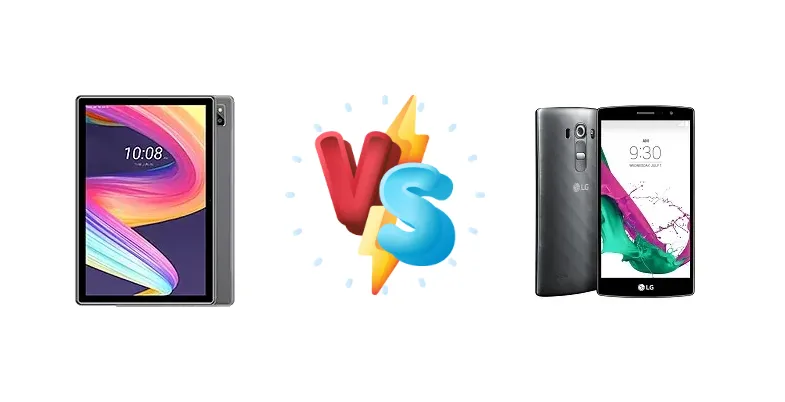
The HTC A103 and LG G4 Beat represent a bygone era of aggressively priced Android smartphones. While both devices aimed for affordability, they took different approaches to achieving it. The A103 leverages a newer, albeit entry-level, Mediatek chipset, while the G4 Beat relies on Qualcomm’s older Snapdragon 615. This comparison dissects their key differences to determine which offers the best value today.
🏆 Quick Verdict
For the average user seeking basic smartphone functionality, the LG G4 Beat edges out the HTC A103. The Snapdragon 615’s octa-core architecture, despite being built on a larger process node, provides a noticeable performance advantage in multi-tasking and moderately demanding applications, making it a more responsive daily driver.
| Network |
|---|
| 2G bands | GSM 850 / 900 / 1800 / 1900 | GSM 850 / 900 / 1800 / 1900 - SIM 1 & SIM 2 (dual-SIM model only) |
| 3G bands | HSDPA 900 / 2100 | HSDPA 850 / 900 / 1900 / 2100 |
| 4G bands | 1, 3, 5, 7, 8, 20, 38, 40, 41 | 1, 3, 5, 7, 8 |
| Speed | HSPA, LTE | HSPA 42.2/5.76 Mbps, LTE Cat4 150/50 Mbps |
| Technology | GSM / HSPA / LTE | GSM / HSPA / LTE |
| Launch |
|---|
| Announced | 2023, July | 2015, July. Released 2015, August |
| Status | Available. Released 2023, August | Discontinued |
| Body |
|---|
| Dimensions | 244 x 162.6 x 8.5 mm (9.61 x 6.40 x 0.33 in) | 142.7 x 72.6 x 9.9 mm (5.62 x 2.86 x 0.39 in) |
| SIM | Nano-SIM + Nano-SIM | Single SIM (Micro-SIM) or Dual SIM (Micro-SIM, dual stand-by) |
| Weight | 440 g (15.52 oz) | 139 g (4.90 oz) |
| Display |
|---|
| Resolution | 800 x 1280 pixels, 16:10 ratio (~149 ppi density) | 1080 x 1920 pixels, 16:9 ratio (~423 ppi density) |
| Size | 10.1 inches, 295.8 cm2 (~74.6% screen-to-body ratio) | 5.2 inches, 74.9 cm2 (~72.3% screen-to-body ratio) |
| Type | IPS LCD | IPS LCD |
| Platform |
|---|
| CPU | Quad-core 2.0 GHz Cortex-A53 | Octa-core (4x1.5 GHz Cortex-A53 & 4x1.0 GHz Cortex-A53) |
| Chipset | Mediatek MT6761B Helio A22 (12 nm) | Qualcomm MSM8939 Snapdragon 615 (28 nm) |
| GPU | PowerVR GE8320 | Adreno 405 |
| OS | Android 13 | Android 5.1.1 (Lollipop) |
| Memory |
|---|
| Card slot | microSDXC (uses shared SIM slot) | microSDHC (dedicated slot) |
| Internal | 64GB 4GB RAM | 8GB 1.5GB RAM |
| | - | eMMC 4.5 |
| Main Camera |
|---|
| Features | LED flash | Laser AF, color spectrum sensor, LED flash, HDR, panorama |
| Single | 5 MP | 8 MP
13 MP, AF (Latin America) |
| Video | 1080p | 1080p@30fps |
| Selfie camera |
|---|
| Single | 5 MP, f/2.2 | 5 MP |
| Video | 720p | - |
| Sound |
|---|
| 3.5mm jack | - | Yes |
| 35mm jack | Yes | Yes |
| Loudspeaker | Yes, with stereo speakers | Yes |
| Comms |
|---|
| Bluetooth | 5.0, A2DP, LE | 4.1, A2DP |
| NFC | No | Yes |
| Positioning | GPS, GLONASS | GPS, GLONASS |
| Radio | No | FM radio |
| USB | USB Type-C 2.0, OTG | microUSB 2.0 |
| WLAN | Wi-Fi 802.11 a/b/g/n/ac, dual-band | Wi-Fi 802.11 b/g/n, hotspot |
| Features |
|---|
| Sensors | Accelerometer, gyro | Accelerometer, proximity, compass |
| Battery |
|---|
| Charging | 10W wired | - |
| Stand-by | - | Up to 380 h (2G) / Up to 380 h (3G) |
| Talk time | - | Up to 15 h (2G) / Up to 14 h (3G) |
| Type | Li-Po 6000 mAh | Li-Ion 2300 mAh, removable |
| Misc |
|---|
| Colors | Gray, Silver | Metallic Gray, Ceramic White, Shiny Gold |
| Models | - | H735, H736 |
| Price | About 140 EUR | About 160 EUR |
HTC A103
- Slightly newer chipset (Helio A22)
- Potentially better power efficiency due to 12nm process
- Likely lower price point (depending on current market)
- Quad-core processor limits multitasking performance
- Older software support likely
- Potentially slower app loading times
LG G4 Beat
- Octa-core Snapdragon 615 offers better multitasking
- More responsive user experience
- Potentially better camera performance (speculative)
- Larger 28nm process node may lead to higher power consumption
- Older chipset architecture
- Software updates likely discontinued
Display Comparison
Neither HTC nor LG provided detailed display specifications for these models. Given their market positioning, both likely feature 720p LCD panels. However, the age difference suggests the G4 Beat may have slightly better color calibration out of the box. The A103’s newer manufacturing date *could* mean a slightly brighter panel, but this is speculative. Bezels are expected to be substantial on both devices, typical of phones in this price bracket.
Camera Comparison
Camera performance on both devices is expected to be basic. Neither phone is likely to excel in low-light conditions. The LG G4 Beat, being a slightly higher-tier device at launch, *may* have a marginally better main sensor, but without specific megapixel counts or aperture information, it’s difficult to say definitively. Both phones likely feature similar image processing capabilities, prioritizing basic scene detection and HDR. Any 2MP auxiliary cameras on either device are unlikely to provide meaningful image quality.
Performance
The core difference lies in the chipsets. The HTC A103’s Mediatek MT6761B Helio A22 is a quad-core processor built on a 12nm process. The LG G4 Beat’s Qualcomm Snapdragon 615, while fabricated on a larger 28nm node, boasts an octa-core configuration – four Cortex-A53 cores clocked at 1.5 GHz and four at 1.0 GHz. This architectural difference gives the G4 Beat a significant edge in multi-threaded tasks. While the A22’s newer process *should* offer better power efficiency, the Snapdragon 615’s extra cores compensate for the larger node, resulting in a more fluid user experience. The G4 Beat will likely handle web browsing and app switching more gracefully.
Battery Life
Battery capacity is not specified for either device. However, given the chipsets and target market, both likely house batteries in the 2500-3000 mAh range. The HTC A103’s 12nm process *could* offer slightly better battery life under light usage, but the Snapdragon 615’s more efficient octa-core architecture when handling multiple tasks could offset this advantage. Both phones support only 10W wired charging, meaning slow charging speeds are to be expected – a full charge will likely take several hours.
Buying Guide
Buy the HTC A103 if you prioritize a slightly newer chipset and are primarily focused on extremely basic tasks like calls, texts, and light social media use. Its 12nm process *should* translate to marginally better efficiency. Buy the LG G4 Beat if you value a smoother, more responsive user experience, especially when juggling multiple apps or browsing the web, and don't mind the older, less efficient manufacturing process.
Frequently Asked Questions
❓ Will the LG G4 Beat struggle with modern app updates due to its older chipset?
Yes, the Snapdragon 615 is several years old. While it can run older versions of Android and many common apps, newer app updates with increased system requirements may experience performance issues or incompatibility. The A103 faces similar challenges, but the G4 Beat is more likely to encounter problems.
❓ Is the 10W charging on either phone sufficient for daily use?
No, 10W charging is quite slow by today's standards. Expect a full charge to take several hours. It's best to charge these phones overnight to ensure they're ready for the next day. Neither device supports fast charging technologies.
❓ Can either of these phones handle basic mobile gaming?
Both phones can handle very basic 2D games. However, demanding 3D titles will likely experience significant lag and low frame rates. The Snapdragon 615 in the G4 Beat will offer a slightly better gaming experience, but don't expect anything beyond casual gaming.
❓ What about software updates and security patches for these older devices?
Software support for both the HTC A103 and LG G4 Beat has likely ended. You should not expect to receive any further Android version updates or security patches. This poses a security risk, so be cautious about using these phones for sensitive tasks like online banking.