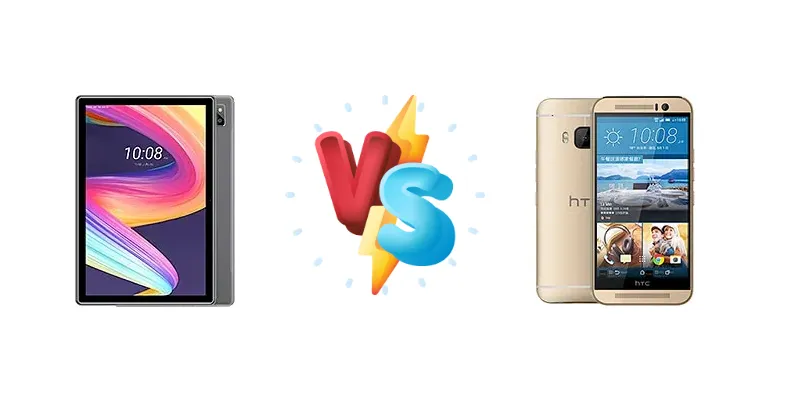
The HTC A103 and One M9 Prime Camera represent different eras of HTC's smartphone strategy. The A103 is a modern, ultra-budget device, while the M9 Prime Camera is an older model attempting to deliver a premium experience at a lower price point. This comparison dissects their core differences, focusing on performance, camera capabilities, and overall value.
🏆 Quick Verdict
For the average user, the HTC One M9 Prime Camera is the superior choice. Its Mediatek Helio X10 chipset delivers significantly faster processing speeds compared to the A103’s Helio A22, resulting in a smoother user experience and better app performance. While the A103 offers a more modern software experience, the performance gap is too large to ignore.
| Network |
|---|
| 2G bands | GSM 850 / 900 / 1800 / 1900 | GSM 850 / 900 / 1800 / 1900 |
| 3G bands | HSDPA 900 / 2100 | HSDPA 850 / 900 / 1900 / 2100 |
| 4G bands | 1, 3, 5, 7, 8, 20, 38, 40, 41 | 1, 3, 5, 7, 8, 20, 28, 38, 40, 41 |
| Speed | HSPA, LTE | HSPA 42.2/21.1 Mbps, LTE (2CA) Cat6 300/50 Mbps |
| Technology | GSM / HSPA / LTE | GSM / HSPA / LTE |
| Launch |
|---|
| Announced | 2023, July | 2016, May. Released 2016, May |
| Status | Available. Released 2023, August | Discontinued |
| Body |
|---|
| Dimensions | 244 x 162.6 x 8.5 mm (9.61 x 6.40 x 0.33 in) | 144.6 x 69.7 x 9.6 mm (5.69 x 2.74 x 0.38 in) |
| SIM | Nano-SIM + Nano-SIM | Nano-SIM |
| Weight | 440 g (15.52 oz) | 158 g (5.57 oz) |
| Display |
|---|
| Protection | - | Corning Gorilla Glass (unspecified version) |
| Resolution | 800 x 1280 pixels, 16:10 ratio (~149 ppi density) | 1080 x 1920 pixels, 16:9 ratio (~441 ppi density) |
| Size | 10.1 inches, 295.8 cm2 (~74.6% screen-to-body ratio) | 5.0 inches, 68.9 cm2 (~68.4% screen-to-body ratio) |
| Type | IPS LCD | Super LCD3 |
| Platform |
|---|
| CPU | Quad-core 2.0 GHz Cortex-A53 | Octa-core 2.2 GHz Cortex-A53 |
| Chipset | Mediatek MT6761B Helio A22 (12 nm) | Mediatek MT6795T Helio X10 (28 nm) |
| GPU | PowerVR GE8320 | PowerVR G6200 |
| OS | Android 13 | Android 5 (Lollipop), Sense UI 7 |
| Memory |
|---|
| Card slot | microSDXC (uses shared SIM slot) | microSDXC (dedicated slot) |
| Internal | 64GB 4GB RAM | 16GB 2GB RAM |
| | - | eMMC 5.0 |
| Main Camera |
|---|
| Features | LED flash | Dual-LED dual-tone flash, HDR, panorama |
| Single | 5 MP | 13 MP, f/2.0, 28mm (wide), AF, OIS |
| Video | 1080p | 1080p@30fps |
| Selfie camera |
|---|
| Features | - | HDR |
| Single | 5 MP, f/2.2 | 4 MP, f/2.0, 27mm (wide), 1/3", 2µm |
| Video | 720p | 1080p@30fps |
| Sound |
|---|
| 3.5mm jack | - | Yes |
| 35mm jack | Yes | Yes |
| Loudspeaker | Yes, with stereo speakers | Yes, with stereo speakers |
| | - | 24-bit/192kHz audio |
| Comms |
|---|
| Bluetooth | 5.0, A2DP, LE | 4.1, A2DP, aptX |
| NFC | No | Yes |
| Positioning | GPS, GLONASS | GPS, GLONASS, BDS |
| Radio | No | Stereo FM radio, RDS |
| USB | USB Type-C 2.0, OTG | microUSB 2.0 (MHL 3.0 TV-out), OTG |
| WLAN | Wi-Fi 802.11 a/b/g/n/ac, dual-band | Wi-Fi 802.11 a/b/g/n/ac, dual-band, Wi-Fi Direct, DLNA, hotspot |
| Features |
|---|
| Sensors | Accelerometer, gyro | Accelerometer, gyro, proximity, compass |
| Battery |
|---|
| Charging | 10W wired | - |
| Stand-by | - | Up to 587 h (2G) / Up to 658 h (3G) |
| Talk time | - | Up to 22 h (2G) / Up to 13 h (3G) |
| Type | Li-Po 6000 mAh | Li-Po 2840 mAh, non-removable |
| Misc |
|---|
| Colors | Gray, Silver | Gunmetal Gray, Gold, Silver/Gold |
| Models | - | One M9PLUS_Prime Cam |
| Price | About 140 EUR | About 250 EUR |
HTC A103
- More modern device with potential for longer software support.
- Potentially better battery life due to the more efficient 12nm chipset.
- Lower price point (likely).
- Significantly slower performance compared to the M9 Prime Camera.
- Likely lower-quality display.
- Basic camera capabilities.
HTC One M9 Prime Camera
- Faster processor for smoother performance and multitasking.
- Potentially better camera system due to the more capable chipset.
- May offer a more refined build quality.
- Older device with limited software update potential.
- Potentially shorter battery life.
- May be harder to find new.
Display Comparison
Display specifications are not provided for either device. However, given the A103’s budget positioning, it likely features a lower-resolution LCD panel. The M9 Prime Camera, aiming for a more premium feel, likely has a higher resolution display, potentially with improved color accuracy. The older manufacturing process of the M9 Prime Camera's chipset may have allowed for a more refined display panel at the time of its release.
Camera Comparison
The 'Prime Camera' moniker suggests a focus on photography for the M9, but details are scarce. It's reasonable to assume it features a higher-resolution main sensor than the A103, which typically features basic camera setups in this price bracket. The A103 likely relies heavily on software processing to enhance image quality, while the M9 Prime Camera may have benefited from a more capable ISP (Image Signal Processor) integrated within the Helio X10. Without specific sensor details, it’s difficult to definitively declare a winner, but the M9 Prime Camera’s chipset suggests a more robust camera system.
Performance
The core difference lies in the chipsets. The HTC One M9 Prime Camera’s Mediatek Helio X10 (MT6795T), built on a 28nm process, boasts an octa-core Cortex-A53 CPU clocked at 2.2 GHz. This contrasts sharply with the A103’s Mediatek Helio A22 (MT6761B) – a quad-core Cortex-A53 at 2.0 GHz fabricated on a more efficient 12nm node. While the 12nm process of the A22 offers better power efficiency, the sheer core count and higher clock speed of the X10 translate to significantly faster performance in CPU-intensive tasks. The X10’s architecture allows for quicker app launches and smoother multitasking, benefiting users who frequently switch between applications.
Battery Life
Battery capacity is not specified for either device. However, the A103’s 12nm chipset and less powerful CPU likely contribute to better battery life despite potentially having a smaller battery. The M9 Prime Camera, with its more demanding chipset, will likely require more frequent charging. The A103 supports 10W wired charging, a standard for its price point. The M9 Prime Camera’s charging speed is unknown, but likely similar or slightly faster given its older, potentially more optimized charging circuitry.
Buying Guide
Buy the HTC A103 if you prioritize a newer device with potential for longer software support and are primarily focused on basic tasks like calling, texting, and light social media use. Buy the HTC One M9 Prime Camera if you need a phone capable of handling more demanding applications, multitasking, and occasional gaming, and are willing to accept an older device with potentially limited software updates.
Frequently Asked Questions
❓ Will the HTC One M9 Prime Camera struggle with modern apps?
While the Helio X10 was a capable processor in its time, modern apps are increasingly demanding. Expect some slowdowns and longer loading times with resource-intensive applications, but it should handle most everyday tasks adequately. The A103 will struggle even more.
❓ Is the software experience on the HTC A103 significantly better being a newer device?
The A103 likely runs a more recent version of Android, offering potential security updates and newer features. However, HTC’s software support for both devices is limited, so the long-term software advantage of the A103 may be minimal. The performance benefits of the M9 Prime Camera outweigh the software advantage.
❓ Can the HTC One M9 Prime Camera handle basic gaming?
The Helio X10 can handle basic 2D and some 3D games at lower settings. However, demanding titles will likely experience frame rate drops and lag. The A103 will struggle even with less demanding games.