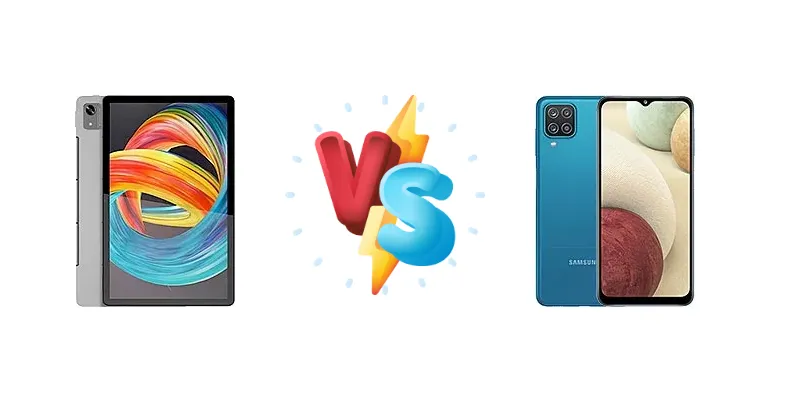
The HTC A102 and Samsung Galaxy A12 (India) represent compelling options in the sub-$150 smartphone market. While both aim for affordability, they take different approaches to achieving it. The A102 leverages MediaTek’s Helio G85 for a focus on gaming performance, while the A12 opts for Samsung’s in-house Exynos 850, prioritizing efficiency and a balanced user experience. This comparison dissects these choices to determine which device delivers the best value.
🏆 Quick Verdict
For users prioritizing raw performance and occasional gaming, the HTC A102 is the better choice thanks to its Helio G85 chipset. However, the Samsung Galaxy A12 (India) offers a more refined experience with its efficient Exynos 850 and potentially better software support, making it ideal for everyday tasks and longer battery life.
| Network |
|---|
| 2G bands | GSM 850 / 900 / 1800 / 1900 | GSM 850 / 900 / 1800 / 1900 |
| 3G bands | HSDPA 850 / 900 / 1700(AWS) / 1900 / 2100 | HSDPA 850 / 900 / 2100 |
| 4G bands | 1, 2, 3, 4, 5, 7, 8, 20, 38, 39, 40, 41 | 1, 3, 5, 7, 8, 20, 28, 38, 40, 41 |
| Speed | HSPA, LTE | HSPA 42.2/5.76 Mbps, LTE Cat4 150/50 Mbps |
| Technology | GSM / CDMA / HSPA / CDMA2000 / LTE | GSM / HSPA / LTE |
| Launch |
|---|
| Announced | 2023, July 13 | 2021, August 12 |
| Status | Available. Released 2023, August | Available. Released 2021, August 12 |
| Body |
|---|
| Build | - | Glass front, plastic back, plastic frame |
| Dimensions | 257.9 x 162.5 x 7.9 mm (10.15 x 6.40 x 0.31 in) | 164 x 75.8 x 8.9 mm (6.46 x 2.98 x 0.35 in) |
| SIM | Nano-SIM + Nano-SIM | · Nano-SIM· Nano-SIM + Nano-SIM |
| Weight | 533 g (1.18 lb) | 205 g (7.23 oz) |
| Display |
|---|
| Resolution | 1200 x 2000 pixels, 5:3 ratio (~212 ppi density) | 720 x 1600 pixels, 20:9 ratio (~270 ppi density) |
| Size | 11.0 inches, 344.4 cm2 (~82.2% screen-to-body ratio) | 6.5 inches, 102.0 cm2 (~82.1% screen-to-body ratio) |
| Type | IPS LCD | PLS LCD |
| Platform |
|---|
| CPU | Octa-core (2x2.0 GHz Cortex-A75 & 6x1.8 GHz Cortex-A55) | Octa-core (4x2.0 GHz Cortex-A55 & 4x2.0 GHz Cortex-A55) |
| Chipset | Mediatek MT6769 Helio G85 (12 nm) | Exynos 850 (8 nm) |
| GPU | Mali-G52 MC2 | Mali-G52 |
| OS | Android 12 | Android 11, upgradable to Android 13, One UI 5.1 |
| Memory |
|---|
| Card slot | microSDXC (uses shared SIM slot) | microSDXC (dedicated slot) |
| Internal | 128GB 8GB RAM | 64GB 4GB RAM, 128GB 4GB RAM, 128GB 6GB RAM |
| | - | eMMC 5.1 |
| Main Camera |
|---|
| Features | LED flash | LED flash, panorama, HDR |
| Quad | - | 48 MP, f/2.0, 26mm (wide), AF
5 MP, f/2.2, 123˚ (ultrawide)
2 MP (macro)
Auxiliary lens |
| Single | 20 MP, f/2.2, AF | - |
| Video | 1080p | 1080p@30fps |
| Selfie camera |
|---|
| Single | 8 MP, f/2.2 | 8 MP, f/2.2 |
| Video | 720p | 1080p@30fps |
| Sound |
|---|
| 3.5mm jack | - | Yes |
| 35mm jack | No | Yes |
| Loudspeaker | Yes | Yes |
| Comms |
|---|
| Bluetooth | 5.0, A2DP, LE | 5.0, A2DP, LE |
| NFC | No | No |
| Positioning | GPS, GLONASS, GALILEO | GPS, GLONASS, GALILEO, BDS |
| Radio | No | FM radio, RDS, recording |
| USB | USB Type-C 2.0, OTG, magnetic connector | USB Type-C 2.0 |
| WLAN | Wi-Fi 802.11 a/b/g/n/ac, dual-band | Wi-Fi 802.11 b/g/n, Wi-Fi Direct |
| Features |
|---|
| Sensors | Accelerometer, gyro, proximity | Fingerprint (side-mounted), accelerometer |
| | - | Virtual proximity sensing |
| Battery |
|---|
| Charging | 18W wired | 15W wired |
| Type | Li-Po 8000 mAh | Li-Po 5000 mAh |
| Misc |
|---|
| Colors | Gray | Black, Blue, White |
| Models | - | SM-A127F, SM-A127F/DS |
| Price | About 170 EUR | About 160 EUR |
| SAR | - | 0.79 W/kg (head) |
HTC A102
- More powerful CPU for gaming and multitasking
- Faster 18W wired charging
- Potentially better value for performance-focused users
- Less power-efficient chipset
- Potential for thermal throttling during extended gaming
- Likely shorter battery life compared to the A12
Samsung Galaxy A12 (India)
- More power-efficient Exynos 850 chipset
- Likely longer battery life
- Samsung’s brand reputation and software support
- Less powerful CPU compared to the Helio G85
- Slower 15W wired charging
- May struggle with demanding games
Display Comparison
Neither device boasts a standout display. Given the context data focuses on internals, we can infer both likely utilize LCD panels common in this price bracket. The key difference lies in the chipsets powering the displays; the Exynos 850’s more efficient architecture *could* translate to slightly better battery life while viewing content, but this is speculative. Bezels are likely comparable, and color accuracy will be standard for the segment.
Camera Comparison
Without detailed camera specs, a direct comparison is difficult. However, both phones likely feature a primary camera supplemented by macro and depth sensors. The A12’s image processing, typical of Samsung, will likely prioritize vibrant colors and contrast. The A102’s camera performance will depend heavily on the sensor used, but the G85’s ISP (Image Signal Processor) is capable of decent image processing. Given the price point, expecting flagship-level camera quality from either device is unrealistic. The usefulness of the 2MP macro cameras on both devices is questionable, offering limited detail and resolution.
Performance
The core difference lies in the chipset architecture. The HTC A102’s MediaTek Helio G85 features two Cortex-A75 cores clocked at 2.0 GHz, paired with six Cortex-A55 cores. This configuration provides a noticeable performance boost in CPU-intensive tasks and gaming compared to the Samsung Galaxy A12’s Exynos 850, which utilizes eight Cortex-A55 cores all clocked at 2.0 GHz. While the A12 has more cores, the A75 cores in the A102 offer significantly higher single-core performance. The Helio G85’s 12nm process, however, is less efficient than the Exynos 850’s 8nm process, potentially leading to more heat generation under sustained load. This means the A102 might exhibit some throttling during extended gaming sessions, while the A12 will maintain consistent performance for longer.
Battery Life
The Samsung Galaxy A12’s 15W charging is slower than the HTC A102’s 18W charging. However, the Exynos 850’s superior power efficiency means the A12 will likely achieve a longer battery life on a single charge. While the A102 might charge slightly faster, the A12’s more efficient chipset will offset the charging speed difference with extended usage. The actual 0-100% charge times will depend on the battery capacity of each device (not provided), but the A12’s efficiency is a significant advantage.
Buying Guide
Buy the HTC A102 if you need a phone capable of handling moderate gaming sessions and demand the most processing power for the price. You’ll benefit from the G85’s Cortex-A75 cores. Buy the Samsung Galaxy A12 (India) if you prioritize all-day battery life, a smoother experience for everyday apps, and the reliability of the Samsung brand. The Exynos 850 excels at power efficiency, making it a better fit for less demanding users.
Frequently Asked Questions
❓ Does the Helio G85 in the HTC A102 overheat during prolonged gaming sessions like PUBG?
The Helio G85 is known to generate more heat than the Exynos 850. While it offers better performance, you may experience some thermal throttling after 30-45 minutes of intensive gaming like PUBG. This will result in a slight drop in frame rates to manage temperatures.
❓ Is the 15W charging on the Samsung Galaxy A12 (India) significantly slower than the 18W charging on the HTC A102?
While 18W is technically faster, the Exynos 850’s efficiency means the A12 spends less time plugged in overall. The difference in 0-100% charge time will be noticeable, but the A12’s longer battery life will likely offset this for most users.
❓ Will the Exynos 850 in the Samsung Galaxy A12 struggle with demanding apps or multitasking?
The Exynos 850 is well-suited for everyday tasks like browsing, social media, and streaming. However, it may exhibit some lag when running multiple demanding apps simultaneously or switching between them rapidly. It's not designed for heavy multitasking.
❓ How does the software experience differ between the HTC A102 and the Samsung Galaxy A12 (India)?
Samsung’s One UI is generally considered more polished and feature-rich than the software experience on HTC devices. Samsung also typically provides longer software support with more frequent updates, which is a significant advantage.