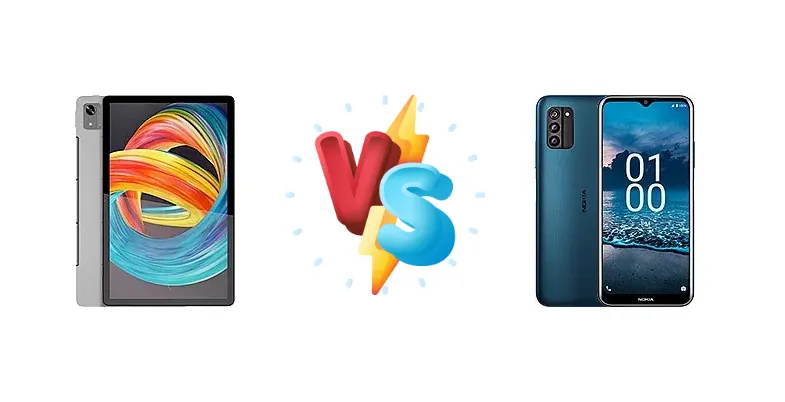
The HTC A102 and Nokia G100 represent two approaches to the ultra-budget smartphone market. The A102 leverages Mediatek’s Helio G85, a chip focused on gaming at a low price point, while the Nokia G100 opts for Qualcomm’s Snapdragon 662, prioritizing efficiency and a balanced experience. This comparison dissects the core differences between these two SoCs and their impact on daily usage.
🏆 Quick Verdict
For the average user prioritizing consistent performance and efficiency, the Nokia G100 with its Snapdragon 662 is the better choice. While the HTC A102’s Helio G85 offers a slight edge in raw GPU power, the Snapdragon 662’s more refined architecture and 11nm process provide a smoother, more reliable experience.
| Network |
|---|
| 2G bands | GSM 850 / 900 / 1800 / 1900 | GSM 850 / 900 / 1800 / 1900 |
| 3G bands | HSDPA 850 / 900 / 1700(AWS) / 1900 / 2100 | HSDPA 850 / 1700(AWS) / 1900 |
| 4G bands | 1, 2, 3, 4, 5, 7, 8, 20, 38, 39, 40, 41 | 2, 4, 5, 7, 12, 13, 17, 44, 66, 71 |
| Speed | HSPA, LTE | HSPA, LTE |
| Technology | GSM / CDMA / HSPA / CDMA2000 / LTE | GSM / HSPA / LTE |
| Launch |
|---|
| Announced | 2023, July 13 | 2022, September 22 |
| Status | Available. Released 2023, August | Available. Released 2022, October |
| Body |
|---|
| Build | - | Glass front, plastic frame, plastic back |
| Dimensions | 257.9 x 162.5 x 7.9 mm (10.15 x 6.40 x 0.31 in) | 166.6 x 76.7 x 8.9 mm (6.56 x 3.02 x 0.35 in) |
| SIM | Nano-SIM + Nano-SIM | Nano-SIM |
| Weight | 533 g (1.18 lb) | 195.1 g (6.88 oz) |
| Display |
|---|
| Resolution | 1200 x 2000 pixels, 5:3 ratio (~212 ppi density) | 720 x 1600 pixels, 20:9 ratio (~269 ppi density) |
| Size | 11.0 inches, 344.4 cm2 (~82.2% screen-to-body ratio) | 6.52 inches, 102.6 cm2 (~80.3% screen-to-body ratio) |
| Type | IPS LCD | IPS LCD |
| Platform |
|---|
| CPU | Octa-core (2x2.0 GHz Cortex-A75 & 6x1.8 GHz Cortex-A55) | Octa-core (4x2.0 GHz Kryo 260 Gold & 4x1.8 GHz Kryo 260 Silver) |
| Chipset | Mediatek MT6769 Helio G85 (12 nm) | Qualcomm SM6115 Snapdragon 662 (11 nm) |
| GPU | Mali-G52 MC2 | Adreno 610 |
| OS | Android 12 | Android 12 |
| Memory |
|---|
| Card slot | microSDXC (uses shared SIM slot) | microSDXC |
| Internal | 128GB 8GB RAM | 32GB 3GB RAM, 128GB 4GB RAM |
| Main Camera |
|---|
| Features | LED flash | LED flash, HDR, panorama |
| Single | 20 MP, f/2.2, AF | - |
| Triple | - | 13 MP, f/1.8, (wide), AF
5 MP, f/2.2, 115˚ (ultrawide), 1/5.0"
Auxiliary lens |
| Video | 1080p | 1080p@30fps |
| Selfie camera |
|---|
| Single | 8 MP, f/2.2 | 8 MP, f/2.0, (wide), 1/4.0", 1.12µm |
| Video | 720p | 1080p@30fps |
| Sound |
|---|
| 35mm jack | No | Yes |
| Loudspeaker | Yes | Yes |
| Comms |
|---|
| Bluetooth | 5.0, A2DP, LE | 5.0, A2DP, LE |
| NFC | No | No |
| Positioning | GPS, GLONASS, GALILEO | GPS |
| Radio | No | FM radio |
| USB | USB Type-C 2.0, OTG, magnetic connector | USB Type-C 2.0, OTG |
| WLAN | Wi-Fi 802.11 a/b/g/n/ac, dual-band | Wi-Fi 802.11 b/g/n/ac, dual-band |
| Features |
|---|
| Sensors | Accelerometer, gyro, proximity | Fingerprint (side-mounted), accelerometer, gyro, proximity, barometer |
| Battery |
|---|
| Charging | 18W wired | 15W wired |
| Type | Li-Po 8000 mAh | Li-Po 5000 mAh |
| Misc |
|---|
| Colors | Gray | Nordic Blue |
| Price | About 170 EUR | About 60 EUR |
HTC A102
- Potentially faster charging with 18W support
- Slightly more powerful GPU for casual gaming
- Helio G85 offers a performance boost over entry-level chipsets
- 12nm process leads to higher heat generation
- Potential for thermal throttling during extended gaming
- Mediatek’s software support is historically less consistent than Qualcomm’s
Nokia G100
- More efficient Snapdragon 662 chipset (11nm)
- Better thermal management for sustained performance
- Qualcomm’s generally superior ISP for image processing
- Likely longer battery life due to efficiency
- Slower 15W charging
- Slightly less GPU power compared to the Helio G85
- May not be ideal for demanding mobile games
Display Comparison
Neither device’s display specifications are provided, so a direct comparison is impossible. However, given their price points, both likely utilize LCD panels with 720p or 1080p resolution. The choice will likely come down to color accuracy and brightness, which are not specified. Users should prioritize in-person viewing if possible.
Camera Comparison
Without camera specifications beyond the presence of sensors, a detailed comparison is limited. Both phones likely feature a multi-camera setup with a primary sensor and auxiliary lenses. The image processing capabilities of the Snapdragon 662’s ISP are generally considered more refined, potentially leading to better dynamic range and color accuracy in photos. The G85’s ISP is adequate, but may struggle in challenging lighting conditions.
Performance
The core difference lies in the chipsets. The HTC A102’s Mediatek Helio G85 (12nm) features a CPU with 2x 2.0 GHz Cortex-A75 cores and 6x 1.8 GHz Cortex-A55 cores. The Nokia G100’s Qualcomm Snapdragon 662 (11nm) uses 4x 2.0 GHz Kryo 260 Gold cores and 4x 1.8 GHz Kryo 260 Silver cores. The Snapdragon 662’s 11nm process gives it an efficiency advantage over the G85’s 12nm node, meaning less heat generation under sustained load. While the A75 cores in the G85 are individually more powerful than the Kryo 260 Gold cores, the Snapdragon 662’s architecture is more balanced, leading to smoother multitasking. The G85 will likely show a slight advantage in GPU-intensive tasks, but the 662’s overall stability is preferable.
Battery Life
The HTC A102 supports 18W wired charging, while the Nokia G100 is limited to 15W. This suggests the A102 *could* charge slightly faster, assuming comparable battery capacities (which are not provided). However, the Snapdragon 662’s superior power efficiency will likely translate to longer battery life during typical usage, offsetting the slower charging speed. The 11nm process contributes significantly to this efficiency.
Buying Guide
Buy the HTC A102 if you are a casual gamer who prioritizes occasional bursts of higher frame rates in less demanding titles and are willing to accept potential thermal throttling. Buy the Nokia G100 if you value consistent performance across all tasks, longer battery life, and a more stable user experience for everyday use like browsing, social media, and video streaming.
Frequently Asked Questions
❓ Will the HTC A102’s Helio G85 overheat during prolonged gaming sessions?
The Helio G85 is known to generate more heat than the Snapdragon 662. While it can handle casual gaming, extended sessions with graphically demanding titles are likely to cause thermal throttling, reducing performance to prevent overheating. The 12nm process is less efficient than the Snapdragon’s 11nm node.
❓ Is the Snapdragon 662 in the Nokia G100 powerful enough for modern mobile games?
The Snapdragon 662 can handle many modern mobile games at medium settings. However, it’s not a gaming powerhouse. Demanding titles may require lower graphics settings to maintain a smooth frame rate. It prioritizes stability and efficiency over raw graphical power.
❓ Which phone is better for everyday tasks like browsing and social media?
The Nokia G100 is better suited for everyday tasks. The Snapdragon 662’s efficient architecture ensures smooth multitasking and responsiveness, even with multiple apps open. The Helio G85, while capable, may exhibit occasional lag or stuttering under heavy load.