
HTC A102 vs. Motorola Moto G Power (2021): A Detailed Performance and Battery Life Showdown
| Phones Images | |||||
|---|---|---|---|---|---|
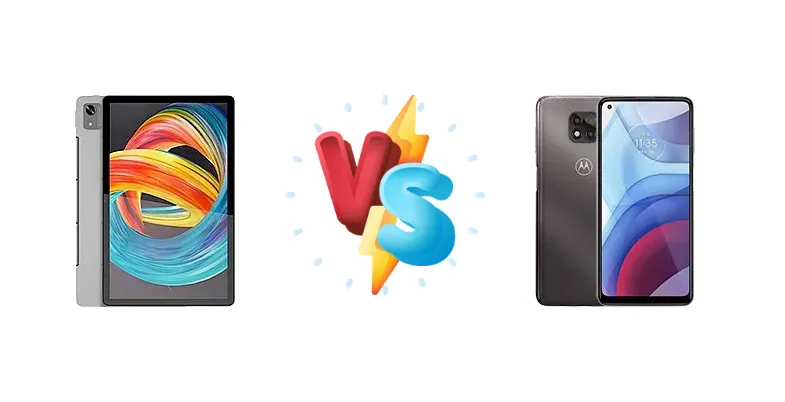
|
🏆 Quick Verdict
For the average user prioritizing all-day battery life and a consistently smooth experience, the Motorola Moto G Power (2021) is the better choice. While the HTC A102’s Helio G85 offers a slight theoretical CPU performance edge, the Snapdragon 662’s efficiency and Qualcomm’s software optimizations provide a more refined user experience.
| PHONES | ||
|---|---|---|
| Phone Names | HTC A102 | Motorola Moto G Power (2021) |
| Network | ||
|---|---|---|
| 2G bands | GSM 850 / 900 / 1800 / 1900 | GSM 850 / 900 / 1800 / 1900 |
| 3G bands | HSDPA 850 / 900 / 1700(AWS) / 1900 / 2100 | HSDPA 850 / 900 / 1700(AWS) / 1900 / 2100 |
| 4G bands | 1, 2, 3, 4, 5, 7, 8, 20, 38, 39, 40, 41 | 1, 2, 3, 4, 5, 7, 8, 12, 13, 14, 17, 25, 26, 29, 30, 38, 41, 66, 71 |
| Speed | HSPA, LTE | HSPA, LTE |
| Technology | GSM / CDMA / HSPA / CDMA2000 / LTE | GSM / CDMA / HSPA / EVDO / LTE |
| - | CDMA2000 1xEV-DO | |
| Launch | ||
|---|---|---|
| Announced | 2023, July 13 | 2021, January 08 |
| Status | Available. Released 2023, August | Available. Released 2021, January 14 |
| Body | ||
|---|---|---|
| Build | - | Glass front, plastic back, plastic frame |
| Dimensions | 257.9 x 162.5 x 7.9 mm (10.15 x 6.40 x 0.31 in) | 165.3 x 75.9 x 9.5 mm (6.51 x 2.99 x 0.37 in) |
| SIM | Nano-SIM + Nano-SIM | Nano-SIM |
| Weight | 533 g (1.18 lb) | 206.5 g (7.30 oz) |
| - | Water-repellent coating | |
| Display | ||
|---|---|---|
| Resolution | 1200 x 2000 pixels, 5:3 ratio (~212 ppi density) | 720 x 1600 pixels, 20:9 ratio (~266 ppi density) |
| Size | 11.0 inches, 344.4 cm2 (~82.2% screen-to-body ratio) | 6.6 inches, 105.2 cm2 (~83.8% screen-to-body ratio) |
| Type | IPS LCD | IPS LCD |
| Platform | ||
|---|---|---|
| CPU | Octa-core (2x2.0 GHz Cortex-A75 & 6x1.8 GHz Cortex-A55) | Octa-core (4x2.0 GHz Kryo 260 Gold & 4x1.8 GHz Kryo 260 Silver) |
| Chipset | Mediatek MT6769 Helio G85 (12 nm) | Qualcomm SM6115 Snapdragon 662 (11 nm) |
| GPU | Mali-G52 MC2 | Adreno 610 |
| OS | Android 12 | Android 10 |
| Memory | ||
|---|---|---|
| Card slot | microSDXC (uses shared SIM slot) | microSDXC (dedicated slot) |
| Internal | 128GB 8GB RAM | 32GB 3GB RAM, 64GB 4GB RAM |
| - | eMMC 5.1 | |
| Main Camera | ||
|---|---|---|
| Features | LED flash | LED flash, HDR, panorama |
| Single | 20 MP, f/2.2, AF | - |
| Triple | - | 48 MP, f/1.7, (wide), 1/2.0", 0.8µm, PDAF 2 MP (macro) Auxiliary lens |
| Video | 1080p | 1080p@30/60fps, gyro-EIS |
| Selfie camera | ||
|---|---|---|
| Features | - | HDR |
| Single | 8 MP, f/2.2 | 8 MP, f/2.0, 1.12µm |
| Video | 720p | 1080p@30fps, gyro-EIS |
| Sound | ||
|---|---|---|
| 3.5mm jack | - | Yes |
| 35mm jack | No | Yes |
| Loudspeaker | Yes | Yes |
| Comms | ||
|---|---|---|
| Bluetooth | 5.0, A2DP, LE | 5.0, A2DP, LE |
| NFC | No | No |
| Positioning | GPS, GLONASS, GALILEO | GPS, GLONASS, GALILEO |
| Radio | No | FM radio |
| USB | USB Type-C 2.0, OTG, magnetic connector | USB Type-C 2.0 |
| WLAN | Wi-Fi 802.11 a/b/g/n/ac, dual-band | Wi-Fi 802.11 a/b/g/n/ac, dual-band, Wi-Fi Direct |
| Features | ||
|---|---|---|
| Sensors | Accelerometer, gyro, proximity | Fingerprint (side-mounted), accelerometer, gyro, proximity, compass, barometer |
| Battery | ||
|---|---|---|
| Charging | 18W wired | 15W wired |
| Type | Li-Po 8000 mAh | Li-Po 5000 mAh |
| Misc | ||
|---|---|---|
| Colors | Gray | Flash Gray, Polar Silver |
| Price | About 170 EUR | About 60 EUR |
HTC A102
- Potentially faster CPU performance for demanding tasks.
- Slightly faster wired charging (18W vs 15W).
- May offer more RAM options (depending on configuration).
- Likely shorter battery life due to less efficient chipset.
- Mediatek chipsets often receive fewer software updates.
- Potential for more thermal throttling under sustained load.
Motorola Moto G Power (2021)
- Exceptional battery life thanks to Snapdragon 662 efficiency.
- Smoother, more consistent performance due to software optimization.
- Qualcomm chipset generally receives more timely updates.
- Slower wired charging (15W).
- CPU performance slightly lower than the HTC A102.
- May have less RAM in base configurations.
Display Comparison
Neither device boasts a standout display. Given the context data focuses on internals, we can infer both likely utilize LCD panels common in this price bracket. The absence of refresh rate specifications suggests both operate at the standard 60Hz. Bezels are likely comparable, reflecting the budget nature of both phones. Color accuracy will likely be standard for the segment, prioritizing power efficiency over color gamut coverage.
Camera Comparison
Without detailed camera specifications, a direct comparison is limited. However, it’s safe to assume both phones feature multi-camera setups geared towards versatility rather than exceptional image quality. The inclusion of a 2MP macro lens on either device is likely a marketing feature with limited practical benefit. The Snapdragon 662’s image signal processor (ISP) generally offers better image processing capabilities, potentially resulting in more detailed and accurate photos, especially in challenging lighting conditions. Sensor size is the critical factor, and without that data, it's difficult to definitively declare a winner.
Performance
The HTC A102’s Mediatek Helio G85 (12nm) and the Motorola Moto G Power (2021)’s Qualcomm Snapdragon 662 (11nm) represent a key battleground. While the Helio G85 features two Cortex-A75 cores clocked at 2.0 GHz alongside six A55 cores, the Snapdragon 662 utilizes four Kryo 260 Gold cores at the same clock speed and four Kryo 260 Silver cores. The Snapdragon 662’s 11nm process node offers a slight efficiency advantage, potentially leading to better sustained performance and thermal management. The Snapdragon’s optimized software integration with Motorola’s near-stock Android further enhances its real-world responsiveness. The A102’s GPU performance will likely be slightly higher, but the Snapdragon 662’s overall system-level optimization provides a smoother experience.
Battery Life
The Motorola Moto G Power (2021) is named appropriately. While the exact battery capacity isn’t provided, Motorola’s ‘Power’ branding historically signifies a large battery. The 15W charging, while slower than the HTC A102’s 18W, is less critical given the likely larger battery capacity. The Snapdragon 662’s superior power efficiency further contributes to longer battery life. The HTC A102’s 18W charging will offer slightly faster top-ups, but the overall runtime will likely be shorter due to the Helio G85’s higher power consumption.
Buying Guide
Buy the HTC A102 if you need a phone with a slightly more powerful processor for occasional gaming or demanding apps, and are willing to compromise on battery longevity. Buy the Motorola Moto G Power (2021) if you prioritize exceptional battery life, a stable software experience, and consistent performance for everyday tasks like browsing, social media, and communication.