
HTC A101 vs. Samsung Galaxy A32 5G: A Deep Dive into Budget 5G
| Phones Images | |||||
|---|---|---|---|---|---|
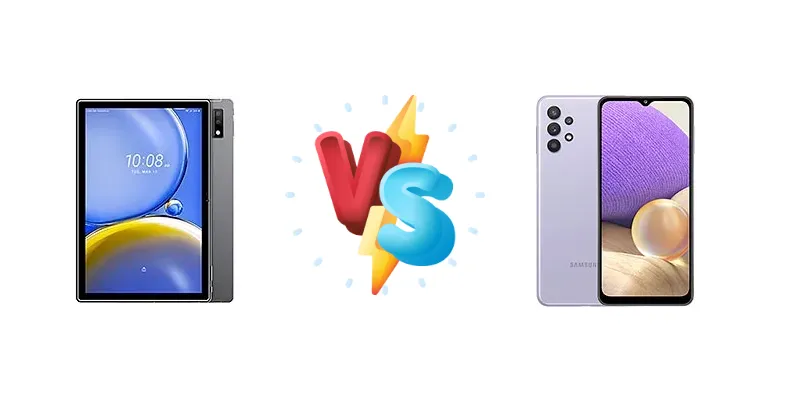
|
🏆 Quick Verdict
For most users, the Samsung Galaxy A32 5G emerges as the better choice. Its Mediatek Dimensity 720 chipset, fabricated on a more efficient 7nm process, provides a noticeable performance advantage, and the slightly faster 15W charging is a welcome addition. While both phones offer similar battery endurance, the A32 5G’s display is measurably brighter.
| PHONES | ||
|---|---|---|
| Phone Names | HTC A101 | Samsung Galaxy A32 5G |
| Network | ||
|---|---|---|
| 2G bands | GSM 850 / 900 / 1800 / 1900 | GSM 850 / 900 / 1800 / 1900 |
| 3G bands | HSDPA 850 / 900 / 1700(AWS) / 1900 / 2100 | HSDPA 850 / 900 / 1900 / 2100 |
| 4G bands | 1, 2, 3, 4, 5, 7, 8, 20, 38, 39, 40, 41 | 1, 2, 3, 4, 5, 7, 8, 12, 17, 20, 26, 28, 38, 40, 41, 66 |
| 5G bands | - | 1, 3, 5, 7, 8, 20, 28, 38, 40, 41, 66, 78, 79 SA/NSA/Sub6 |
| Speed | HSPA, LTE | HSPA 42.2/5.76 Mbps, LTE Cat16 1024/75 Mbps, 5G |
| Technology | GSM / CDMA / HSPA / CDMA2000 / LTE | GSM / CDMA / HSPA / LTE / 5G |
| - | 25, 41, 66, 71 SA/NSA/Sub6 - SM-A326U | |
| Launch | ||
|---|---|---|
| Announced | 2022, July 04 | 2021, January 13 |
| Status | Available. Released 2022, August | Available. Released 2021, January 22 |
| Body | ||
|---|---|---|
| Build | - | Glass front (Gorilla Glass 5), plastic frame, plastic back |
| Dimensions | 241.5 x 160.3 x 8.4 mm (9.51 x 6.31 x 0.33 in) | 164.2 x 76.1 x 9.1 mm (6.46 x 3.00 x 0.36 in) |
| SIM | Nano-SIM + Nano-SIM | · Nano-SIM· Nano-SIM + Nano-SIM |
| Weight | 530 g (1.17 lb) | 205 g (7.23 oz) |
| Display | ||
|---|---|---|
| Protection | - | Corning Gorilla Glass 5 |
| Resolution | 1200 x 1920 pixels, 16:10 ratio (~224 ppi density) | 720 x 1600 pixels, 20:9 ratio (~270 ppi density) |
| Size | 10.1 inches, 295.8 cm2 (~76.4% screen-to-body ratio) | 6.5 inches, 102.0 cm2 (~81.6% screen-to-body ratio) |
| Type | IPS LCD | TFT LCD, 60Hz (International), 90Hz (SM-A326U, SM-326DL only) |
| Platform | ||
|---|---|---|
| CPU | Octa-core (2x2.0 GHz Cortex-A75 & 6x2.0 GHz Cortex-A55) | Octa-core (2x2.0 GHz Cortex-A76 & 6x2.0 GHz Cortex-A55) |
| Chipset | Unisoc Tiger T618 (12 nm) | Mediatek Dimensity 720 (7 nm) |
| GPU | Mali G52 MP2 | Mali-G57 MC3 |
| OS | Android 11 | Android 11, upgradable to Android 13, One UI 5 |
| Memory | ||
|---|---|---|
| Card slot | microSDXC (uses shared SIM slot) | microSDXC (uses shared SIM slot) |
| Internal | 128GB 8GB RAM | 64GB 4GB RAM, 128GB 4GB RAM, 128GB 6GB RAM, 128GB 8GB RAM |
| Main Camera | ||
|---|---|---|
| Dual | 16 MP, f/2.2, (wide), AF 2 MP, f/2.2, (ultrawide) | - |
| Features | LED flash | LED flash, panorama, HDR |
| Quad | - | 48 MP, f/1.8, 26mm (wide), 1/2.0", 0.8µm, PDAF 8 MP, f/2.2, 123˚, (ultrawide), 1/4.0", 1.12µm 5 MP (macro) Auxiliary lens |
| Video | 1080p | 4K@30fps, 1080p@30/120fps |
| Selfie camera | ||
|---|---|---|
| Single | 5 MP, f/2.2 | 13 MP, f/2.2, (wide), 1/3.1", 1.12µm |
| Video | 720p | 1080p@30fps |
| Sound | ||
|---|---|---|
| 3.5mm jack | - | Yes |
| 35mm jack | Yes | Yes |
| Loudspeaker | Yes, with stereo speakers | Yes |
| Comms | ||
|---|---|---|
| Bluetooth | 5.0, A2DP, LE | 5.0, A2DP, LE |
| NFC | No | Yes (market/region dependent) |
| Positioning | GPS, GLONASS, GALILEO | GPS, GLONASS, GALILEO, BDS |
| Radio | No | FM radio |
| USB | USB Type-C 2.0, OTG, magnetic connector | USB Type-C 2.0, OTG |
| WLAN | Wi-Fi 802.11 a/b/g/n/ac, dual-band | Wi-Fi 802.11 a/b/g/n/ac, dual-band, Wi-Fi Direct |
| Features | ||
|---|---|---|
| Sensors | Accelerometer, gyro, proximity | Fingerprint (side-mounted), accelerometer, gyro, compass |
| - | Virtual proximity sensing | |
| Battery | ||
|---|---|---|
| Charging | 10W wired | 15W wired |
| Type | Li-Po 7000 mAh | Li-Ion 5000 mAh |
| Misc | ||
|---|---|---|
| Colors | Gray, Silver | Awesome Black, Awesome White, Awesome Blue, Awesome Violet |
| Models | - | SM-A326B, SM-A326B/DS, SM-A326BR/DS, SM-A326BR, SM-A326U, SM-A326W, SM-A326U1, SM-A326K, SCG08, SM-S326DL |
| Price | About 300 EUR | € 111.89 / $ 78.64 / £ 77.53 |
| SAR EU | - | 0.33 W/kg (head) 1.08 W/kg (body) |
| Tests | ||
|---|---|---|
| Battery life | - | Endurance rating 123h |
| Camera | - | Photo / Video |
| Display | - | Contrast ratio: 1470:1 (nominal) |
| Loudspeaker | - | -28.5 LUFS (Average) |
| Performance | - | AnTuTu: 226561 (v8) GeekBench: 1673 (v5.1) |
HTC A101
- Extremely affordable price point
- 5G connectivity
- Simple, uncluttered software experience
- Less powerful Unisoc chipset
- Slower 10W charging
- Display brightness likely lower than A32 5G
Samsung Galaxy A32 5G
- More powerful Mediatek Dimensity 720 chipset
- Brighter display for better outdoor visibility
- Faster 15W charging
- Slightly higher price
- Samsung’s One UI can be resource-intensive
- Potential for bloatware
Display Comparison
The Samsung Galaxy A32 5G boasts a brighter display, reaching 497 nits compared to the A101’s unspecified brightness. Both displays share a similar contrast ratio around 1470:1 to 1490:1, suggesting comparable color reproduction. However, the higher peak brightness of the A32 5G translates to better outdoor visibility, a crucial advantage for users frequently exposed to sunlight. While both are LCD panels, the A32 5G’s superior brightness makes it the more comfortable option for extended viewing.
Camera Comparison
Both devices feature 'Photo / Video' capabilities, but lack detailed camera specifications. Without sensor size or aperture information, a direct comparison is difficult. However, Samsung’s image processing algorithms are generally more refined, potentially leading to better image quality in various lighting conditions. The inclusion of a 2MP macro camera on the A32 5G is unlikely to significantly impact overall camera performance, serving more as a marketing feature than a practical tool. The A32 5G likely benefits from Samsung’s software optimizations.
Performance
The core difference lies in the chipsets. The Samsung Galaxy A32 5G’s Mediatek Dimensity 720, built on a 7nm process, offers a clear advantage over the HTC A101’s Unisoc Tiger T618 (12nm). The 7nm node allows for greater transistor density and improved power efficiency, resulting in better sustained performance and reduced thermal throttling. Both CPUs feature a similar core configuration – 2x Cortex-A76/A75 and 6x Cortex-A55 – but the Dimensity 720’s architecture and fabrication process give it an edge in real-world applications. The A32 5G will handle multitasking and moderately demanding apps with greater ease.
Battery Life
Both the HTC A101 and Samsung Galaxy A32 5G achieve an endurance rating of 123 hours, indicating similar battery life under typical usage. However, the A32 5G supports 15W wired charging, while the A101 is limited to 10W. This translates to faster charging times for the A32 5G, reducing downtime and offering greater convenience. While the battery capacity isn’t specified for either device, the more efficient chipset in the A32 5G likely contributes to its comparable endurance despite the faster charging.
Buying Guide
Buy the HTC A101 if your primary need is a functional, extremely affordable 5G device and you prioritize minimal software overhead. You'll be content with basic tasks and light usage. Buy the Samsung Galaxy A32 5G if you value a smoother user experience, better display visibility, and a more capable chipset for multitasking and occasional gaming. It's a small investment for a significant quality-of-life improvement.