
Google Pixel 7a vs. HTC A101 Plus: A Detailed Comparison
| Phones Images | |||||
|---|---|---|---|---|---|
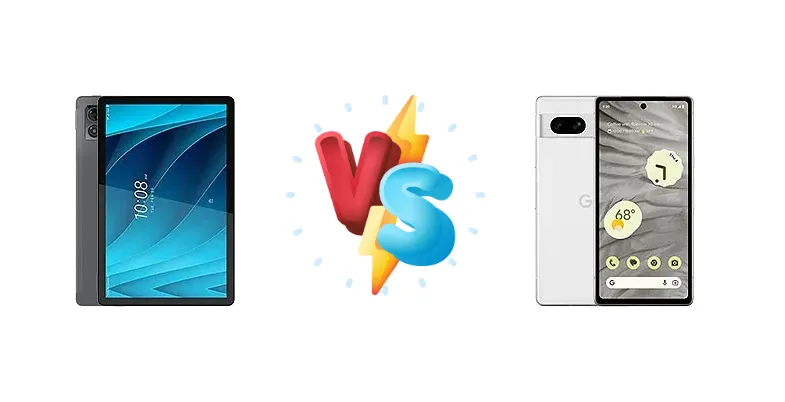
|
🏆 Quick Verdict
For most users, the Google Pixel 7a is the superior choice. Its significantly more powerful Tensor G2 chipset, coupled with a brighter display and vastly superior camera system, justifies the price difference. However, the HTC A101 Plus offers a compelling option for those on an extremely tight budget who prioritize basic smartphone functionality.
| PHONES | ||
|---|---|---|
| Phone Names | HTC A101 Plus | Google Pixel 7a |
| Network | ||
|---|---|---|
| 2G bands | GSM 850 / 900 / 1800 / 1900 | GSM 850 / 900 / 1800 / 1900 |
| 3G bands | HSDPA 850 / 900 / 2100 | HSDPA 800 / 850 / 900 / 1700(AWS) / 1900 / 2100 |
| 4G bands | LTE | 1, 2, 3, 4, 5, 7, 8, 12, 13, 14, 17, 20, 25, 26, 28, 29, 30, 38, 40, 41, 48, 66, 71 - GWKK3, G0DZQ |
| 5G bands | - | 1, 2, 3, 5, 7, 8, 12, 14, 20, 25, 28, 30, 38, 41, 48, 66, 71, 77, 78 SA/NSA/Sub6 - GWKK3 |
| Speed | HSPA, LTE | HSPA, LTE, 5G |
| Technology | GSM / HSPA / LTE | GSM / HSPA / LTE / 5G |
| - | 1, 2, 3, 5, 7, 8, 12, 20, 25, 28, 38, 40, 41, 66, 75, 76, 77, 78, 79 SA/NSA/Sub6 - GHL1X, G82U8 | |
| Launch | ||
|---|---|---|
| Announced | 2024, May 03 | 2023, May 10 |
| Status | Available. Released 2024, May 03 | Available. Released 2023, May 10 |
| Body | ||
|---|---|---|
| Build | - | Glass front (Gorilla Glass 3), aluminum frame, plastic back |
| Dimensions | 256.6 x 168.2 x 7.5 mm (10.10 x 6.62 x 0.30 in) | 152 x 72.9 x 9 mm (5.98 x 2.87 x 0.35 in) |
| SIM | Nano-SIM + Nano-SIM | Nano-SIM + eSIM |
| Weight | 501 g (1.10 lb) | 193.5 g (6.84 oz) |
| - | IP67 dust/water resistant (up to 1m for 30 min) | |
| Display | ||
|---|---|---|
| Protection | - | Corning Gorilla Glass 3 |
| Resolution | 1200 x 1920 pixels, 16:10 ratio (~207 ppi density) | 1080 x 2400 pixels, 20:9 ratio (~429 ppi density) |
| Size | 10.95 inches, 347.7 cm2 (~80.6% screen-to-body ratio) | 6.1 inches, 90.7 cm2 (~81.8% screen-to-body ratio) |
| Type | IPS LCD | OLED, HDR, 90Hz |
| - | Always-on display | |
| Platform | ||
|---|---|---|
| CPU | Octa-core (2x1.6 GHz Cortex-A75 & 6x1.6 GHz Cortex-A55) | Octa-core (2x2.85 GHz Cortex-X1 & 2x2.35 GHz Cortex-A78 & 4x1.80 GHz Cortex-A55) |
| Chipset | Unisoc T606 (12 nm) | Google Tensor G2 (5 nm) |
| GPU | Mali-G57 MP1 | Mali-G710 MP7 |
| OS | Android 14 | Android 13, upgradable to Android 15, up to 5 major Android upgrades |
| Memory | ||
|---|---|---|
| Card slot | microSDXC (uses shared SIM slot) | No |
| Internal | 128GB 8GB RAM | 128GB 8GB RAM |
| - | UFS 3.1 | |
| Main Camera | ||
|---|---|---|
| Dual | 13 MP Secondary lens | 64 MP, f/1.9, 26mm (wide), 1/1.73", 0.8µm, dual pixel PDAF, OIS 13 MP, f/2.2, 120˚ (ultrawide), 1.12µm |
| Features | LED flash | Dual-LED flash, Pixel Shift, Auto-HDR, panorama |
| Video | 1080p | 4K@30/60fps, 1080p@30/60/120/240fps, OIS |
| Selfie camera | ||
|---|---|---|
| Features | - | HDR, panorama |
| Single | 8 MP | 13 MP, f/2.2, 20mm (ultrawide), 1.12µm |
| Video | - | 4K@30fps, 1080p@30fps |
| Sound | ||
|---|---|---|
| 3.5mm jack | - | No |
| 35mm jack | Yes | No |
| Loudspeaker | Yes, with stereo speakers | Yes, with stereo speakers |
| Comms | ||
|---|---|---|
| Bluetooth | 5.0, A2DP, LE | 5.3, A2DP, LE |
| NFC | No | Yes |
| Positioning | Unspecified | GPS, GLONASS, GALILEO, BDS, QZSS, NavIC |
| Radio | No | No |
| USB | USB Type-C 2.0, OTG, magnetic connector | USB Type-C 3.2 |
| WLAN | Wi-Fi 802.11 a/b/g/n/ac, dual-band | Wi-Fi 802.11 a/b/g/n/ac/6e, tri-band |
| Features | ||
|---|---|---|
| Sensors | Yes | Fingerprint (under display, optical), accelerometer, gyro, proximity, compass, barometer |
| Battery | ||
|---|---|---|
| Charging | 10W wired | 18W wired, PD3.0 7.5W wireless |
| Type | 7000 mAh | Li-Po 4385 mAh |
| Misc | ||
|---|---|---|
| Colors | Gray, Silver | Charcoal, Snow, Sea, Coral |
| Models | - | GWKK3, GHL1X, G0DZQ, G82U8 |
| Price | About 150 EUR | € 179.90 / $ 150.00 / £ 170.00 / ₹ 25,980 |
HTC A101 Plus
- Extremely affordable price point.
- Functional for basic smartphone tasks.
- Acceptable battery life for light usage.
- Significantly underpowered processor.
- Likely poor camera performance.
- Slow charging speed (10W).
Google Pixel 7a
- Powerful Google Tensor G2 chipset.
- Excellent camera system with Google’s AI features.
- Bright and vibrant OLED display.
- Faster charging with wireless charging support.
- Higher price point.
- May be overkill for basic users.
- Not expandable storage.
Display Comparison
The Pixel 7a boasts a significantly brighter display, reaching a measured peak of 1070 nits, compared to an assumed lower brightness on the HTC A101 Plus (spec not provided). This higher brightness translates to better visibility outdoors. While the A101 Plus’s panel specifications are unknown, the Pixel 7a’s OLED panel offers superior contrast and color accuracy. The Pixel 7a’s 90Hz refresh rate (not specified for A101 Plus) also contributes to a smoother scrolling experience, a noticeable benefit for everyday use.
Camera Comparison
The Pixel 7a’s camera system is a major differentiator. While specific sensor details aren’t provided, Google’s computational photography prowess, powered by the Tensor G2, delivers exceptional image quality, particularly in challenging lighting conditions. The Pixel 7a excels in both photo and video capture. The HTC A101 Plus’s camera capabilities are likely to be significantly more limited, given its budget positioning and the Unisoc T606’s image signal processor (ISP). The absence of optical image stabilization (OIS) on the A101 Plus (assumed) further disadvantages it in low-light scenarios.
Performance
The performance gap between these devices is substantial. The Google Pixel 7a’s Tensor G2, built on a 5nm process, features a prime Cortex-X1 core clocked at 2.85 GHz, alongside Cortex-A78 and A55 cores. This architecture is designed for demanding tasks like AI processing and gaming. In contrast, the HTC A101 Plus utilizes the Unisoc T606 (12nm), with a less powerful core configuration of Cortex-A75 and A55 cores clocked at 1.6 GHz. The Tensor G2’s superior process node and core design result in significantly faster processing speeds and improved efficiency, making the Pixel 7a the clear winner for users who multitask, game, or use resource-intensive applications.
Battery Life
The Pixel 7a has an endurance rating of 76 hours, indicating solid battery life. While the A101 Plus’s battery capacity is unknown, its 10W wired charging is considerably slower than the Pixel 7a’s 18W wired charging with PD3.0 and 7.5W wireless charging. The Pixel 7a’s faster charging speeds allow for quicker top-ups, minimizing downtime. The Tensor G2’s efficiency, despite its power, contributes to competitive battery performance, offsetting the potential impact of a smaller battery capacity (not specified).
Buying Guide
Buy the HTC A101 Plus if you need a functional smartphone for basic tasks like calls, texts, and light social media use, and your budget is under $150. You're willing to compromise on performance and camera quality for affordability. Buy the Google Pixel 7a if you prioritize a smooth user experience, excellent camera capabilities, and access to Google’s AI features, and are willing to spend around $400. You value performance and a better overall smartphone experience.