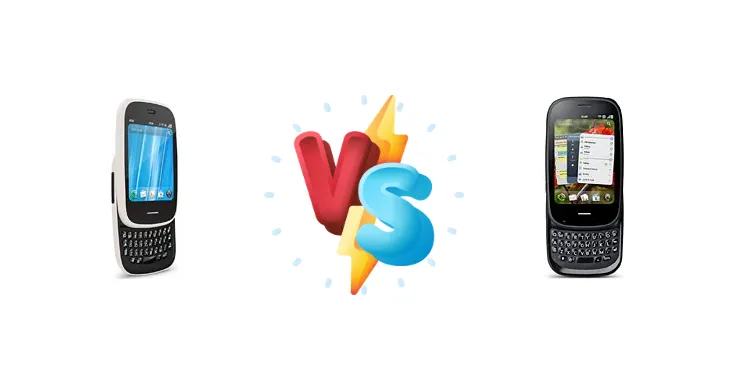
The Palm Pre 2 and HP Veer 4G represent a fascinating period in smartphone history – a push for a refined, gesture-based webOS experience in a compact form factor. While both devices aimed for a similar user base, they differed significantly in their underlying hardware. This comparison dissects those differences, focusing on the impact of the Pre 2’s faster CPU versus the Veer 4G’s more modern chipset.
🏆 Quick Verdict
For the average user prioritizing responsiveness and future-proofing, the Palm Pre 2 edges out the HP Veer 4G. Its 1.0 GHz CPU provides a noticeable performance advantage in everyday tasks, despite the Veer 4G utilizing a newer Qualcomm chipset. The Pre 2’s wireless charging is a significant convenience factor.
| Network |
|---|
| 2G bands | GSM 850 / 900 / 1800 / 1900 | GSM 850 / 900 / 1800 / 1900 |
| 3G bands | HSDPA 850 / 1900 / 2100 | HSDPA 850 / 1900 |
| Speed | HSPA 14.4/5.76 Mbps | HSPA 7.2/2 Mbps |
| Technology | GSM / HSPA | GSM / HSPA |
| | - | HSDPA 900 / 2100 |
| Launch |
|---|
| Announced | 2011, May. Released 2011, May 15 | 2010, October. Released 2010, November |
| Status | Discontinued | Discontinued |
| Body |
|---|
| Dimensions | 84 x 54.5 x 15.1 mm (3.31 x 2.15 x 0.59 in) | 100.7 x 59.6 x 16.9 mm (3.96 x 2.35 x 0.67 in) |
| Keyboard | QWERTY | QWERTY |
| SIM | Mini-SIM | Mini-SIM |
| Weight | 103 g (3.63 oz) | 145 g (5.11 oz) |
| Display |
|---|
| Protection | - | Corning Gorilla Glass |
| Resolution | 320 x 400 pixels (~197 ppi density) | 320 x 480 pixels, 3:2 ratio (~186 ppi density) |
| Size | 2.6 inches, 21.3 cm2 (~46.5% screen-to-body ratio) | 3.1 inches, 28.6 cm2 (~47.7% screen-to-body ratio) |
| Type | TFT, 256K colors | TFT |
| Platform |
|---|
| CPU | 800 MHz Scorpion | 1.0 GHz |
| Chipset | Qualcomm MSM7230 | - |
| GPU | Adreno 205 | - |
| OS | HP webOS 2.1 | HP webOS 2.0 |
| Memory |
|---|
| Card slot | No | No |
| Internal | 8GB (6.1GB user available) | 16GB 512MB RAM |
| Main Camera |
|---|
| Features | fixed focus | LED flash |
| Single | 5 MP | 5 MP |
| Video | Yes | Yes |
| Sound |
|---|
| 3.5mm jack | No | Yes |
| 35mm jack | No | Yes |
| Loudspeaker | Yes | Yes |
| Comms |
|---|
| Bluetooth | 2.1, A2DP | 2.1, A2DP, EDR |
| Positioning | GPS, A-GPS | GPS, A-GPS |
| Radio | No | - |
| USB | microUSB 2.0 | microUSB 2.0 |
| WLAN | Wi-Fi 802.11 b/g/n | Wi-Fi 802.11 b/g |
| Features |
|---|
| Browser | HTML, Adobe Flash | HTML, Adobe Flash |
| Sensors | Accelerometer, proximity | Accelerometer, proximity |
| | AT&T dedicated applications
MP3/WAV/eAAC+ player
MP4/H.264 player
Organizer
Document viewer
Voice memo/dial
Predictive text input | - |
| Battery |
|---|
| Charging | - | Wireless |
| Stand-by | Up to 300 h | Up to 350 h |
| Talk time | Up to 5 h | Up to 5 h 30 min |
| Type | Removable Li-Ion 910 mAh battery | Removable Li-Ion battery |
| Misc |
|---|
| Colors | White, black | Black |
| Price | About 320 EUR | About 260 EUR |
HP Veer 4G
- More modern Qualcomm chipset architecture
- Potential for better long-term software support (though limited)
- Compact and pocketable design
- Slower CPU clock speed (800 MHz)
- Lacks wireless charging
- Limited multitasking capabilities
Palm Pre 2
- Faster CPU clock speed (1.0 GHz)
- Convenient wireless charging
- Proven smooth webOS experience
- Older chipset architecture
- Potentially shorter battery life under heavy load
- Limited multitasking capabilities
Display Comparison
Neither device boasts a particularly impressive display by modern standards. Specifics regarding panel technology (IPS, TFT) and resolution are unavailable, but both were geared towards efficiency in a compact package. The focus was on usability within the limited screen real estate, rather than media consumption. Bezels were relatively substantial on both, typical for the era. Color accuracy and brightness are likely comparable, given the shared target market and emphasis on battery life.
Camera Comparison
Camera performance on both devices was not a primary selling point. Details regarding sensor size and image quality are scarce. Both likely featured basic cameras suitable for casual snapshots, but not for serious photography. Without specific sensor information, it’s difficult to definitively say which device offered a better camera experience. The focus was on functionality rather than image fidelity.
Performance
The core difference lies in the processing power. The Palm Pre 2’s 1.0 GHz CPU offers a 25% clock speed advantage over the HP Veer 4G’s 800 MHz Qualcomm MSM7230 Scorpion processor. While the MSM7230 benefits from a more modern architecture, the higher clock speed of the Pre 2 likely translates to a more responsive user experience, particularly when multitasking or running webOS applications. The MSM7230’s efficiency *could* lead to slightly better battery life under similar workloads, but this would be heavily dependent on software optimization. RAM specifications are unavailable for either device, but both likely featured a modest amount for the time, limiting true multitasking capabilities.
Battery Life
Battery capacity figures are unavailable for both devices. However, the HP Veer 4G’s more efficient Qualcomm chipset *could* offer slightly longer battery life despite potentially having a smaller battery. The Palm Pre 2 compensates with the convenience of wireless charging, allowing for easy top-ups without needing a cable. Charging speeds via cable are unknown for both devices, but were likely slow by today’s standards.
Buying Guide
Buy the HP Veer 4G if you prioritize a slightly more modern chipset architecture and potential for better long-term software support (though webOS development was ultimately discontinued). Buy the Palm Pre 2 if you value a snappier user experience, the convenience of wireless charging, and a proven track record of smooth webOS operation within its hardware constraints.
Frequently Asked Questions
❓ Does the Qualcomm MSM7230 in the HP Veer 4G offer a significant performance boost over the Palm Pre 2's CPU, despite the lower clock speed?
While the MSM7230 is a more modern chipset, the 25% clock speed difference in favor of the Palm Pre 2’s CPU likely outweighs the architectural advantages in most real-world scenarios. webOS was designed to be responsive, and the faster CPU contributes significantly to that experience.
❓ Is the wireless charging on the Palm Pre 2 a practical feature, or more of a novelty?
Wireless charging on the Palm Pre 2 is genuinely practical. It eliminates the need for fiddling with cables, making it convenient for quick top-ups throughout the day. This was a relatively uncommon feature at the time, making it a standout benefit.
❓ Given that webOS development was discontinued, is either phone worth buying in 2024?
Both phones are primarily collector's items or for enthusiasts interested in experiencing webOS. Functionality will be limited by the age of the software and lack of updates. However, the Palm Pre 2's superior performance makes it the more enjoyable device for those seeking a functional retro experience.