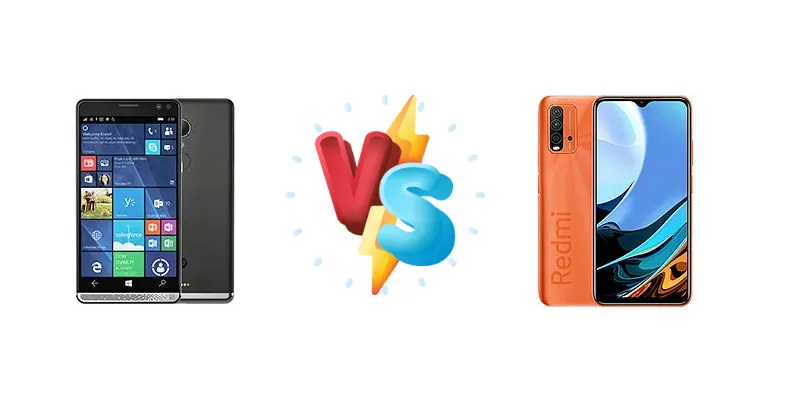
The HP Elite x3, released in 2016, represents a bygone era of Windows-powered smartphones aiming for premium features. The Xiaomi Redmi 9T, a much more recent offering, targets the budget-conscious consumer with a focus on long battery life and essential functionality. This comparison examines how these two devices stack up, despite their vastly different origins and target markets, focusing on what each offers in 2024.
🏆 Quick Verdict
For the average user in 2024, the Xiaomi Redmi 9T is the more practical choice. While the HP Elite x3 boasts a more powerful Snapdragon 820, its age, limited software support, and slower charging are significant drawbacks. The Redmi 9T’s endurance and affordability make it a better all-around device.
| Network |
|---|
| 2G bands | GSM 850 / 900 / 1800 / 1900 - SIM 1 & SIM 2 (dual-SIM model only) | GSM 850 / 900 / 1800 / 1900 |
| 3G bands | HSDPA 850 / 900 / 1700(AWS) / 1900 / 2100 | HSDPA 850 / 900 / 1700(AWS) / 1900 / 2100 |
| 4G bands | 1, 2, 3, 4, 5, 7, 8, 12, 17, 19, 20, 26, 28, 29, 38, 39, 40, 41 - EMEA | 1, 2, 3, 4, 5, 7, 8, 20, 28, 38, 40, 41 |
| Speed | HSPA 21.1/5.76 Mbps, LTE Cat6 300/50 Mbps | HSPA, LTE |
| Technology | GSM / HSPA / LTE | GSM / HSPA / LTE |
| | 1, 2, 3, 4, 5, 7, 12, 17, 20, 29, 30 - Americas | - |
| Launch |
|---|
| Announced | 2016, February. Released 2016, August | 2021, January 08 |
| Status | Discontinued | Available. Released 2021, January 18 |
| Body |
|---|
| Build | - | Glass front (Gorilla Glass 3), plastic frame, plastic back |
| Dimensions | 161.8 x 83.5 x 7.8 mm (6.37 x 3.29 x 0.31 in) | 162.3 x 77.3 x 9.6 mm (6.39 x 3.04 x 0.38 in) |
| SIM | · Nano-SIM· Nano-SIM + Nano-SIM | Nano-SIM + Nano-SIM |
| Weight | 195 g (6.88 oz) | 198 g (6.98 oz) |
| | IP67 dust/water resistant (up to 1m for 30 mins)
MIL-STD-810G compliant*
*does not guarantee ruggedness or use in extreme conditions | Water-repellent coating |
| Display |
|---|
| Protection | Corning Gorilla Glass 4 | Corning Gorilla Glass 3 |
| Resolution | 1440 x 2560 pixels, 16:9 ratio (~494 ppi density) | 1080 x 2340 pixels, 19.5:9 ratio (~395 ppi density) |
| Size | 5.96 inches, 97.5 cm2 (~72.2% screen-to-body ratio) | 6.53 inches, 104.7 cm2 (~83.4% screen-to-body ratio) |
| Type | AMOLED, 350 nits (typ) | IPS LCD, 400 nits (typ) |
| Platform |
|---|
| CPU | Quad-core (2x2.15 GHz Kryo & 2x1.6 GHz Kryo) | Octa-core (4x2.0 GHz Kryo 260 Gold & 4x1.8 GHz Kryo 260 Silver) |
| Chipset | Qualcomm MSM8996 Snapdragon 820 (14 nm) | Qualcomm SM6115 Snapdragon 662 (11 nm) |
| GPU | Adreno 530 | Adreno 610 |
| OS | Microsoft Windows 10 | Android 10, MIUI 12 |
| Memory |
|---|
| Card slot | microSDXC (uses shared SIM slot) - dual SIM model only | microSDXC (dedicated slot) |
| Internal | 64GB 4GB RAM | 64GB 4GB RAM, 128GB 4GB RAM, 128GB 6GB RAM |
| | eMMC 5.1 | UFS 2.1 - 64GB
UFS 2.2 - 128GB |
| Main Camera |
|---|
| Features | LED flash, HDR, panorama | LED flash, HDR, panorama |
| Quad | - | 48 MP, f/1.8, 26mm (wide), 1/2.0", 0.8µm, PDAF
8 MP, f/2.2, 120˚ (ultrawide), 1/4.0", 1.12µm
2 MP (macro)
Auxiliary lens |
| Single | 16 MP, f/2.2, 1.31µm, PDAF | - |
| Video | 4K@30fps, 1080p@30fps | 1080p@30fps |
| Selfie camera |
|---|
| Single | 8 MP, f/2.2, 1/4.0", 1.12µm | 8 MP, f/2.1, 27mm (wide), 1/4.0", 1.12µm |
| Video | 1080p@30fps | 1080p@30fps |
| Sound |
|---|
| 3.5mm jack | Yes | Yes |
| 35mm jack | Yes | Yes |
| Loudspeaker | Yes, with stereo speakers | Yes, with stereo speakers |
| | Tuned by Bang & Olufsen
| 24-bit/192kHz audio |
| Comms |
|---|
| Bluetooth | 4.0, A2DP, LE | 5.0, A2DP, LE |
| Infrared port | - | Yes |
| NFC | Yes | Yes (market/region dependent) |
| Positioning | GPS, GLONASS, BDS | GPS, GLONASS, GALILEO, BDS |
| Radio | No | FM radio |
| USB | USB Type-C 3.0, magnetic connector | USB Type-C 2.0, OTG |
| WLAN | Wi-Fi 802.11 a/b/g/n/ac, dual-band, hotspot | Wi-Fi 802.11 a/b/g/n/ac, dual-band, Wi-Fi Direct |
| Features |
|---|
| Sensors | Iris scanner, fingerprint (rear-mounted), accelerometer, gyro, proximity, compass, barometer | Fingerprint (side-mounted), accelerometer, proximity, compass |
| | Microsoft Continuum support | - |
| Battery |
|---|
| Charging | 10W wired
Wireless (Qi) | 18W wired
2.5W reverse wired |
| Type | Li-Po 4150 mAh, non-removable | Li-Po 6000 mAh |
| Misc |
|---|
| Colors | Gold, Graphite/Chrome | Carbon Gray, Twilight Blue, Sunrise Orange, Ocean Green |
| Models | - | J19S, M2010J19SG, M2010J19SY |
| Price | About 700 EUR | € 87.56 |
| SAR | - | 1.09 W/kg (head) 1.00 W/kg (body) |
| SAR EU | - | 0.60 W/kg (head) 0.81 W/kg (body) |
| Pricing |
|---|
| 128GB 6GB RAM | - | Rp 2,272,000 |
| 64GB 4GB RAM | - | $ 168.78 |
| Tests |
|---|
| Battery life | - |
Endurance rating 150h
|
| Camera | - |
Photo / Video |
| Display | - |
Contrast ratio: 1594:1 |
| Loudspeaker | - |
-25.6 LUFS (Very good)
|
| Performance | - |
AnTuTu: 177917 (v8)
GeekBench: 1400 (v5.1)
GFXBench: 5.8fps (ES 3.1 onscreen) |
HP Elite x3
- Wireless charging (Qi standard)
- More powerful processor (Snapdragon 820)
- Unique Windows Phone experience (for enthusiasts)
- Outdated software and security updates
- Slow 10W charging
- Limited app compatibility
Xiaomi Redmi 9T
- Excellent battery life (150h endurance)
- Fast 18W charging
- Affordable price point
- Lower processing power (Snapdragon 662)
- Basic camera system
- Plastic build quality
Display Comparison
The Redmi 9T features a display with a measured peak brightness of 437 nits and a 1594:1 contrast ratio. While these numbers are respectable for its price point, the Elite x3’s display specifications are unavailable. Given its age, it’s unlikely to match the Redmi 9T’s contrast. The Redmi 9T’s brightness is sufficient for outdoor visibility in most conditions, making it a more usable display in everyday scenarios. The lack of detailed display information for the Elite x3 makes a direct comparison difficult, but its age suggests potential issues with color accuracy and viewing angles.
Camera Comparison
Both devices offer photo and video capabilities, but detailed camera specifications are limited. The Redmi 9T’s camera system likely benefits from more modern image processing algorithms and software optimizations. Without specific sensor size or aperture information for the Elite x3, it’s difficult to assess its image quality. The Redmi 9T’s affordability suggests a focus on practicality rather than cutting-edge camera technology, but it’s likely to deliver more consistent results in various lighting conditions due to its newer software and potentially better sensor technology. The presence of a 2MP macro camera on the Redmi 9T is unlikely to significantly impact overall image quality.
Performance
The HP Elite x3’s Qualcomm Snapdragon 820, built on a 14nm process, was a flagship processor in its time, featuring a quad-core Kryo architecture clocked up to 2.15 GHz. However, the Xiaomi Redmi 9T’s Snapdragon 662, fabricated on a more efficient 11nm node, presents a different proposition. While the 820 has a theoretical performance advantage, the 662’s octa-core configuration (4x2.0 GHz Kryo 260 Gold & 4x1.8 GHz Kryo 260 Silver) and newer architecture offer a more balanced experience for everyday tasks. The 11nm process also contributes to better thermal efficiency, potentially leading to more sustained performance under load. The Elite x3’s age means it will likely struggle with modern applications and software updates.
Battery Life
The Xiaomi Redmi 9T boasts an impressive endurance rating of 150 hours, indicating excellent battery life. It supports 18W wired charging and 2.5W reverse wired charging. The HP Elite x3, in contrast, is limited to 10W wired charging and Qi wireless charging. While wireless charging is a convenience feature, the significantly slower wired charging speed of the Elite x3 is a major disadvantage. The Redmi 9T’s 18W charging allows for a much quicker top-up, and its superior endurance means users will likely need to charge it less frequently. The Redmi 9T’s reverse wired charging is a useful addition for topping up accessories.
Buying Guide
Buy the HP Elite x3 if you are a collector of unique devices, specifically interested in the Windows Phone ecosystem, or require wireless charging and are willing to accept the limitations of an older device. Buy the Xiaomi Redmi 9T if you prioritize long battery life, a modern Android experience, and affordability, and need a reliable daily driver for basic tasks and media consumption.
Frequently Asked Questions
❓ Is the HP Elite x3 still usable as a daily driver in 2024?
While technically functional, the HP Elite x3 faces significant limitations as a daily driver in 2024. Its outdated Windows Phone operating system lacks modern app support and security updates, making it vulnerable to threats and incompatible with many current services. The slow charging and limited battery life further detract from its usability.
❓ How does the Snapdragon 662 in the Redmi 9T handle multitasking and gaming?
The Snapdragon 662 is a capable chipset for everyday multitasking and light gaming. It can handle multiple apps running simultaneously without significant slowdowns. While it won't deliver flagship-level gaming performance, it can run popular mobile games at medium settings with acceptable frame rates. The 662’s efficiency also contributes to better battery life during gaming sessions.
❓ Does the Redmi 9T support fast software updates and security patches?
Xiaomi generally provides regular software updates and security patches for its Redmi series devices, including the Redmi 9T. However, the frequency and duration of support can vary. Users can expect to receive updates for at least a couple of years after the device's release, ensuring a reasonably secure and up-to-date experience.