
Honor Play4 Pro vs Huawei nova 7i: A Deep Dive into Kirin Chipset Performance
| Phones Images | |||||
|---|---|---|---|---|---|
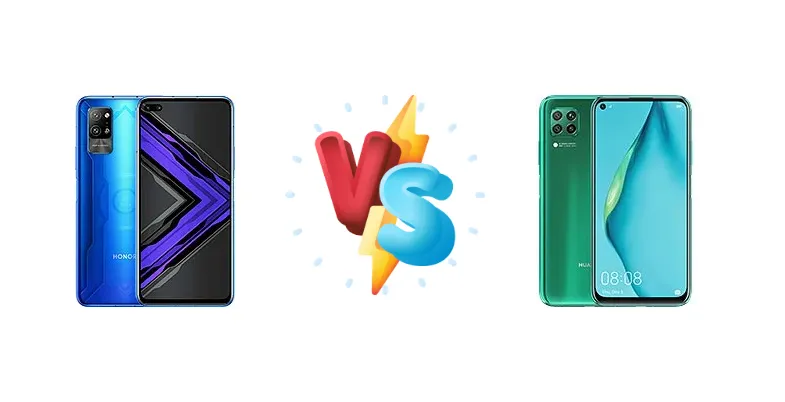
|
🏆 Quick Verdict
For users prioritizing raw processing power and sustained performance, the Honor Play4 Pro emerges as the winner. Its Kirin 990 chipset, with its more powerful CPU cores, offers a noticeable advantage in demanding tasks and gaming. While the nova 7i provides a solid experience, the Play4 Pro’s superior silicon justifies the potential price difference.
| PHONES | ||
|---|---|---|
| Phone Names | Honor Play4 Pro | Huawei nova 7i |
| Network | ||
|---|---|---|
| 2G bands | GSM 850 / 900 / 1800 / 1900 | GSM 850 / 900 / 1800 / 1900 |
| 3G bands | HSDPA 850 / 900 / 1700(AWS) / 1900 / 2100 | HSDPA 800 / 850 / 900 / 1700(AWS) / 2100 |
| 4G bands | 1, 2, 3, 4, 5, 7, 8, 12, 17, 18, 19, 26, 34, 38, 39, 40, 41 | 1, 2, 3, 4, 5, 7, 8, 18, 19, 20, 28, 34, 38, 39, 40, 41 - JNY-L21A, JNY-L01A, JNY-L21B |
| 5G bands | 1, 3, 41, 77, 78, 79 SA/NSA | - |
| Speed | HSPA, LTE, 5G | HSPA 42.2/5.76 Mbps, LTE (2CA) Cat13 400/75 Mbps |
| Technology | GSM / CDMA / HSPA / LTE / 5G | GSM / CDMA / HSPA / LTE |
| CDMA 800 & TD-SCDMA | 1, 2, 3, 4, 5, 7, 8, 18, 19, 28, 34, 38, 39, 40, 41 - JNY-L22A, JNY-L02A, JNY-L22B | |
| Launch | ||
|---|---|---|
| Announced | 2020, June 03. Released 2020, June 10 | 2020, January 30. Released 2020, February 14 |
| Status | Discontinued | Discontinued |
| Body | ||
|---|---|---|
| Build | - | Glass front, plastic back, plastic frame |
| Dimensions | 162.7 x 75.8 x 8.9 mm (6.41 x 2.98 x 0.35 in) | 159.2 x 76.3 x 8.7 mm (6.27 x 3.00 x 0.34 in) |
| SIM | Nano-SIM + Nano-SIM | · Nano-SIM· Nano-SIM + Nano-SIM |
| Weight | 213 g (7.51 oz) | 183 g (6.46 oz) |
| Display | ||
|---|---|---|
| Resolution | 1080 x 2400 pixels, 20:9 ratio (~401 ppi density) | 1080 x 2310 pixels (~398 ppi density) |
| Size | 6.57 inches, 104.2 cm2 (~84.5% screen-to-body ratio) | 6.4 inches, 101.4 cm2 (~83.5% screen-to-body ratio) |
| Type | IPS LCD | IPS LCD |
| Platform | ||
|---|---|---|
| CPU | Octa-core (2x2.86 GHz Cortex-A76 & 2x2.09 GHz Cortex-A76 & 4x1.86 GHz Cortex-A55) | Octa-core (2x2.27 GHz Cortex-A76 & 6x1.88 GHz Cortex-A55) |
| Chipset | Kirin 990 (7 nm) | Kirin 810 (7 nm) |
| GPU | Mali-G76 MP16 | Mali-G52 MP6 |
| OS | Android 10, Magic UI 3.1, no Google Play Services | Android 10, EMUI 10, no Google Play Services |
| Memory | ||
|---|---|---|
| Card slot | No | Nano Memory (uses shared SIM slot) |
| Internal | 128GB 8GB RAM | 128GB 8GB RAM |
| - | UFS 2.1 | |
| Main Camera | ||
|---|---|---|
| Dual | 40 MP, f/1.8, 27mm (wide), 1/1.7", PDAF 8 MP, f/2.4, 80mm (telephoto), PDAF, OIS, 3x optical zoom | - |
| Features | Laser AF, LED flash, HDR, panorama | LED flash, HDR, panorama |
| Quad | - | 48 MP, f/1.8, 26mm (wide), 1/2.0", 0.8µm, PDAF 8 MP, f/2.4, (ultrawide) 2 MP (macro) Auxiliary lens |
| Video | 4K@30/60fps, 1080p@30fps, 1080p@960fps, OIS, gyro-EIS | 1080p@30fps |
| Selfie camera | ||
|---|---|---|
| Dual | 32 MP, f/2.0, 26mm (wide), 1/2.8", 0.8µm 8 MP, (ultrawide) | - |
| Features | Panorama | HDR |
| Single | - | 16 MP, f/2.0, (wide), 1/3.06", 1.0µm |
| Video | 4K@30fps, 1080p@30fps, gyro-EIS | 1080p@30fps |
| Sound | ||
|---|---|---|
| 3.5mm jack | No | Yes |
| 35mm jack | No | Yes |
| Loudspeaker | Yes | Yes |
| Comms | ||
|---|---|---|
| Bluetooth | 5.1, A2DP, LE | 5.1, A2DP, LE |
| NFC | Yes | No |
| Positioning | GPS, BDS | GPS, GLONASS, GALILEO, BDS, QZSS |
| Radio | No | FM radio (market/region dependent) |
| USB | USB Type-C 2.0, OTG | USB Type-C 2.0, OTG |
| WLAN | Wi-Fi 802.11 a/b/g/n/ac, dual-band, Wi-Fi Direct | Wi-Fi 802.11 a/b/g/n/ac, dual-band, Wi-Fi Direct |
| Features | ||
|---|---|---|
| Sensors | Fingerprint (side-mounted), accelerometer, gyro, proximity, compass | Fingerprint (side-mounted), accelerometer, proximity, compass |
| Battery | ||
|---|---|---|
| Charging | 40W wired, 70% in 30 min Reverse wired | 40W wired, 70% in 30 min |
| Type | Li-Po 4200 mAh | Li-Po 4200 mAh |
| Misc | ||
|---|---|---|
| Colors | Black, Blue, Light Blue | Midnight Black, Crush Green, Sakura Pink |
| Models | OXP-AN00 | JNY-L22B, JNY-L21A, JNY-L01A, JNY-L21B, JNY-L22A, JNY-L02A, JNY-LX2 |
| Price | About 360 EUR | About 240 EUR |
Honor Play4 Pro
- Superior CPU and GPU performance with the Kirin 990.
- Potentially better camera image processing due to the more powerful ISP.
- More future-proof chipset for demanding applications.
- Potentially higher price point.
- Kirin 990 may consume more power, potentially impacting battery life.
Huawei nova 7i
- More affordable price point.
- Solid performance for everyday tasks and casual gaming.
- 40W fast charging for quick top-ups.
- Less powerful chipset compared to the Kirin 990.
- May struggle with demanding games and intensive multitasking.
Display Comparison
Both devices lack detailed display specifications in the provided data. However, given their market positioning, it’s reasonable to assume both utilize IPS LCD panels. The key differentiator will likely be color calibration and peak brightness, areas where Huawei historically performs well. Without specific nit ratings, it’s difficult to declare a clear winner, but the nova 7i’s brand reputation suggests potentially more accurate color reproduction.
Camera Comparison
Without detailed camera sensor information, a direct comparison is limited. However, the Kirin 990’s more powerful ISP (Image Signal Processor) in the Play4 Pro likely enables superior image processing, resulting in better dynamic range, noise reduction, and overall image quality. The presence of a flagship-level chipset often correlates with more advanced camera features and algorithms. While both phones likely offer similar basic camera functionality, the Play4 Pro is expected to deliver more refined and detailed photos, particularly in challenging lighting conditions. We can assume both phones will have a primary camera, ultrawide, and depth sensor, but the Play4 Pro's ISP will likely extract more detail.
Performance
The Honor Play4 Pro’s Kirin 990 (7nm) significantly outpaces the Huawei nova 7i’s Kirin 810 (7nm) in CPU performance. The 990 features a dual-cluster configuration with two high-performance Cortex-A76 cores clocked at 2.86 GHz, alongside two more Cortex-A76 cores at 2.09 GHz, and four efficiency-focused Cortex-A55 cores. The nova 7i, conversely, has two Cortex-A76 cores at 2.27 GHz and six Cortex-A55 cores. This core count and clock speed difference translates to faster app loading, smoother multitasking, and improved performance in CPU-intensive applications. The Kirin 990 also boasts a more powerful Mali-G76 MP16 GPU, offering a substantial advantage in graphics performance, crucial for gaming. While both chips are 7nm, the architectural improvements in the 990 provide a clear edge.
Battery Life
Both the Honor Play4 Pro and Huawei nova 7i support 40W wired charging, achieving a 70% charge in 30 minutes. This rapid charging capability is a significant benefit for both devices, minimizing downtime. While battery capacity isn’t specified, the Kirin 990’s increased power consumption may necessitate a slightly larger battery in the Play4 Pro to achieve comparable battery life to the nova 7i. However, the faster processing power of the Play4 Pro could also lead to quicker task completion, potentially offsetting some of the increased power draw. The equal charging speeds effectively neutralize this difference for the average user.
Buying Guide
Buy the Honor Play4 Pro if you need a phone capable of handling intensive multitasking, demanding mobile games, and benefit from a more future-proof chipset. This is the choice for power users and gamers. Buy the Huawei nova 7i if you prioritize a balanced experience with a focus on everyday tasks, social media, and casual gaming, and are looking for a more budget-friendly option. It’s ideal for users who don’t push their phones to the absolute limit.