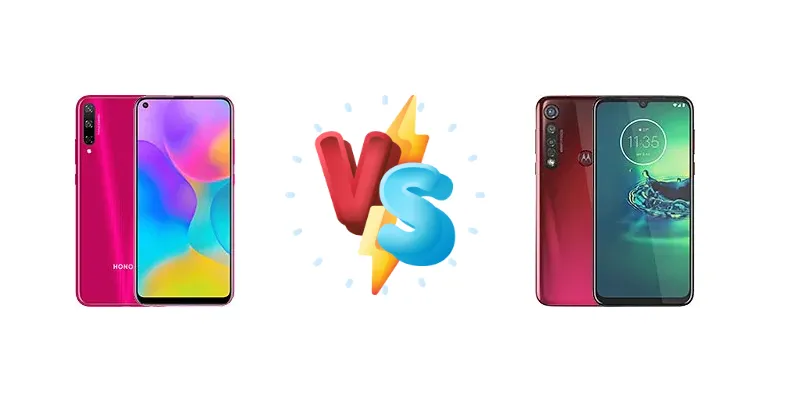
The Honor Play 3 and Motorola Moto G8 Plus represent compelling options in the crowded budget smartphone market. Both aim to deliver essential features without breaking the bank, but they take different approaches to achieving this. The Play 3 leverages Honor’s in-house Kirin chipset, while the Moto G8 Plus opts for Qualcomm’s Snapdragon 665. This comparison dives deep into the specifics to determine which device offers the best value.
🏆 Quick Verdict
For the average user prioritizing sustained performance and slightly faster charging, the Motorola Moto G8 Plus emerges as the better choice. Its Snapdragon 665, built on an 11nm process, offers a more efficient architecture than the Kirin 710F’s 12nm node, translating to better thermal management during extended use. However, the difference is marginal.
| Network |
|---|
| 2G bands | GSM 850 / 900 / 1800 / 1900 | GSM 850 / 900 / 1800 / 1900 |
| 3G bands | HSDPA 850 / 900 / 1900 / 2100 | HSDPA 850 / 900 / 1700(AWS) / 1900 / 2100 |
| 4G bands | 1, 3, 5, 7, 8, 34, 38, 39, 40, 41 | 1, 2, 3, 4, 5, 7, 8, 18, 19, 20, 26, 28, 38, 40, 41 |
| Speed | HSPA 42.2/5.76 Mbps, LTE (2CA) Cat6 400/50 Mbps | HSPA 42.2/5.76 Mbps, LTE (2CA) Cat13 600/100 Mbps |
| Technology | GSM / CDMA / HSPA / LTE | GSM / HSPA / LTE |
| | CDMA 800 & TD-SCDMA | 1, 2, 3, 4, 5, 7, 8, 12, 17, 28, 66 - LATAM |
| Launch |
|---|
| Announced | 2019, September. Released 2019, September | 2019, October 24. Released 2019, October 28 |
| Status | Discontinued | Discontinued |
| Body |
|---|
| Build | Glass front, plastic back, plastic frame | Glass front, plastic back, plastic frame |
| Dimensions | 159.8 x 76.1 x 8.1 mm (6.29 x 3.00 x 0.32 in) | 158.4 x 75.8 x 9.1 mm (6.24 x 2.98 x 0.36 in) |
| SIM | Nano-SIM + Nano-SIM | · Nano-SIM· Nano-SIM + Nano-SIM |
| Weight | 176 g (6.21 oz) | 188 g (6.63 oz) |
| | IP5X (dust), IPX4 (water) resistance | Water-repellent coating |
| Display |
|---|
| Resolution | 720 x 1560 pixels, 19.5:9 ratio (~269 ppi density) | 1080 x 2280 pixels, 19:9 ratio (~400 ppi density) |
| Size | 6.39 inches, 100.2 cm2 (~82.4% screen-to-body ratio) | 6.3 inches, 99.1 cm2 (~82.5% screen-to-body ratio) |
| Type | IPS LCD | IPS LCD |
| Platform |
|---|
| CPU | Octa-core (4x2.2 GHz Cortex-A73 & 4x1.7 GHz Cortex-A53) | Octa-core (4x2.0 GHz Kryo 260 Gold & 4x1.8 GHz Kryo 260 Silver) |
| Chipset | Kirin 710F (12 nm) | Qualcomm SDM665 Snapdragon 665 (11 nm) |
| GPU | Mali-G51 MP4 | Adreno 610 |
| OS | Android 9.0 (Pie), EMUI 9.1 | Android 9.0 (Pie), upgradable to Android 10 |
| Memory |
|---|
| Card slot | microSDXC (uses shared SIM slot) | microSDXC (uses shared SIM slot) |
| Internal | 64GB 4GB RAM, 64GB 6GB RAM, 128GB 4GB RAM | 64GB 4GB RAM |
| | - | eMMC 5.1 |
| Main Camera |
|---|
| Features | LED flash, HDR, panorama | Laser AF, LED flash, HDR, panorama |
| Triple | 48 MP, f/1.8, 27mm (wide), 1/2.0", 0.8µm, PDAF
8 MP, f/2.4, 13mm (ultrawide), 1/4.0", 1.12µm
Auxiliary lens | 48 MP, f/1.7, 26mm (wide), 1/2.0", 0.8µm, PDAF
16 MP, f/2.2, 14mm (ultrawide), dedicated video camera (1080p)
Auxiliary lens |
| Video | 1080p@30fps | 4K@30fps, 1080p@30/60/120fps, 1080p@30fps (gyro-EIS) |
| Selfie camera |
|---|
| Features | HDR | HDR |
| Single | 8 MP, f/2.0 | 25 MP, f/2.0, 0.9µm |
| Video | 1080p@30fps | 1080p@30/120fps |
| Sound |
|---|
| 3.5mm jack | Yes | Yes |
| 35mm jack | Yes | Yes |
| Loudspeaker | Yes | Yes, with stereo speakers |
| Comms |
|---|
| Bluetooth | 5.0, A2DP, LE | 5.0, A2DP, LE, aptX |
| NFC | No | Yes (market dependent) |
| Positioning | GPS, GLONASS, BDS | GPS, GLONASS, BDS, GALILEO |
| Radio | FM radio | FM radio |
| USB | microUSB 2.0, OTG | USB Type-C 2.0, OTG |
| WLAN | Wi-Fi 802.11 b/g/n, Wi-Fi Direct | Wi-Fi 802.11 a/b/g/n/ac, dual-band, Wi-Fi Direct |
| Features |
|---|
| Sensors | Accelerometer, proximity, compass | Fingerprint (rear-mounted), accelerometer, gyro, proximity, compass |
| Battery |
|---|
| Charging | 10W wired | 15W wired |
| Type | Li-Po 4000 mAh, non-removable | Li-Po 4000 mAh, non-removable |
| Misc |
|---|
| Colors | Magic Night Black, Aurora Blue, Charm Red | Dark Blue, Dark Red |
| Models | ASK-AL00x | XT2019, XT2019-2 |
| Price | About 130 EUR | About 270 EUR |
| SAR | - | 0.59 W/kg (head) 1.58 W/kg (body) |
| SAR EU | - | 0.59 W/kg (head) 0.88 W/kg (body) |
| Tests |
|---|
| Audio quality | - |
Noise -93.2dB / Crosstalk -94.2dB |
| Battery life | - | Endurance rating 87h |
| Camera | - |
Photo |
| Display | - |
Contrast ratio: 1505:1 (nominal) |
| Loudspeaker | - |
Voice 79dB / Noise 74dB / Ring 80dB |
| Performance | - |
AnTuTu: 168699 (v8)
GeekBench: 5641 (v4.4), 1385 (v5.1)
GFXBench: 6.5fps (ES 3.1 onscreen) |
Honor Play 3
- Potential for optimized software experience (Honor)
- Competitive pricing (likely)
- Decent battery endurance (87h)
- Slower 10W charging
- Less efficient Kirin 710F chipset
- Limited display information
Motorola Moto G8 Plus
- More efficient Snapdragon 665 chipset
- Faster 15W charging
- Brighter and higher contrast display (581 nits, 1505:1)
- Motorola’s software update track record is inconsistent
- Camera performance likely similar to Honor Play 3
Display Comparison
The Motorola Moto G8 Plus boasts a measured peak brightness of 581 nits and a 1505:1 contrast ratio, indicating a more vibrant and visible display, especially outdoors. While the Honor Play 3’s display specifications are not provided, it’s reasonable to assume it falls short of these figures given its lower price point. The G8 Plus’s contrast ratio suggests deeper blacks and more defined colors, enhancing the viewing experience for media consumption. The lack of information on the Play 3’s panel type makes a direct comparison of color accuracy difficult, but Motorola’s measured data provides a clear advantage.
Camera Comparison
Both phones are listed as having a 'Photo' camera, which is unhelpful. Without specific sensor details, it’s difficult to make a meaningful comparison. However, given the market positioning, it’s likely both rely on similar budget sensors. The absence of information regarding optical image stabilization (OIS) or aperture sizes further complicates the analysis. We can assume both will struggle in low-light conditions, and image quality will heavily rely on software processing. Ignoring the likely inclusion of low-resolution macro/depth sensors on both devices, the primary camera sensor size would be the key differentiator, but that data is unavailable.
Performance
The core difference lies in the chipsets: the Honor Play 3 utilizes the Kirin 710F (12nm) with its octa-core configuration (4x2.2 GHz Cortex-A73 & 4x1.7 GHz Cortex-A53), while the Moto G8 Plus features the Qualcomm Snapdragon 665 (11nm) with an octa-core setup (4x2.0 GHz Kryo 260 Gold & 4x1.8 GHz Kryo 260 Silver). The Snapdragon 665’s 11nm fabrication process is more efficient, leading to lower power consumption and potentially less thermal throttling under sustained load. While the Kirin 710F’s Cortex-A73 cores offer higher clock speeds, the architectural advantages of the Snapdragon 665’s Kryo cores and the process node give it an edge in real-world performance consistency.
Battery Life
Both the Honor Play 3 and Motorola Moto G8 Plus achieve an impressive endurance rating of 87 hours, suggesting comparable battery life in typical usage scenarios. However, the Moto G8 Plus benefits from 15W wired charging, while the Play 3 is limited to 10W. This translates to a faster 0-100% charge time for the Motorola, reducing downtime. While the mAh capacity isn’t specified for either device, the faster charging speed of the G8 Plus provides a practical advantage for users who frequently need to top up their battery.
Buying Guide
Buy the Honor Play 3 if you prioritize a brand with a strong track record in software optimization and are comfortable with a slower charging speed. This phone suits users who primarily engage in light tasks like calling, texting, and social media. Buy the Motorola Moto G8 Plus if you value a more efficient processor for smoother multitasking, slightly faster charging, and a display with proven brightness and contrast. This is the better option for those who occasionally game or use demanding apps.
Frequently Asked Questions
❓ Will the Snapdragon 665 in the Moto G8 Plus handle demanding games like PUBG Mobile smoothly?
The Snapdragon 665 is capable of running PUBG Mobile, but you’ll likely need to stick to medium graphics settings for a consistently smooth experience. The 11nm process helps mitigate thermal throttling, but extended gaming sessions may still result in some frame drops. The Kirin 710F might offer slightly higher peak performance, but is more prone to throttling.
❓ How significant is the difference in charging speed between 10W and 15W charging?
While not a massive leap, the 15W charging on the Moto G8 Plus will noticeably reduce charging times. Expect roughly a 30-60 minute difference for a full charge compared to the Honor Play 3’s 10W charging. This is particularly beneficial for users who need a quick top-up before heading out.
❓ Is the lack of detailed camera specifications a major concern?
Yes, it is. Without knowing the sensor size, aperture, or presence of OIS, it’s difficult to assess the camera’s capabilities. Both phones likely feature budget sensors, so don’t expect flagship-level image quality. Expect decent results in good lighting conditions, but struggles in low light.