
Honor Magic8 Pro vs. OnePlus 12R: A Head-to-Head Comparison of Snapdragon Powerhouses
| Phones Images | |||||
|---|---|---|---|---|---|
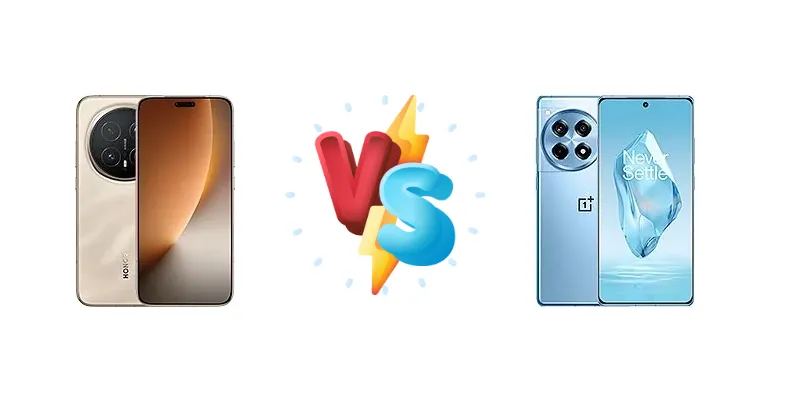
|
🏆 Quick Verdict
For the power user prioritizing raw performance and bleeding-edge technology, the Honor Magic8 Pro is the clear winner. Its Snapdragon 8 Elite Gen 5 offers a substantial leap in CPU and GPU capabilities. However, the OnePlus 12R delivers exceptional value, providing a smooth experience and impressive battery life at a more accessible price point.
| PHONES | ||
|---|---|---|
| Phone Names | Honor Magic8 Pro | OnePlus 12R |
| Network | ||
|---|---|---|
| 2G bands | GSM 850 / 900 / 1800 / 1900 | GSM 850 / 900 / 1800 / 1900 |
| 3G bands | HSDPA 800 / 850 / 900 / 1700(AWS) / 1900 / 2100 | HSDPA 850 / 900 / 1700(AWS) / 1900 / 2100 |
| 4G bands | LTE | 1, 2, 3, 4, 5, 7, 8, 12, 17, 18, 19, 20, 26, 28, 32, 38, 39, 40, 41, 66 |
| 5G bands | SA/NSA | 1, 2, 3, 5, 7, 8, 12, 20, 28, 38, 40, 41, 66, 77, 78 SA/NSA |
| Speed | HSPA, LTE, 5G | HSPA, LTE, 5G |
| Technology | GSM / HSPA / LTE / 5G | GSM / CDMA / HSPA / LTE / 5G |
| Launch | ||
|---|---|---|
| Announced | 2025, October 15 | 2024, January 23 |
| Status | Available. Released 2025, October 23 | Available. Released 2024, February 06 |
| Body | ||
|---|---|---|
| Build | Glass front (NanoCrystal Shield), fiber-reinforced plastic back | Glass front (Gorilla Glass Victus 2), aluminum frame, glass back |
| Dimensions | 161.2 x 75 x 8.3 mm (6.35 x 2.95 x 0.33 in) | 163.3 x 75.3 x 8.8 mm (6.43 x 2.96 x 0.35 in) |
| SIM | · Nano-SIM + Nano-SIM + eSIM + eSIM (max 2 at a time) - International· Nano-SIM + Nano-SIM - China | · Nano-SIM + Nano-SIM + eSIM (max 2 at a time)· Nano-SIM + Nano-SIM |
| Weight | 219 g (7.72 oz) | 207 g (7.30 oz) |
| Display | ||
|---|---|---|
| Protection | NanoCrystal Shield (INT); Giant Rhino Glass (China) | Corning Gorilla Glass Victus 2 |
| Resolution | 1256 x 2808 pixels, 20:9 ratio (~458 ppi density) | 1264 x 2780 pixels (~450 ppi density) |
| Size | 6.71 inches, 108.3 cm2 (~89.6% screen-to-body ratio) | 6.78 inches, 111.7 cm2 (~90.9% screen-to-body ratio) |
| Type | LTPO OLED, 1B colors, 120Hz, 4320Hz PWM, Dolby Vision, HDR Vivid, 1800 nits (HBM), 6000 nits (peak) | LTPO4 AMOLED, 1B colors, 120Hz, HDR10+, Dolby Vision, 1600 nits (HBM), 4500 nits (peak) |
| Platform | ||
|---|---|---|
| CPU | Octa-core (2x4.6 GHz Oryon V3 Phoenix L + 6x3.62 GHz Oryon V3 Phoenix M) | Octa-core (1x3.2 GHz Cortex-X3 & 2x2.8 GHz Cortex-A715 & 2x2.8 GHz Cortex-A710 & 3x2.0 GHz Cortex-A510) |
| Chipset | Qualcomm SM8850-AC Snapdragon 8 Elite Gen 5 (3 nm) | Qualcomm SM8550-AB Snapdragon 8 Gen 2 (4 nm) |
| GPU | Adreno 840 | Adreno 740 |
| OS | Android 16, up to 7 major Android upgrades, MagicOS 10 | Android 14, up to 3 major Android upgrades, OxygenOS 15 |
| Memory | ||
|---|---|---|
| Card slot | No | No |
| Internal | 256GB 12GB RAM, 512GB 12GB RAM, 512GB 16GB RAM, 1TB 16GB RAM | 128GB 8GB RAM, 256GB 8GB RAM, 256GB 12GB RAM, 256GB 16GB RAM |
| Main Camera | ||
|---|---|---|
| Features | Laser AF, color spectrum sensor, LED flash, HDR, panorama | Laser AF, color spectrum sensor, LED flash, HDR, panorama |
| Triple | 50 MP, f/1.6, 23mm (wide), 1/1.3", 1.2µm, multi-directional PDAF, OIS 200 MP, f/2.6, 85mm (periscope telephoto), 1/1.4", 0.56µm, multi-directional PDAF, OIS, 3.7x optical zoom 50 MP, f/2.0, 12mm, 122˚ (ultrawide), 1/2.88", 0.61µm, dual pixel PDAF | 50 MP, f/1.8, 24mm (wide), 1/1.56", 1.0µm, multi-directional PDAF, OIS 8 MP, f/2.2, 16mm, 112˚ (ultrawide), 1/4.0", 1.12µm 2 MP (macro) |
| Video | 4K@24/30/60/120fps, 1080p@24/30/60/120/240fps, gyro-EIS, OIS, HDR, 10-bit video | 4K@30/60fps, 1080p@30/60/120/240fps, gyro-EIS, OIS |
| Selfie camera | ||
|---|---|---|
| Features | - | HDR, panorama |
| Single | 50 MP, f/2.0, 21mm (wide), 1/2.93", 0.6µm, PDAF TOF 3D, (depth/biometrics sensor) | 16 MP, f/2.4, 26mm (wide), 1/3", 1.0µm |
| Video | 4K@30/60fps, 1080p@30/60fps, gyro-EIS | 1080p@30fps, gyro-EIS |
| Sound | ||
|---|---|---|
| 35mm jack | No | No |
| Loudspeaker | Yes, with large amplitude stereo speakers | Yes, with stereo speakers |
| Comms | ||
|---|---|---|
| Bluetooth | 6.0, A2DP, LE, aptX HD, aptX Adaptive, aptX Lossless, LHDC 5, Auracast, ASHA | 5.3, A2DP, LE, aptX HD |
| Infrared port | Yes | Yes |
| NFC | Yes | Yes |
| Positioning | GPS (L1+L5), BDS (B1I+B1c+B2a+B2b), GALILEO (E1+E5a+E5b), QZSS (L1+L5), NavIC (L1+L5), GLONASS | GPS, GALILEO, GLONASS, BDS, QZSS |
| Radio | No | No |
| USB | USB Type-C 3.2, DisplayPort 1.2, OTG | USB Type-C 2.0 |
| WLAN | Wi-Fi 802.11 a/b/g/n/ac/6/7, dual-band or tri-band, Wi-Fi Direct | Wi-Fi 802.11 a/b/g/n/ac/6/7, dual-band |
| Features | ||
|---|---|---|
| Sensors | Fingerprint (under display, ultrasonic), Face ID, accelerometer, gyro, proximity, compass | Fingerprint (under display, optical), accelerometer, gyro, proximity, compass |
| Battery | ||
|---|---|---|
| Charging | 100W wired (Global) 120W wired, 100W PPS, 40W UFCS (China) 80W wireless Reverse wireless 5W reverse wired | 100W wired, 100% in 26 min |
| Type | Si/C Li-Ion 7100 mAh (Global); 6270 mAh (Europe); 7200 mAh (China) | Li-Ion 5500 mAh |
| Misc | ||
|---|---|---|
| Colors | Sunrise Gold, Sky Cyan, Black, White | Iron Gray, Cool Blue, Electric Violet, Sunset Dune |
| Models | BKQ-N49, BKQ-AN90, BKQ-AN10 | CPH2609, CPH2585, CPH2611 |
| Price | About 960 EUR | € 410.84 / $ 399.95 / £ 649.00 |
| SAR | - | 1.19 W/kg (head) 0.82 W/kg (body) |
Honor Magic8 Pro
- Unmatched processing power with Snapdragon 8 Elite Gen 5
- Ultra-fast charging (up to 120W in China)
- Potential for superior camera performance
- Likely higher price point
- Battery life potentially lower than OnePlus 12R
OnePlus 12R
- Excellent battery life (14:32h active use)
- Fast 100W charging (26 minutes to full)
- More affordable price
- Less powerful chipset than Snapdragon 8 Elite Gen 5
- Camera system likely less advanced
Display Comparison
The OnePlus 12R boasts a bright display, peaking at 1181 nits measured, ensuring excellent visibility outdoors. While the Honor Magic8 Pro’s display specifications aren’t provided, Honor typically employs high-quality panels. The key difference here isn’t necessarily peak brightness, but likely panel technology; the Magic8 Pro is expected to feature an LTPO panel for variable refresh rates, improving power efficiency. This is a benefit for users who value smooth scrolling and animations without a significant battery drain.
Camera Comparison
Without detailed camera specs for the Honor Magic8 Pro, a direct comparison is limited. However, given its flagship positioning, it’s reasonable to expect a more advanced camera system with larger sensors and more sophisticated image processing. The OnePlus 12R, while capable, likely prioritizes value over cutting-edge camera technology. Users focused on photography and videography will likely find the Magic8 Pro a more compelling option, assuming it features a larger main sensor and improved optical image stabilization (OIS).
Performance
The core of this comparison lies in the chipsets. The Honor Magic8 Pro’s Snapdragon 8 Elite Gen 5, built on a 3nm process, features a unique CPU configuration with Oryon V3 Phoenix cores (2x4.6 GHz L + 6x3.62 GHz M). This architecture is designed for superior single-core and multi-core performance compared to the OnePlus 12R’s Snapdragon 8 Gen 2 (4nm). The Gen 2 utilizes a more traditional core layout (1x3.2 GHz Cortex-X3, 2x2.8 GHz Cortex-A715, 2x2.8 GHz Cortex-A710, 3x2.0 GHz Cortex-A510). The 3nm node of the 8 Elite Gen 5 translates to improved thermal efficiency, potentially reducing throttling during sustained workloads like gaming. Gamers and power users will see a tangible benefit from the Magic8 Pro’s superior processing power.
Battery Life
The OnePlus 12R shines in battery endurance, achieving an impressive 14 hours and 32 minutes of active use. The Honor Magic8 Pro’s battery capacity isn’t specified, but its more powerful chipset and potentially higher screen resolution could impact battery life. However, the Magic8 Pro compensates with significantly faster charging: 100W wired globally (and up to 120W in China), plus 80W wireless charging. The OnePlus 12R offers 100W wired charging, reaching 100% in 26 minutes. The Magic8 Pro’s faster wired and wireless charging capabilities are a boon for users who prioritize minimizing downtime.
Buying Guide
Buy the Honor Magic8 Pro if you demand the absolute fastest Android experience, need the quickest charging speeds available (especially in China with 120W), and are willing to pay a premium for the latest silicon. Buy the OnePlus 12R if you prioritize excellent battery life (14:32h active use), a balanced feature set, and a more affordable price without sacrificing significant performance for everyday tasks and gaming.