
Honor Magic7 RSR Porsche Design vs. OnePlus 12R: A Deep Dive into Flagship Performance
| Phones Images | |||||
|---|---|---|---|---|---|
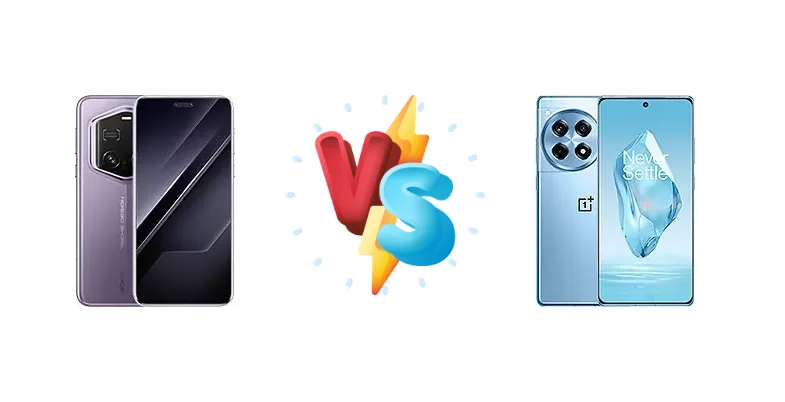
|
🏆 Quick Verdict
For users prioritizing raw performance and display brightness, the Honor Magic7 RSR Porsche Design is the clear winner, thanks to its Snapdragon 8 Elite and significantly brighter display. However, the OnePlus 12R delivers a compelling experience at a lower price point, making it the better choice for budget-conscious buyers.
| PHONES | ||
|---|---|---|
| Phone Names | Honor Magic7 RSR Porsche Design | OnePlus 12R |
| Network | ||
|---|---|---|
| 2G bands | GSM 850 / 900 / 1800 / 1900 | GSM 850 / 900 / 1800 / 1900 |
| 3G bands | HSDPA 800 / 850 / 900 / 1700(AWS) / 1900 / 2100 | HSDPA 850 / 900 / 1700(AWS) / 1900 / 2100 |
| 4G bands | LTE | 1, 2, 3, 4, 5, 7, 8, 12, 17, 18, 19, 20, 26, 28, 32, 38, 39, 40, 41, 66 |
| 5G bands | SA/NSA | 1, 2, 3, 5, 7, 8, 12, 20, 28, 38, 40, 41, 66, 77, 78 SA/NSA |
| Speed | HSPA, LTE, 5G | HSPA, LTE, 5G |
| Technology | GSM / CDMA / HSPA / CDMA2000 / LTE / 5G | GSM / CDMA / HSPA / LTE / 5G |
| Launch | ||
|---|---|---|
| Announced | 2024, December 23 | 2024, January 23 |
| Status | Available. Released 2024, December 24 | Available. Released 2024, February 06 |
| Body | ||
|---|---|---|
| Build | Glass front (NanoCrystal Shield), glass back, aluminum frame | Glass front (Gorilla Glass Victus 2), aluminum frame, glass back |
| Dimensions | 162.7 x 77.1 x 8.8 mm (6.41 x 3.04 x 0.35 in) | 163.3 x 75.3 x 8.8 mm (6.43 x 2.96 x 0.35 in) |
| SIM | · Nano-SIM + Nano-SIM + eSIM + eSIM (max 2 at a time) - INT· Nano-SIM + Nano-SIM - CN | · Nano-SIM + Nano-SIM + eSIM (max 2 at a time)· Nano-SIM + Nano-SIM |
| Weight | 228 g (8.04 oz) | 207 g (7.30 oz) |
| Display | ||
|---|---|---|
| Protection | NanoCrystal Shield | Corning Gorilla Glass Victus 2 |
| Resolution | 1280 x 2800 pixels, 19.5:9 ratio (~453 ppi density) | 1264 x 2780 pixels (~450 ppi density) |
| Size | 6.8 inches, 112.8 cm2 (~89.9% screen-to-body ratio) | 6.78 inches, 111.7 cm2 (~90.9% screen-to-body ratio) |
| Type | LTPO OLED, 1B colors, 120Hz, 4320Hz PWM, Dolby Vision, HDR, 1600 nits (HBM), 5000 nits (peak) | LTPO4 AMOLED, 1B colors, 120Hz, HDR10+, Dolby Vision, 1600 nits (HBM), 4500 nits (peak) |
| Platform | ||
|---|---|---|
| CPU | Octa-core (2x4.32 GHz Oryon V2 Phoenix L + 6x3.53 GHz Oryon V2 Phoenix M) | Octa-core (1x3.2 GHz Cortex-X3 & 2x2.8 GHz Cortex-A715 & 2x2.8 GHz Cortex-A710 & 3x2.0 GHz Cortex-A510) |
| Chipset | Qualcomm SM8750-AB Snapdragon 8 Elite (3 nm) | Qualcomm SM8550-AB Snapdragon 8 Gen 2 (4 nm) |
| GPU | Adreno 830 | Adreno 740 |
| OS | Android 15, MagicOS 9 | Android 14, up to 3 major Android upgrades, OxygenOS 15 |
| Memory | ||
|---|---|---|
| Card slot | No | No |
| Internal | 512GB 16GB RAM, 1TB 24GB RAM | 128GB 8GB RAM, 256GB 8GB RAM, 256GB 12GB RAM, 256GB 16GB RAM |
| Main Camera | ||
|---|---|---|
| Features | LiDAR AF, color spectrum sensor, LED flash, HDR, panorama | Laser AF, color spectrum sensor, LED flash, HDR, panorama |
| Triple | 50 MP, f/1.4-2.0, 23mm (wide), 1/1.3", 1.2µm, multi-directional PDAF, OIS 200 MP, f/1.9, 72mm (periscope telephoto), 1/1.4", 0.56µm, multi-directional PDAF, OIS, 3x optical zoom 50 MP, f/2.0, 13mm, 122˚ (ultrawide), 1/2.88", 0.61µm, dual pixel PDAF | 50 MP, f/1.8, 24mm (wide), 1/1.56", 1.0µm, multi-directional PDAF, OIS 8 MP, f/2.2, 16mm, 112˚ (ultrawide), 1/4.0", 1.12µm 2 MP (macro) |
| Video | 4K@24/30/60fps, 1080p@30/60/120/240fps, gyro-EIS, OIS, HDR, 10-bit video | 4K@30/60fps, 1080p@30/60/120/240fps, gyro-EIS, OIS |
| Selfie camera | ||
|---|---|---|
| Features | - | HDR, panorama |
| Single | 50 MP, f/2.0, 22mm (wide), 1/2.93", 0.6µm, AF TOF 3D, (depth/biometrics sensor) | 16 MP, f/2.4, 26mm (wide), 1/3", 1.0µm |
| Video | 4K@30/60fps, 1080p@30/60fps, gyro-EIS | 1080p@30fps, gyro-EIS |
| Sound | ||
|---|---|---|
| 35mm jack | No | No |
| Loudspeaker | Yes, with stereo speakers | Yes, with stereo speakers |
| Comms | ||
|---|---|---|
| Bluetooth | 5.4, A2DP, LE, aptX HD | 5.3, A2DP, LE, aptX HD |
| Infrared port | Yes | Yes |
| NFC | Yes | Yes |
| Positioning | GPS (L1+L5), GLONASS, BDS (B1I+B1c+B2a), GALILEO (E1+E5a), QZSS (L1+L5) | GPS, GALILEO, GLONASS, BDS, QZSS |
| Radio | No | No |
| USB | USB Type-C 3.2, DisplayPort 1.2, OTG | USB Type-C 2.0 |
| WLAN | Wi-Fi 802.11 a/b/g/n/ac/6/7, dual-band, Wi-Fi Direct | Wi-Fi 802.11 a/b/g/n/ac/6/7, dual-band |
| Features | ||
|---|---|---|
| Sensors | Fingerprint (under display, ultrasonic), Face ID, accelerometer, gyro, proximity, compass | Fingerprint (under display, optical), accelerometer, gyro, proximity, compass |
| Battery | ||
|---|---|---|
| Charging | 100W wired 80W wireless Reverse wireless 5W reverse wired | 100W wired, 100% in 26 min |
| Type | Si/C Li-Ion 5850 mAh | Li-Ion 5500 mAh |
| Misc | ||
|---|---|---|
| Colors | Provence, Agate Grey | Iron Gray, Cool Blue, Electric Violet, Sunset Dune |
| Models | PTP-AN20 | CPH2609, CPH2585, CPH2611 |
| Price | About 1050 EUR | € 410.84 / $ 399.95 / £ 649.00 |
| SAR | - | 1.19 W/kg (head) 0.82 W/kg (body) |
Honor Magic7 RSR Porsche Design
- Superior performance with Snapdragon 8 Elite
- Significantly brighter display for outdoor visibility
- Faster and more versatile charging options (wired & wireless)
- Likely higher price point
- Porsche Design branding may not appeal to all
OnePlus 12R
- Excellent value for the performance offered
- Fast 100W wired charging
- Proven Snapdragon 8 Gen 2 chipset
- Less bright display compared to the Honor
- No wireless charging support
Display Comparison
The Honor Magic7 RSR Porsche Design’s display is a standout feature, achieving a measured peak brightness of 1510 nits. This is a substantial improvement over the OnePlus 12R’s 1181 nits, making the Honor significantly more usable outdoors. While both displays likely utilize OLED technology (though not explicitly stated), the brightness difference is the key differentiator. We expect the Honor to also benefit from a higher peak brightness for HDR content. The absence of refresh rate data for both devices makes a direct comparison difficult, but both are likely to offer at least 120Hz for smooth scrolling.
Camera Comparison
Without detailed camera specifications, a direct comparison is limited. However, given the Porsche Design branding on the Honor, we can anticipate a greater emphasis on camera capabilities, potentially including larger sensors and more advanced image processing algorithms. The OnePlus 12R, while likely offering a competent camera system, will likely prioritize overall value. The absence of megapixel counts or sensor sizes prevents a deeper analysis, but the Honor’s positioning suggests a more sophisticated camera experience.
Performance
The core difference lies in the chipsets: the Honor Magic7 RSR Porsche Design features the Qualcomm SM8750-AB Snapdragon 8 Elite (3nm), while the OnePlus 12R utilizes the SM8550-AB Snapdragon 8 Gen 2 (4nm). The Snapdragon 8 Elite’s 3nm process node promises superior power efficiency and thermal performance compared to the 4nm Snapdragon 8 Gen 2. The Honor’s CPU configuration – Octa-core (2x4.32 GHz Oryon V2 Phoenix L + 6x3.53 GHz Oryon V2 Phoenix M) – suggests a focus on sustained performance, with the Oryon cores offering a performance uplift. The OnePlus 12R’s CPU (Octa-core, 1x3.2 GHz Cortex-X3 & 2x2.8 GHz Cortex-A715 & 2x2.8 GHz Cortex-A710 & 3x2.0 GHz Cortex-A510) is still very capable, but the Honor is expected to deliver a noticeable edge in demanding tasks and gaming. Both devices likely utilize LPDDR5x RAM, but the specific speed isn't provided.
Battery Life
The Honor Magic7 RSR Porsche Design achieves an active use battery score of 15:11h, slightly exceeding the OnePlus 12R’s 14:32h. This difference, while present, isn’t massive. The Honor compensates for any potential battery capacity difference with its superior charging capabilities: 100W wired, 80W wireless, and even reverse wireless charging at 5W. The OnePlus 12R offers 100W wired charging, reaching 100% in 26 minutes, but lacks wireless charging. The Honor’s wireless charging is a significant advantage for users who prefer cable-free convenience.
Buying Guide
Buy the Honor Magic7 RSR Porsche Design if you demand the absolute best in processing power, need a display that remains visible even in direct sunlight, and appreciate the faster charging speeds – both wired and wireless. Buy the OnePlus 12R if you prioritize value, seeking flagship-level performance without the premium price tag, and are comfortable with a slightly less bright display and a reliance on wired charging.