
Honor Magic7 Lite vs Google Pixel 7a: Which Mid-Range Phone Reigns Supreme?
| Phones Images | |||||
|---|---|---|---|---|---|
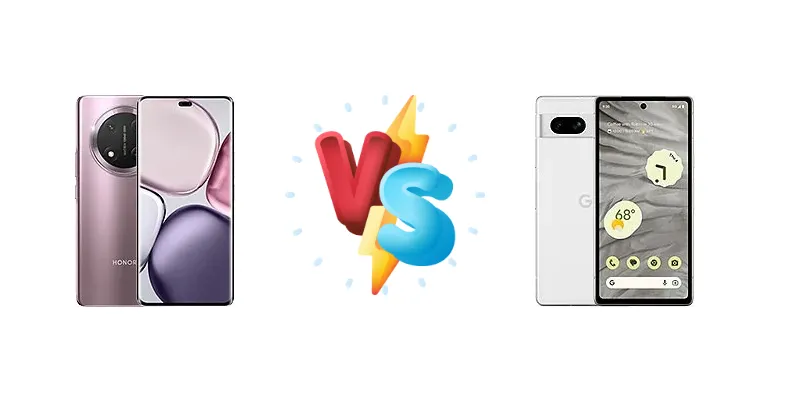
|
🏆 Quick Verdict
For users prioritizing all-day (and then some) battery life and incredibly fast 66W charging, the Honor Magic7 Lite is the clear winner. However, the Google Pixel 7a offers a more powerful processor and Google’s renowned camera processing, making it ideal for photography enthusiasts and those invested in the Google ecosystem.
| PHONES | ||
|---|---|---|
| Phone Names | Honor Magic7 Lite | Google Pixel 7a |
| Network | ||
|---|---|---|
| 2G bands | GSM 850 / 900 / 1800 / 1900 | GSM 850 / 900 / 1800 / 1900 |
| 3G bands | HSDPA 850 / 900 / 1900 / 2100 | HSDPA 800 / 850 / 900 / 1700(AWS) / 1900 / 2100 |
| 4G bands | LTE | 1, 2, 3, 4, 5, 7, 8, 12, 13, 14, 17, 20, 25, 26, 28, 29, 30, 38, 40, 41, 48, 66, 71 - GWKK3, G0DZQ |
| 5G bands | SA/NSA | 1, 2, 3, 5, 7, 8, 12, 14, 20, 25, 28, 30, 38, 41, 48, 66, 71, 77, 78 SA/NSA/Sub6 - GWKK3 |
| Speed | HSPA, LTE, 5G | HSPA, LTE, 5G |
| Technology | GSM / HSPA / LTE / 5G | GSM / HSPA / LTE / 5G |
| - | 1, 2, 3, 5, 7, 8, 12, 20, 25, 28, 38, 40, 41, 66, 75, 76, 77, 78, 79 SA/NSA/Sub6 - GHL1X, G82U8 | |
| Launch | ||
|---|---|---|
| Announced | 2025, January 02 | 2023, May 10 |
| Status | Available. Released 2025, January 02 | Available. Released 2023, May 10 |
| Body | ||
|---|---|---|
| Build | - | Glass front (Gorilla Glass 3), aluminum frame, plastic back |
| Dimensions | 162.8 x 75.5 x 8 mm (6.41 x 2.97 x 0.31 in) | 152 x 72.9 x 9 mm (5.98 x 2.87 x 0.35 in) |
| SIM | Nano-SIM + eSIM | Nano-SIM + eSIM |
| Weight | 189 g (6.67 oz) | 193.5 g (6.84 oz) |
| - | IP67 dust/water resistant (up to 1m for 30 min) | |
| Display | ||
|---|---|---|
| Protection | Mohs level 4 | Corning Gorilla Glass 3 |
| Resolution | 1224 x 2700 pixels (~437 ppi density) | 1080 x 2400 pixels, 20:9 ratio (~429 ppi density) |
| Size | 6.78 inches, 111.5 cm2 (~90.7% screen-to-body ratio) | 6.1 inches, 90.7 cm2 (~81.8% screen-to-body ratio) |
| Type | AMOLED, 1B colors, 120Hz, 3840Hz PWM, 4000 nits (peak) | OLED, HDR, 90Hz |
| - | Always-on display | |
| Platform | ||
|---|---|---|
| CPU | Octa-core (4x2.2 GHz Cortex-A78 & 4x1.8 GHz Cortex-A55) | Octa-core (2x2.85 GHz Cortex-X1 & 2x2.35 GHz Cortex-A78 & 4x1.80 GHz Cortex-A55) |
| Chipset | Qualcomm SM6450 Snapdragon 6 Gen 1 (4 nm) | Google Tensor G2 (5 nm) |
| GPU | Adreno 710 | Mali-G710 MP7 |
| OS | Android 14, MagicOS 8 | Android 13, upgradable to Android 15, up to 5 major Android upgrades |
| Memory | ||
|---|---|---|
| Card slot | No | No |
| Internal | 256GB 8GB RAM, 256GB 12GB RAM, 512GB 6GB RAM, 512GB 8GB RAM, 512GB 12GB RAM | 128GB 8GB RAM |
| - | UFS 3.1 | |
| Main Camera | ||
|---|---|---|
| Dual | 108 MP, f/1.8, (wide), 1/1.67", PDAF, OIS 5 MP, f/2.2, (ultrawide) | 64 MP, f/1.9, 26mm (wide), 1/1.73", 0.8µm, dual pixel PDAF, OIS 13 MP, f/2.2, 120˚ (ultrawide), 1.12µm |
| Features | LED flash, panorama, HDR | Dual-LED flash, Pixel Shift, Auto-HDR, panorama |
| Video | 4K@30fps, 1080p@30fps | 4K@30/60fps, 1080p@30/60/120/240fps, OIS |
| Selfie camera | ||
|---|---|---|
| Features | - | HDR, panorama |
| Single | 16 MP, f/2.5, (wide) | 13 MP, f/2.2, 20mm (ultrawide), 1.12µm |
| Video | 1080p@30fps | 4K@30fps, 1080p@30fps |
| Sound | ||
|---|---|---|
| 3.5mm jack | - | No |
| 35mm jack | No | No |
| Loudspeaker | Yes, with stereo speakers | Yes, with stereo speakers |
| Comms | ||
|---|---|---|
| Bluetooth | 5.1, A2DP, LE | 5.3, A2DP, LE |
| NFC | Yes (market/region dependent) | Yes |
| Positioning | GPS, GLONASS, GALILEO, BDS | GPS, GLONASS, GALILEO, BDS, QZSS, NavIC |
| Radio | No | No |
| USB | USB Type-C 2.0, OTG | USB Type-C 3.2 |
| WLAN | Wi-Fi 802.11 a/b/g/n/ac, dual-band, Wi-Fi Direct | Wi-Fi 802.11 a/b/g/n/ac/6e, tri-band |
| Features | ||
|---|---|---|
| Sensors | Fingerprint (under display, optical), accelerometer, gyro, compass, proximity (ultrasonic) | Fingerprint (under display, optical), accelerometer, gyro, proximity, compass, barometer |
| Battery | ||
|---|---|---|
| Charging | 66W wired Reverse wired | 18W wired, PD3.0 7.5W wireless |
| Type | Si/C Li-Ion 6600 mAh | Li-Po 4385 mAh |
| Misc | ||
|---|---|---|
| Colors | Titanium Purple, Titanium Black | Charcoal, Snow, Sea, Coral |
| Models | BRP-NX1 | GWKK3, GHL1X, G0DZQ, G82U8 |
| Price | $ 401.95 / £ 247.49 / € 264.54 | € 179.90 / $ 150.00 / £ 170.00 / ₹ 25,980 |
| EU LABEL | ||
|---|---|---|
| Battery | 59:33h endurance, 1200 cycles | - |
| Energy | Class B | - |
| Free fall | Class A (270 falls) | - |
| Repairability | Class B | - |
Honor Magic7 Lite
- Exceptional battery life (59:33h endurance)
- Ultra-fast 66W wired charging
- Reverse wired charging capability
- Less powerful processor than the Pixel 7a
- Camera likely lags behind the Pixel 7a in image quality
Google Pixel 7a
- Powerful Google Tensor G2 processor
- Excellent camera with Google’s computational photography
- Bright and accurate display (1070 nits)
- Significantly shorter battery life than the Magic7 Lite
- Slower 18W charging
Display Comparison
The Pixel 7a boasts a significantly brighter display, reaching a measured 1070 nits, which translates to superior visibility outdoors under direct sunlight. While the Magic7 Lite’s display specifications are not provided, the Pixel 7a’s brightness advantage is substantial. The Pixel 7a’s panel likely benefits from Google’s display calibration, offering accurate colors. The absence of LTPO technology on either device suggests both utilize standard refresh rate panels, impacting power consumption compared to adaptive refresh rate displays.
Camera Comparison
The Pixel 7a’s camera system is a key differentiator. While specific sensor details aren’t provided for either phone, Google’s computational photography prowess, powered by the Tensor G2, elevates image quality significantly. The Pixel 7a excels in dynamic range, low-light performance, and overall image clarity. The Magic7 Lite’s camera is likely competent for everyday snapshots, but it won’t match the Pixel 7a’s sophisticated image processing. The Pixel 7a’s video capabilities are also expected to be superior, benefiting from the Tensor G2’s image signal processor.
Performance
The Google Pixel 7a’s Tensor G2 chipset, built on a 5nm process, offers a clear performance advantage over the Honor Magic7 Lite’s Snapdragon 6 Gen 1 (4nm). The Tensor G2’s octa-core configuration, featuring 2x2.85 GHz Cortex-X1 cores, provides a substantial boost in peak performance for demanding tasks like video editing and gaming. While the Snapdragon 6 Gen 1 is efficient, its Cortex-A78 cores clocked at 2.2 GHz are less powerful. The Pixel 7a’s Tensor G2 also benefits from dedicated AI processing capabilities, enhancing features like voice recognition and image processing. The Pixel 7a is the better choice for users who frequently multitask or play graphically intensive games.
Battery Life
The Honor Magic7 Lite truly shines in battery endurance, achieving an impressive 59:33h endurance rating and 15:02h of active use. This is significantly longer than the Pixel 7a’s reported 76h endurance (likely under older testing methodologies). The Magic7 Lite’s 66W wired charging is a game-changer, allowing for incredibly fast top-ups – a full charge will take significantly less time than the Pixel 7a’s 18W charging with PD3.0. While the Pixel 7a offers 7.5W wireless charging, the Magic7 Lite’s faster wired charging and superior endurance make it the clear winner for battery-conscious users. The Magic7 Lite also offers reverse wired charging, a feature absent on the Pixel 7a.
Buying Guide
Buy the Honor Magic7 Lite if you need a phone that can reliably last through two full days of moderate use and you value the convenience of extremely fast charging. This phone is perfect for travelers, commuters, or anyone who frequently finds themselves away from a power outlet. Buy the Google Pixel 7a if you prefer a smoother, more responsive user experience, prioritize camera quality with Google’s computational photography, and appreciate timely software updates and features.