
Honor Magic6 Pro vs Oppo Find X8 Ultra
| Phones Images | |||||
|---|---|---|---|---|---|
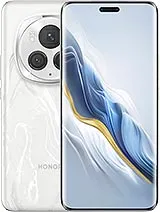
|

|
||||
| PHONES | ||
|---|---|---|
| Phone Names | Honor Magic6 Pro | Oppo Find X8 Ultra |
| Network | ||
|---|---|---|
| 2G bands | GSM 850 / 900 / 1800 / 1900 | GSM 850 / 900 / 1800 / 1900 |
| 3G bands | HSDPA 800 / 850 / 900 / 1700(AWS) / 1900 / 2100 | HSDPA 800 / 850 / 900 / 1700(AWS) / 1900 / 2100 |
| 4G bands | LTE | 1, 3, 4, 5, 7, 8, 18, 19, 20, 26, 28, 34, 38, 39, 40, 41, 42, 48, 66 |
| 5G bands | SA/NSA | 1, 3, 5, 7, 8, 20, 28, 38, 40, 41, 66, 77, 78, 79, 80, 81, 83, 84 SA/NSA |
| Speed | HSPA, LTE, 5G | HSPA, LTE, 5G |
| Technology | GSM / CDMA / HSPA / CDMA2000 / LTE / 5G | GSM / HSPA / LTE / 5G |
| Launch | ||
|---|---|---|
| Announced | 2024, January 11 | 2025, April 10 |
| Status | Available. Released 2024, January 18 | Available. Released 2025, April 16 |
| Body | ||
|---|---|---|
| Build | Glass front (NanoCrystal Shield), glass back or silicone polymer back (eco leather) | - |
| Dimensions | 162.5 x 75.8 x 8.9 mm (6.40 x 2.98 x 0.35 in) | 163.1 x 76.8 x 8.8 mm (6.42 x 3.02 x 0.35 in) |
| SIM | · Nano-SIM + eSIM· Nano-SIM + Nano-SIM | Nano-SIM + Nano-SIM |
| Weight | 225 g or 229 g (7.94 oz) | 226 g (7.97 oz) |
| Display | ||
|---|---|---|
| Protection | NanoCrystal Shield | Corning Gorilla Glass (unspecified version) |
| Resolution | 1280 x 2800 pixels, 19.5:9 ratio (~453 ppi density) | 1440 x 3168 pixels (~510 ppi density) |
| Size | 6.8 inches, 112.8 cm2 (~91.6% screen-to-body ratio) | 6.82 inches, 113.0 cm2 (~90.2% screen-to-body ratio) |
| Type | LTPO OLED, 1B colors, 120Hz, Dolby Vision, HDR, 1600 nits (HBM), 5000 nits (peak) | LTPO AMOLED, 1B colors, 120Hz, 2160Hz PWM, Dolby Vision, HDR Vivid, HDR10+, 800 nits (typ), 1600 nits (HBM), 2500 nits (peak) |
| Platform | ||
|---|---|---|
| CPU | Octa-core (1x3.3 GHz Cortex-X4 & 3x3.2 GHz Cortex-A720 & 2x3.0 GHz Cortex-A720 & 2x2.3 GHz Cortex-A520) | Octa-core (2x4.32 GHz Oryon V2 Phoenix L + 6x3.53 GHz Oryon V2 Phoenix M) |
| Chipset | Qualcomm SM8650-AB Snapdragon 8 Gen 3 (4 nm) | Qualcomm SM8750-AB Snapdragon 8 Elite (3 nm) |
| GPU | Adreno 750 | Adreno 830 |
| OS | Android 14, up to 4 major Android upgrades, MagicOS 8 | Android 15, ColorOS 15 |
| Memory | ||
|---|---|---|
| Card slot | No | No |
| Internal | 256GB 12GB RAM, 256GB 16GB RAM, 512GB 12GB RAM, 512GB 16GB RAM, 1TB 16GB RAM | 256GB 12GB RAM, 512GB 16GB RAM, 1TB 16GB RAM |
| Main Camera | ||
|---|---|---|
| Features | Laser AF, color spectrum sensor, LED flash, HDR, panorama | Laser AF, color spectrum sensor, Hasselblad Color Calibration, LED flash, HDR, panorama |
| Quad | - | 50 MP, f/1.8, 23mm (wide), 1.0"-type, 1.6µm, dual pixel PDAF, OIS 50 MP, f/2.1, 70mm (periscope telephoto), 1/1.56", 1.0µm, 3x optical zoom, multi-directional PDAF (10cm - ∞), OIS 50 MP, f/3.1, 135mm (periscope telephoto), 1/1/.95", 0.8µm, 6x optical zoom, dual pixel PDAF (35cm - ∞), OIS 50 MP, f/2.0, 15mm, 120˚ (ultrawide), 1/2.75", 0.64µm, PDAF |
| Triple | 50 MP, f/1.4-2.0, 23mm (wide), 1/1.3", 1.2µm, PDAF, OIS 180 MP, f/2.6, (periscope telephoto), 1/1.49", 0.56µm, PDAF, OIS, 2.5x optical zoom 50 MP, f/2.0, 13mm, 122˚ (ultrawide), 1/2.88", 0.61µm, AF | - |
| Video | 4K@24/30/60fps, 1080p@30/60/120/240fps, gyro-EIS, OIS, HDR, 10-bit video | 4K@30/60/120fps, 1080p@30/60/120/240fps; gyro-EIS; HDR, 10‑bit video, Dolby Vision |
| Selfie camera | ||
|---|---|---|
| Features | - | Panorama, HDR |
| Single | 50 MP, f/2.0, 22mm (wide), 1/2.93", 0.6µm, AF TOF 3D, (depth/biometrics sensor) | 32 MP, f/2.4, 21mm (wide), 1/2.74", 0.8µm, PDAF |
| Video | 4K@30fps, 1080p@30/60fps, gyro-EIS | 4K@30/60fps, 1080p@30/60fps, gyro-EIS |
| Sound | ||
|---|---|---|
| 35mm jack | No | No |
| Loudspeaker | Yes, with stereo speakers | Yes, with stereo speakers |
| Comms | ||
|---|---|---|
| Bluetooth | 5.3, A2DP, LE, aptX HD | 5.4, A2DP, LE, aptX HD, LHDC 5 |
| Infrared port | Yes | Yes |
| NFC | Yes | Yes |
| Positioning | GPS (L1+L5), GLONASS, BDS (B1I+B1c+B2a), GALILEO (E1+E5a) | GPS (L1+L5), BDS (B1I+B1c+B2a), GALILEO (E1+E5a), QZSS (L1+L5), GLONASS |
| Radio | No | No |
| USB | USB Type-C 3.2, DisplayPort 1.2, OTG | USB Type-C 3.2, OTG |
| WLAN | Wi-Fi 802.11 a/b/g/n/ac/6/7, dual-band, Wi-Fi Direct | Wi-Fi 802.11 a/b/g/n/ac/6/7, dual-band, Wi-Fi Direct |
| Features | ||
|---|---|---|
| Sensors | Fingerprint (under display, optical), Face ID, accelerometer, gyro, proximity, compass | Fingerprint (under display, ultrasonic), accelerometer, gyro, proximity, compass |
| Battery | ||
|---|---|---|
| Charging | 80W wired 66W wireless Reverse wireless 5W reverse wired | 100W wired, 18W PD, 18W QC, 55W PPS 50W wireless 10W reverse wireless |
| Type | Si/C Li-Ion 5600 mAh | Si/C Li-Ion 6100 mAh |
| Misc | ||
|---|---|---|
| Colors | Black, Green, Blue, Purple, White | Matte Black, Pure White, Shell Pink |
| Models | BVL-AN16, BVL-N49 | PKJ110, PKU110 |
| Price | € 455.54 / $ 899.00 / £ 598.99 | - |
| OUR TESTS | ||
|---|---|---|
| Battery | Active use score 14:06h | Active use score 16:20h |
| Display | 1578 nits max brightness (measured) | 1157 nits max brightness (measured) |
| Loudspeaker | -25.6 LUFS (Very good) | -26.3 LUFS (Good) |
| Performance | AnTuTu: 2017400 (v10) GeekBench: 6787 (v6) 3DMark: 5254 (Wild Life Extreme) | AnTuTu: 2710432 (v10) GeekBench: 9503 (v6) 3DMark: 6644 (Wild Life Extreme) |