
Honor Magic5 vs Huawei Mate 50 Pro: A Detailed Comparison of Flagship Power
| Phones Images | |||||
|---|---|---|---|---|---|
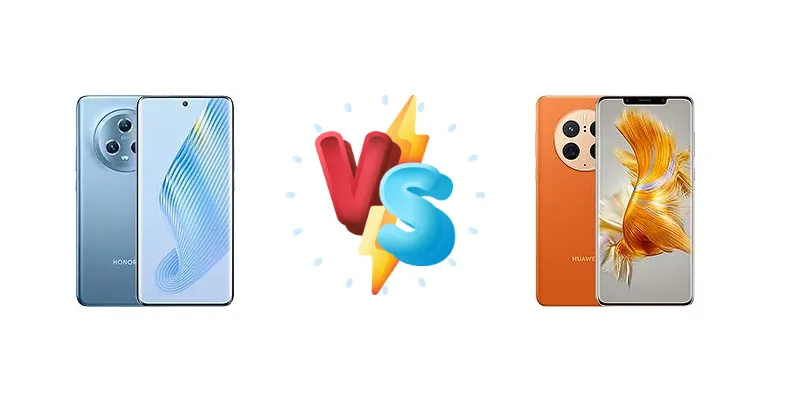
|
🏆 Quick Verdict
For most users, the Honor Magic5 emerges as the superior choice. Its Snapdragon 8 Gen 2 chipset delivers a noticeable performance uplift over the Mate 50 Pro’s Snapdragon 8+ Gen 1, translating to smoother multitasking and gaming. However, the Mate 50 Pro’s excellent battery life and wireless charging capabilities remain strong contenders for power users.
| PHONES | ||
|---|---|---|
| Phone Names | Honor Magic5 | Huawei Mate 50 Pro |
| Network | ||
|---|---|---|
| 2G bands | GSM 850 / 900 / 1800 / 1900 | GSM 850 / 900 / 1800 / 1900 |
| 3G bands | HSDPA 800 / 850 / 900 / 1700(AWS) / 1900 / 2100 | HSDPA 800 / 850 / 900 / 1700(AWS) / 1900 / 2100 |
| 4G bands | 1, 2, 3, 4, 5, 7, 8, 12, 17, 18, 19, 20, 26, 28, 34, 38, 39, 40, 41 - China | 1, 2, 3, 4, 5, 7, 8, 12, 13, 17, 18, 19, 20, 26, 28, 32, 34, 38, 39, 40, 41, 66 - International |
| 5G bands | 1, 3, 5, 8, 28, 38, 41, 77, 78 SA/NSA - China | - |
| Speed | HSPA, LTE, 5G | HSPA, LTE |
| Technology | GSM / CDMA / HSPA / EVDO / LTE / 5G | GSM / CDMA / HSPA / CDMA2000 / LTE |
| CDMA2000 1xEV-DO | 1, 2, 3, 4, 5, 7, 8, 12, 17, 18, 19, 20, 26, 28, 34, 38, 39, 40, 41 - China | |
| Launch | ||
|---|---|---|
| Announced | 2023, February 27 | 2022, September 06 |
| Status | Available. Released 2023, March 31 | Available. Released 2022, September 28 |
| Body | ||
|---|---|---|
| Build | Glass front, glass back or eco leather back | - |
| Dimensions | 161.4 x 75.5 x 7.8 mm (6.35 x 2.97 x 0.31 in) | 162.1 x 75.5 x 8.5 mm (6.38 x 2.97 x 0.33 in) |
| SIM | · Nano-SIM· Nano-SIM + Nano-SIM | · Nano-SIM· Nano-SIM + Nano-SIM |
| Weight | 191 g (6.74 oz) | 205 g / 209 g (7.23 oz) |
| - | IP68 dust/water resistant (up to 6m for 30 min) | |
| Display | ||
|---|---|---|
| Protection | - | Huawei Kunlun Glass |
| Resolution | 1224 x 2688 pixels (~439 ppi density) | 1212 x 2616 pixels, 19.5:9 ratio (~428 ppi density) |
| Size | 6.73 inches, 110.2 cm2 (~90.4% screen-to-body ratio) | 6.74 inches, 111.8 cm2 (~91.3% screen-to-body ratio) |
| Type | OLED, 1B colors, 120Hz, HDR10+, 1600 nits (peak) | OLED, 1B colors, 120Hz |
| Platform | ||
|---|---|---|
| CPU | Octa-core (1x3.2 GHz Cortex-X3 & 2x2.8 GHz Cortex-A715 & 2x2.8 GHz Cortex-A710 & 3x2.0 GHz Cortex-A510) | Octa-core (1x3.19 GHz Cortex-X2 & 3x2.75 GHz Cortex-A710 & 4x2.0 GHz Cortex-A510) |
| Chipset | Qualcomm SM8550-AB Snapdragon 8 Gen 2 (4 nm) | Qualcomm SM8475 Snapdragon 8+ Gen 1 4G (4 nm) |
| GPU | Adreno 740 | Adreno 730 |
| OS | Android 13, MagicOS 7.1 | EMUI 13 (International), HarmonyOS 3.0 (China) |
| Memory | ||
|---|---|---|
| Card slot | No | Nano Memory (uses shared SIM slot) |
| Internal | 256GB 8GB RAM, 256GB 12GB RAM, 256GB 16GB RAM, 512GB 16GB RAM | 256GB 8GB RAM, 512GB 8GB RAM |
| UFS | UFS 3.1 | |
| Main Camera | ||
|---|---|---|
| Features | Color spectrum sensor, LED flash, HDR, panorama | Laser AF, color spectrum sensor, LED flash, panorama, HDR |
| Single | 12 MP, f/2.4, 100˚ (ultrawide), 1.22µm | 13 MP, f/2.4, 18mm (ultrawide) TOF 3D, (depth/biometrics sensor) |
| Triple | 54 MP, f/1.9, (wide), 1/1.49", PDAF 32 MP, f/2.4, (telephoto), PDAF, OIS, 2.5x optical zoom 50 MP, f/2.0, 13mm, 122˚ (ultrawide), 1/2.5", AF | 50 MP, f/1.4-f/4.0, 24mm (wide), PDAF, OIS 64 MP, f/3.5, 90mm (periscope telephoto), PDAF, OIS, 3.5x optical zoom 13 MP, f/2.2, 13mm, 120˚ (ultrawide), PDAF |
| Video | 4K@30/60fps, 1080p@30/60fps, gyro-EIS, HDR10, 10-bit video | 4K@30/60fps, 1080p@30/60/120/240/480fps, 720p@960fps, 720p@3840fps, HDR, gyro-EIS |
| Selfie camera | ||
|---|---|---|
| Features | HDR | HDR, panorama |
| Single | 12 MP, f/2.4, 100˚ (ultrawide), 1.22µm | 13 MP, f/2.4, 18mm (ultrawide) TOF 3D, (depth/biometrics sensor) |
| Video | 4K@30fps, 1080p@30/60fps | 4K@30/60fps, 1080p@30/60/240fps |
| Sound | ||
|---|---|---|
| 3.5mm jack | No | No |
| 35mm jack | No | No |
| Loudspeaker | Yes, with stereo speakers | Yes, with stereo speakers |
| 24-bit audio stereo recording | 32-bit/384kHz audio | |
| Comms | ||
|---|---|---|
| Bluetooth | 5.2, A2DP, LE, aptX HD | 5.2, A2DP, LE |
| Infrared port | Yes | Yes |
| NFC | Yes | Yes |
| Positioning | GPS (L1+L5), GLONASS (L1), BDS (B1I+B1c+B2a), GALILEO (E1+E5a) | GPS (L1+L5), GLONASS (L1), BDS (B1I+B1c+B2a), GALILEO (E1+E5a), QZSS (L1+L5), NavIC (L5) |
| Radio | No | No |
| USB | USB Type-C 2.0, OTG | USB Type-C 3.1, OTG, Display Port 1.2 |
| WLAN | Wi-Fi 802.11 a/b/g/n/ac/6/7, dual-band, Wi-Fi Direct | Wi-Fi 802.11 a/b/g/n/ac/6, dual-band, Wi-Fi Direct |
| Features | ||
|---|---|---|
| Sensors | Fingerprint (under display, optical), accelerometer, gyro, proximity, compass | Face ID, fingerprint (under display, optical), accelerometer, gyro, proximity, barometer, compass |
| - | BDS Satellite Message (sending only) | |
| Battery | ||
|---|---|---|
| Charging | 66W wired 5W reverse wired | 66W wired 50W wireless 5W reverse wireless |
| Type | Li-Po 5100 mAh | Li-Po 4700 mAh |
| Misc | ||
|---|---|---|
| Colors | Black, Glacier Blue, Green, Purple, Orange | Black, Silver, Purple, Orange |
| Models | PGT-AN00, PGT-N09 | DCO-AL00, DCO-LX9 |
| Price | About 900 EUR | About 900 EUR |
| Tests | ||
|---|---|---|
| Battery life | - | Endurance rating 104h |
| Camera | - | Photo / Video |
| Display | - | Contrast ratio: Infinite (nominal) |
| Loudspeaker | - | -24.8 LUFS (Very good) |
| Performance | - | AnTuTu: 979921 (v9) GeekBench: 3839 (v5.1) GFXBench: 68fps (ES 3.1 onscreen) |
Honor Magic5
- Latest Snapdragon 8 Gen 2 chipset for superior performance
- Potential for longer software support
- Faster wired charging (66W)
- Battery life likely inferior to Mate 50 Pro
- No wireless charging support
- Limited information on camera capabilities
Huawei Mate 50 Pro
- Exceptional battery life and endurance
- 50W wireless charging support
- Proven camera performance and image processing
- Older Snapdragon 8+ Gen 1 chipset
- Limited to 4G connectivity
- Potentially shorter software support lifecycle
Display Comparison
The Huawei Mate 50 Pro boasts a display capable of reaching 946 nits of peak brightness, ensuring excellent visibility even in direct sunlight. While the Honor Magic5’s brightness isn’t specified, the Mate 50 Pro’s ‘Infinite’ contrast ratio suggests a high-quality OLED panel. The lack of LTPO information for either device means we can’t definitively assess adaptive refresh rate efficiency. Both likely offer excellent viewing experiences, but the Mate 50 Pro’s measured brightness gives it a slight edge for outdoor use.
Camera Comparison
Both devices are described as having capable Photo/Video capabilities, but specific details are lacking. Without sensor size or aperture information, a direct comparison is difficult. However, the Mate 50 Pro’s reputation for strong image processing and color science suggests a refined camera experience. The absence of details on the Honor Magic5’s camera system makes it hard to assess its strengths. We can assume both will offer a range of shooting modes, but the Mate 50 Pro’s established track record gives it a tentative advantage.
Performance
The Honor Magic5’s Qualcomm SM8550-AB Snapdragon 8 Gen 2 (4nm) represents a significant leap over the Mate 50 Pro’s Snapdragon 8+ Gen 1 (4nm). The 8 Gen 2’s Cortex-X3 prime core, clocked at 3.2 GHz, offers a substantial performance advantage over the Mate 50 Pro’s Cortex-X2 (3.19 GHz). The newer architecture and 4nm process node of the Snapdragon 8 Gen 2 also contribute to improved thermal efficiency, potentially reducing throttling during sustained workloads. The Mate 50 Pro is limited to 4G connectivity, a major drawback for users in areas with robust 5G infrastructure.
Battery Life
The Huawei Mate 50 Pro shines in battery endurance, achieving an impressive 10:36h of active use and a 104-hour endurance rating. While the Honor Magic5’s battery capacity isn’t specified, the Mate 50 Pro’s longevity is a clear advantage. The Mate 50 Pro also offers 50W wireless charging, a feature absent on the Honor Magic5, which is limited to 66W wired charging and 5W reverse wired charging. The 66W wired charging is competitive, but the addition of faster wireless charging on the Mate 50 Pro provides greater flexibility.
Buying Guide
Buy the Honor Magic5 if you prioritize raw processing power for demanding applications, gaming, and future-proofing. Its newer chipset and potential for software updates make it a long-term investment. Buy the Huawei Mate 50 Pro if you value exceptional battery life, prefer wireless charging, and don't require the absolute latest processor – or if 5G connectivity isn't a priority due to the 4G limitation.