
Honor Magic3 Pro+ vs Huawei Mate 40 Pro: Which Flagship Reigns Supreme?
| Phones Images | |||||
|---|---|---|---|---|---|
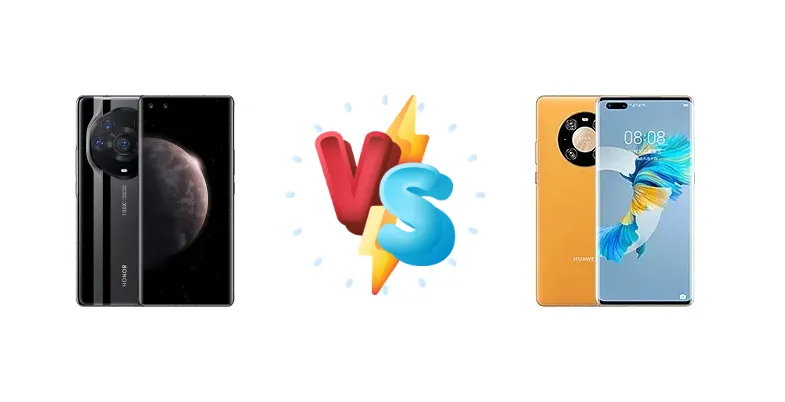
|
🏆 Quick Verdict
The Honor Magic3 Pro+ edges out the Mate 40 Pro due to its Snapdragon 888+ chipset offering slightly better sustained performance and 5G connectivity. While the Mate 40 Pro's camera remains excellent, the Magic3 Pro+'s overall package provides a more modern and versatile experience.
| PHONES | ||
|---|---|---|
| Phone Names | Honor Magic3 Pro+ | Huawei Mate 40 Pro 4G |
| Network | ||
|---|---|---|
| 2G bands | GSM 850 / 900 / 1800 / 1900 - SIM 1 & SIM 2 | GSM 850 / 900 / 1800 / 1900 |
| 3G bands | HSDPA 800 / 850 / 900 / 1700(AWS) / 1900 / 2100 | HSDPA 800 / 850 / 900 / 1700(AWS) / 1900 / 2100 |
| 4G bands | 1, 2, 3, 4, 5, 7, 8, 12, 17, 18, 19, 20, 26, 28, 34, 38, 39, 40, 41 | 1, 2, 3, 4, 5, 6, 7, 8, 9, 12, 17, 18, 19, 20, 26, 34, 38, 39, 40, 41 |
| 5G bands | 1, 3, 5, 8, 28, 38, 41, 77, 78, 79 SA/NSA | - |
| Speed | HSPA, LTE-A, 5G | HSPA, LTE |
| Technology | GSM / CDMA / HSPA / EVDO / LTE / 5G | GSM / CDMA / HSPA / EVDO / LTE |
| CDMA2000 1xEV-DO | CDMA2000 1xEV-DO | |
| Launch | ||
|---|---|---|
| Announced | 2021, August 12 | 2021, June 28 |
| Status | Available. Released 2021, September 19 | Available. Released 2021, July 09 |
| Body | ||
|---|---|---|
| Build | Glass front, ceramic back, aluminum frame | Glass front, glass back or eco leather back, aluminum frame |
| Dimensions | 162.8 x 74.9 x 9.9 mm (6.41 x 2.95 x 0.39 in) | 162.9 x 75.5 x 9.1 mm (Glass) / 9.5mm (Leather) |
| SIM | Dual SIM (Nano-SIM, dual stand-by) | Nano-SIM + Nano-SIM |
| Weight | 236 g (8.32 oz) | 212 g (7.48 oz) |
| IP68 dust/water resistant (up to 1.5m for 30 min) | IP68 dust/water resistant | |
| Display | ||
|---|---|---|
| Resolution | 1344 x 2772 pixels, 18.5:9 ratio (~456 ppi density) | 1344 x 2772 pixels, 18.5:9 ratio (~456 ppi density) |
| Size | 6.76 inches, 115.7 cm2 (~94.9% screen-to-body ratio) | 6.76 inches, 115.7 cm2 (~94.1% screen-to-body ratio) |
| Type | OLED, 1B colors, 120Hz, HDR10+ | OLED, HDR10, 90Hz |
| Platform | ||
|---|---|---|
| CPU | Octa-core (1x2.99 GHz Cortex-X1 & 3x2.42 GHz Cortex-A78 & 4x1.80 GHz Cortex-A55) | Octa-core (1x3.13 GHz Cortex-A77 & 3x2.54 GHz Cortex-A77 & 4x2.05 GHz Cortex-A55) |
| Chipset | Qualcomm SM8350 Snapdragon 888+ 5G (5 nm) | Kirin 9000 (5 nm) |
| GPU | Adreno 660 | Mali-G78 MP24 |
| OS | Android 11, Magic UI 5 | HarmonyOS 2.0 |
| Memory | ||
|---|---|---|
| Card slot | No | Nano Memory (uses shared SIM slot) |
| Internal | 512GB 12GB RAM | 128GB 8GB RAM, 256GB 8GB RAM, 512GB 8GB RAM |
| - | UFS 3.1 | |
| Main Camera | ||
|---|---|---|
| Features | LED flash, HDR, panorama | Laser AF, color spectrum sensor, Leica optics, LED flash, panorama, HDR |
| Quad | 50 MP, f/1.9, 23mm (wide), 1/1.28", 1.22µm, multi-directional PDAF, OIS 64 MP, f/3.5, 90mm (telephoto), 1/2.0", 0.7µm, PDAF, OIS, 3.5x optical zoom, 10x hybrid zoom 64 MP, f/1.8, (monochrome) 64 MP, f/2.4, 11mm 126˚ (ultrawide), 1/2.0", 0.7µm, PDAF TOF 3D (depth) | - |
| Single | 13 MP, f/2.4, 100˚ (ultrawide) TOF 3D, (depth/biometrics sensor) | 13 MP, f/2.4, 18mm (ultrawide) TOF 3D, (depth/biometrics sensor) |
| Triple | - | 50 MP, f/1.9, 23mm (wide), 1/1.28", 1.22µm, multi-directional PDAF 12 MP, f/3.4, 125mm (periscope telephoto), PDAF, OIS, 5x optical zoom 20 MP, f/1.8, 18mm (ultrawide), PDAF |
| Video | 4K@30/60fps, 1080p@30/60fps, gyro-EIS | 4K@30/60fps, 1080p@30/60/120/240/480fps, 720p@960fps, 720p@3840fps, HDR, gyro-EIS |
| Selfie camera | ||
|---|---|---|
| Features | HDR | HDR, panorama |
| Single | 13 MP, f/2.4, 100˚ (ultrawide) TOF 3D, (depth/biometrics sensor) | 13 MP, f/2.4, 18mm (ultrawide) TOF 3D, (depth/biometrics sensor) |
| Video | 1080p@30fps | 4K@30/60fps, 1080p@30/60/240fps |
| Sound | ||
|---|---|---|
| 3.5mm jack | No | No |
| 35mm jack | - | No |
| Loudspeaker | Yes, with stereo speakers | Yes, with stereo speakers |
| - | 32-bit/384kHz audio | |
| Comms | ||
|---|---|---|
| Bluetooth | 5.2, A2DP, LE, aptX HD | 5.2, A2DP, LE |
| Infrared port | - | Yes |
| NFC | Yes | Yes |
| Positioning | GPS (L1+L5), GLONASS (L1), BDS (B1I+B1c+B2a) | GPS (L1+L5), GLONASS (L1), BDS (B1I+B1c+B2a+B2b), GALILEO (E1+E5a+E5b), QZSS (L1+L5), NavIC |
| Radio | No | No |
| USB | USB Type-C 3.1, OTG | USB Type-C 3.1, OTG |
| WLAN | Wi-Fi 802.11 a/b/g/n/ac/6, dual-band, Wi-Fi Direct | Wi-Fi 802.11 a/b/g/n/ac/6, dual-band, Wi-Fi Direct |
| Features | ||
|---|---|---|
| Sensors | Fingerprint (under display, optical), Face ID, accelerometer, gyro, proximity, compass, color spectrum | Face ID, fingerprint (under display, optical), accelerometer, gyro, proximity, barometer, compass |
| Battery | ||
|---|---|---|
| Charging | 66W wired 66W wireless 5W reverse wireless 5W reverse wired | 66W wired 50W wireless 5W reverse wireless |
| Type | Li-Po 4600 mAh, non-removable | Li-Po 4400 mAh |
| Misc | ||
|---|---|---|
| Colors | Ceramic Black, Ceramic White | Mystic Silver, White, Black, Green, Yellow |
| Models | ELZ-AN20 | NOH-AL00, NOH-AL10 |
| Price | About 1070 EUR | About 800 EUR |
Honor Magic3 Pro+
- Superior Performance (Snapdragon 888+)
- Faster 120Hz Display
- Faster Wireless Charging (66W)
- 5G Connectivity
- More Recent Software Updates
- Design might be less distinctive than Mate 40 Pro
- Camera, while good, doesn't quite match Mate 40 Pro in still photography
Huawei Mate 40 Pro 4G
- Exceptional Camera Quality (especially low light)
- Premium Design and Build Quality
- Accurate Color Reproduction on Display
- Slower Performance compared to Magic3 Pro+
- No 5G Connectivity
- Potential Software Limitations due to US Trade Ban
- Slower Wireless Charging (50W)
Display Comparison
Both phones feature excellent OLED displays with vibrant colors and smooth refresh rates (90Hz for Mate 40 Pro, 120Hz for Magic3 Pro+). The Magic3 Pro+’s 120Hz refresh rate provides a slightly more fluid experience, while the Mate 40 Pro’s display is known for its accurate color reproduction. Both have curved edges, which some users may find aesthetically pleasing, while others prefer flat screens.
Camera Comparison
The Huawei Mate 40 Pro’s camera system is renowned for its exceptional image quality, particularly in low light. Its RYYB sensor technology captures more light. The Magic3 Pro+ also has a very capable camera system, offering versatile shooting options and impressive video recording capabilities. While the Mate 40 Pro excels in still photography, the Magic3 Pro+ offers a more balanced camera experience.
Performance
The Snapdragon 888+ in the Magic3 Pro+ generally outperforms the Kirin 9000 in the Mate 40 Pro, especially in sustained workloads. The Kirin 9000 was impressive at launch, but the 888+ benefits from Qualcomm's optimizations. Both offer flagship-level performance for everyday tasks and gaming.
Battery Life
Both phones offer 66W wired charging, providing relatively fast charging times. The wireless charging speeds differ (50W for Mate 40 Pro, 66W for Magic3 Pro+). Battery life is comparable, typically lasting a full day with moderate usage. Both include reverse wireless charging.
Buying Guide
The Honor Magic3 Pro+ is ideal for users prioritizing raw performance, 5G capabilities, and a more recent software experience. The Huawei Mate 40 Pro 4G is a strong choice for those who value exceptional camera quality and a refined design, understanding potential software limitations due to the US trade ban.