
Honor Magic Vs vs. Huawei Mate X3: A Deep Dive into Foldable Flagships
| Phones Images | |||||
|---|---|---|---|---|---|
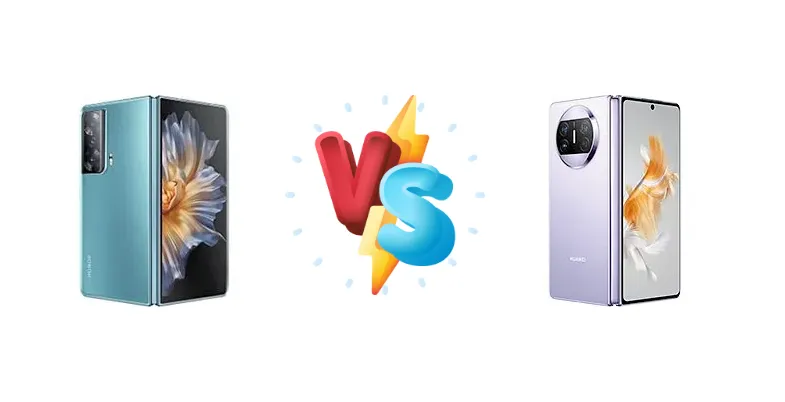
|
🏆 Quick Verdict
For most users, the Honor Magic Vs offers a slightly better overall package. Its superior endurance rating of 85 hours, combined with a competitive price point, makes it the more practical choice. However, the Huawei Mate X3’s faster wireless charging and marginally brighter display appeal to users prioritizing those features.
| PHONES | ||
|---|---|---|
| Phone Names | Honor Magic Vs | Huawei Mate X3 |
| Network | ||
|---|---|---|
| 2G bands | GSM 850 / 900 / 1800 / 1900 | GSM 850 / 900 / 1800 / 1900 |
| 3G bands | HSDPA 800 / 850 / 900 / 1700(AWS) / 1900 / 2100 | HSDPA 800 / 850 / 900 / 1700(AWS) / 1900 / 2100 |
| 4G bands | 1, 2, 3, 4, 5, 7, 8, 12, 17, 18, 19, 20, 26, 28, 34, 38, 39, 40, 41 | 1, 2, 3, 4, 5, 7, 8, 12, 17, 18, 19, 20, 26, 28, 34, 38, 39, 40, 41 |
| 5G bands | 1, 3, 5, 8, 28, 38, 41, 77, 78 SA/NSA | - |
| Speed | HSPA, LTE, 5G | HSPA, LTE |
| Technology | GSM / CDMA / HSPA / CDMA2000 / LTE / 5G | GSM / CDMA / HSPA / EVDO / LTE |
| CDMA2000 1x | CDMA2000 1xEV-DO | |
| Launch | ||
|---|---|---|
| Announced | 2022, November 23 | 2023, March 23 |
| Status | Available. Released 2022, December 30 | Available. Released 2023, April 08 |
| Body | ||
|---|---|---|
| Build | Glass front, glass back or eco leather back, magnesium alloy frame, titanium alloy folding mechanism | Glass front, glass back or eco leather back, aluminum frame |
| Dimensions | Unfolded: 160.3 x 141.5 x 6.1 mmFolded: 160.3 x 72.6 x 12.9 mm | Unfolded: 156.9 x 141.5 x 5.3 mmFolded: 156.9 x 72.4 x 11.1 mm |
| SIM | Nano-SIM + Nano-SIM | Nano-SIM + Nano-SIM |
| Weight | 261 g / 267 g (9.21 oz) | 239 g or 241 g (8.43 oz) |
| - | IPX8 dust/water resistant (up to 1.5m for 30 min) | |
| Display | ||
|---|---|---|
| Protection | - | Kunlun Glass (cover display only) |
| Resolution | 1984 x 2272 pixels (~382 ppi density) | 2224 x 2496 pixels (~426 ppi density) |
| Size | 7.9 inches, 199.5 cm2 (~87.9% screen-to-body ratio) | 7.85 inches, 197.5 cm2 (~88.9% screen-to-body ratio) |
| Type | Foldable OLED, 1B colors, 90Hz, HDR10+, 800 nits | Foldable OLED, 1B colors, 120Hz |
| Cover display: OLED, 1B colors, 120Hz, HDR10+, 1200 nits, 6.45 inches, 1080 x 2560 pixels, 431 ppi | Cover display: OLED, 120Hz, 6.4 inches, 1080 x 2504 pixels | |
| Platform | ||
|---|---|---|
| CPU | Octa-core (1x3.0 GHz Cortex-X2 & 3x2.5 GHz Cortex-A710 & 4x1.80 GHz Cortex-A510) | Octa-core (1x3.19 GHz Cortex-X2 & 3x2.75 GHz Cortex-A710 & 4x2.0 GHz Cortex-A510) |
| Chipset | Qualcomm SM8475 Snapdragon 8+ Gen 1 (4 nm) | Qualcomm SM8475 Snapdragon 8+ Gen 1 4G (4 nm) |
| GPU | Adreno 730 | Adreno 730 |
| OS | Android 13, MagicOS 7.1 - InternationalAndroid 12, MagicOS 7 - China | HarmonyOS 3.1 (China), EMUI 13.1 (Europe), no Google Play Services |
| Memory | ||
|---|---|---|
| Card slot | No | Nano Memory (uses shared SIM slot) |
| Internal | 256GB 8GB RAM, 256GB 12GB RAM, 512GB 12GB RAM | 256GB 12GB RAM, 512GB 12GB RAM, 1TB 12GB RAM |
| - | UFS | |
| Main Camera | ||
|---|---|---|
| Features | Dual-LED dual-tone flash, HDR, panorama | Laser AF, color spectrum sensor, LED flash, panorama, HDR |
| Triple | 54 MP, f/1.9, 27mm (wide), 1/1.49", 1.0µm, PDAF 8 MP, f/2.4, 81mm (telephoto), PDAF, 3x optical zoom, OIS 50 MP, f/2.0, 13mm, 122˚ (ultrawide), AF | 50 MP, f/1.8, 23mm (wide), PDAF, OIS 12 MP, f/3.4, 125mm (periscope telephoto), PDAF, OIS, 5x optical zoom 13 MP, f/2.2, 13mm (ultrawide), AF |
| Video | 4K@30/60fps (10-bit), 1080p@30/60fps, gyro-EIS, HDR10+ | 4K@30/60fps, 1080p@30/60fps, gyro-EIS |
| Selfie camera | ||
|---|---|---|
| Features | HDR | HDR, panorama |
| Single | 16 MP, f/2.5, 24mm (wide) | 8 MP, f/2.4, (wide) Cover camera: 8 MP, f/2.4, (wide) |
| Video | 1080p@30fps, gyro-EIS | 4K@30fps, 1080p@30fps |
| Sound | ||
|---|---|---|
| 3.5mm jack | No | No |
| 35mm jack | No | No |
| Loudspeaker | Yes, with stereo speakers | Yes, with stereo speakers |
| Comms | ||
|---|---|---|
| Bluetooth | 5.2, A2DP, LE, aptX HD | 5.2, A2DP, LE |
| Infrared port | Yes | Yes |
| NFC | Yes | Yes |
| Positioning | GPS (L1+L5), GLONASS (L1), BDS (B1I+B1c+B2a), GALILEO (E1+E5a), QZSS (L1+L5) | GPS (L1+L5), GLONASS (B1I+B1c+B2a), BDS (B1I+B1c+B2a), GALILEO (E1+E5a), QZSS (L1+L5), NavIC |
| Radio | No | No |
| USB | USB Type-C 3.1, OTG, Display Port 1.2 | USB Type-C 3.1, DisplayPort 1.2, OTG |
| WLAN | Wi-Fi 802.11 a/b/g/n/ac/6, dual-band, Wi-Fi Direct | Wi-Fi 802.11 a/b/g/n/ac/6, dual-band, Wi-Fi Direct |
| Features | ||
|---|---|---|
| Sensors | Fingerprint (side-mounted), accelerometer, gyro, proximity, compass | Fingerprint (side-mounted), accelerometer, gyro, proximity, compass, barometer, altimeter |
| - | BDS Satellite Message | |
| Battery | ||
|---|---|---|
| Charging | 66W wired 5W reverse wired | 66W wired 50W wireless 7.5W reverse wireless |
| Type | Li-Po 5000 mAh | Market-dependent versions:· Li-Po 4800 mAh (Global)· Si/C Li-Ion 5060 mAh (China only) |
| Misc | ||
|---|---|---|
| Colors | Cyan, Black, Orange | Black, White, Violet, Dark Green, Gold |
| Models | FRI-AN00, FRI-NX9 | ALT-AL00, ALT-L29 |
| Price | About 2940 EUR | About 1500 EUR |
| Tests | ||
|---|---|---|
| Battery life | Endurance rating 85h | Endurance rating 81h |
| Camera | Photo / Video | Photo / Video |
| Display | Contrast ratio: Infinite (nominal) | Contrast ratio: Infinite (nominal) |
| Loudspeaker | -23.4 LUFS (Very good) | -26.3 LUFS (Good) |
| Performance | AnTuTu: 831175 (v9) GeekBench: 3971 (v5.1), 4497 (v6) GFXBench: 50fps (ES 3.1 onscreen) | AnTuTu: 993592 (v9) GeekBench: 4283 (v5.5), 4512 (v6) GFXBench: 41fps (ES 3.1 onscreen) |
Honor Magic Vs
- Longer battery endurance (85h)
- Full 5G connectivity
- Potentially more affordable price
- Slightly dimmer display
- Slower wireless charging (5W reverse)
Huawei Mate X3
- Brighter display (926 nits)
- Faster wireless charging (50W)
- Higher clocked CPU core
- Limited to 4G connectivity
- Shorter battery endurance (81h)
Display Comparison
The Huawei Mate X3 boasts a brighter display, reaching 926 nits compared to the Honor Magic Vs’s 876 nits. While both share an infinite (nominal) contrast ratio, the difference in peak brightness will be noticeable in direct sunlight. Both utilize foldable OLED panels, but details regarding hinge mechanisms and crease mitigation aren’t provided. The impact of these factors on long-term durability remains a key consideration. The slightly brighter display on the Mate X3 benefits users who frequently consume HDR content outdoors.
Camera Comparison
Both phones are listed with 'Photo / Video' capabilities, lacking specific details about sensor size, aperture, or image processing. Without this information, a definitive camera comparison is impossible. However, given Huawei’s historical strength in computational photography, the Mate X3 likely prioritizes image processing algorithms to enhance detail and dynamic range. The absence of specific camera specs highlights a potential area where further investigation is needed. We can assume both will offer a versatile camera system, but the quality will depend heavily on the unseen hardware and software.
Performance
Both devices are powered by the Qualcomm Snapdragon 8+ Gen 1 (4nm), but the Huawei Mate X3 features a slightly higher clocked Cortex-X2 core (3.19 GHz vs 3.0 GHz). While this difference is measurable, real-world performance gains will likely be minimal for most tasks. Both utilize the same core configuration (1x Cortex-X2, 3x Cortex-A710, 4x Cortex-A510). The Mate X3’s 4G limitation, however, is a significant drawback for users in areas with robust 5G infrastructure, potentially impacting download and streaming speeds. The Honor Magic Vs maintains full 5G connectivity.
Battery Life
The Honor Magic Vs edges out the Huawei Mate X3 in battery endurance, achieving an 85-hour rating versus 81 hours. While the capacity isn’t specified, the longer endurance suggests more efficient power management or a slightly larger battery. Both support 66W wired charging, but the Mate X3 adds 50W wireless charging, a significant advantage for users who prefer cable-free power-ups. The Mate X3 also offers 7.5W reverse wireless charging, allowing it to charge accessories, while the Honor Magic Vs provides only 5W reverse charging. The faster wireless charging on the Mate X3 is a compelling feature for convenience.
Buying Guide
Buy the Honor Magic Vs if you prioritize all-day battery life and a more affordable entry point into the foldable world. It’s ideal for power users who demand longevity. Buy the Huawei Mate X3 if you value the convenience of faster wireless charging and a slightly brighter display, and are willing to pay a premium for those enhancements. It caters to users who frequently top up their devices wirelessly and enjoy media consumption in bright environments.