
Honor Magic Vs vs. Google Pixel Fold: A Deep Dive into Foldable Supremacy
| Phones Images | |||||
|---|---|---|---|---|---|
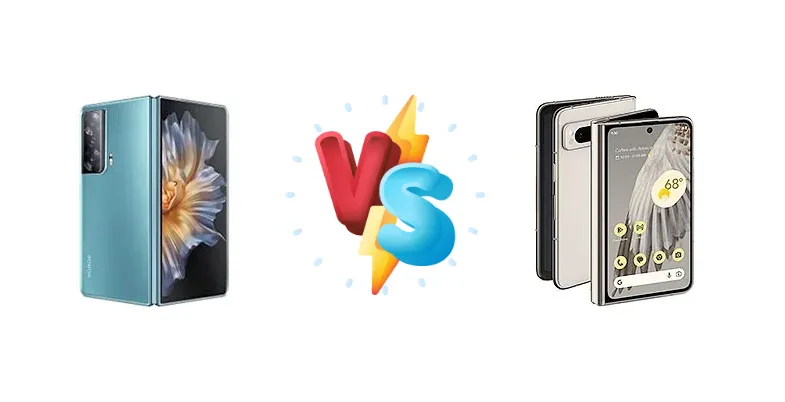
|
🏆 Quick Verdict
For the average user prioritizing battery life and raw performance, the Honor Magic Vs emerges as the winner. Its Snapdragon 8+ Gen 1 chipset and 85-hour endurance rating offer a significant advantage. However, the Pixel Fold’s software experience and Google’s camera processing are strong contenders for those deeply embedded in the Google ecosystem.
| PHONES | ||
|---|---|---|
| Phone Names | Honor Magic Vs | Google Pixel Fold |
| Network | ||
|---|---|---|
| 2G bands | GSM 850 / 900 / 1800 / 1900 | GSM 850 / 900 / 1800 / 1900 |
| 3G bands | HSDPA 800 / 850 / 900 / 1700(AWS) / 1900 / 2100 | HSDPA 800 / 850 / 900 / 1700(AWS) / 1900 / 2100 |
| 4G bands | 1, 2, 3, 4, 5, 7, 8, 12, 17, 18, 19, 20, 26, 28, 34, 38, 39, 40, 41 | 1, 2, 3, 4, 5, 7, 8, 12, 13, 14, 17, 18, 19, 20, 21, 25, 26, 28, 29, 30, 32, 38, 39, 40, 41, 42, 46, 48, 66, 71 |
| 5G bands | 1, 3, 5, 8, 28, 38, 41, 77, 78 SA/NSA | 1, 2, 3, 5, 7, 8, 12, 14, 20, 25, 28, 30, 38, 40, 41, 48, 66, 71, 75, 76, 77, 78, 79, 257, 258, 260, 261 SA/NSA/Sub6/mmWave |
| Speed | HSPA, LTE, 5G | HSPA, LTE, 5G |
| Technology | GSM / CDMA / HSPA / CDMA2000 / LTE / 5G | GSM / CDMA / HSPA / EVDO / LTE / 5G |
| CDMA2000 1x | CDMA2000 1xEV-DO | |
| Launch | ||
|---|---|---|
| Announced | 2022, November 23 | 2023, May 10 |
| Status | Available. Released 2022, December 30 | Available. Released 2023, June 27 |
| Body | ||
|---|---|---|
| Build | Glass front, glass back or eco leather back, magnesium alloy frame, titanium alloy folding mechanism | Glass front (Gorilla Glass Victus) (folded), plastic front (unfolded), glass back (Gorilla Glass Victus), aluminum frame |
| Dimensions | Unfolded: 160.3 x 141.5 x 6.1 mmFolded: 160.3 x 72.6 x 12.9 mm | Unfolded: 139.7 x 158.7 x 5.8 mmFolded: 139.7 x 79.5 x 12.1 mm |
| SIM | Nano-SIM + Nano-SIM | Nano-SIM + eSIM |
| Weight | 261 g / 267 g (9.21 oz) | 283 g (9.98 oz) |
| - | IPX8 water resistant | |
| Display | ||
|---|---|---|
| Resolution | 1984 x 2272 pixels (~382 ppi density) | 1840 x 2208 pixels (~378 ppi density) |
| Size | 7.9 inches, 199.5 cm2 (~87.9% screen-to-body ratio) | 7.6 inches, 183.3 cm2 (~82.7% screen-to-body ratio) |
| Type | Foldable OLED, 1B colors, 90Hz, HDR10+, 800 nits | Foldable OLED, 120Hz, HDR10+, 1000 nits (HBM), 1450 nits (peak) |
| Cover display: OLED, 1B colors, 120Hz, HDR10+, 1200 nits, 6.45 inches, 1080 x 2560 pixels, 431 ppi | Cover display: OLED, 120Hz, HDR, Corning Gorilla Glass Victus 5.8 inches, 1080 x 2092 pixels, 17.4:9 ratio, 408 ppi 1200 nits (HBM), 1550 nits (peak) | |
| Platform | ||
|---|---|---|
| CPU | Octa-core (1x3.0 GHz Cortex-X2 & 3x2.5 GHz Cortex-A710 & 4x1.80 GHz Cortex-A510) | Octa-core (2x2.85 GHz Cortex-X1 & 2x2.35 GHz Cortex-A78 & 4x1.80 GHz Cortex-A55) |
| Chipset | Qualcomm SM8475 Snapdragon 8+ Gen 1 (4 nm) | Google Tensor G2 (5 nm) |
| GPU | Adreno 730 | Mali-G710 MP7 |
| OS | Android 13, MagicOS 7.1 - InternationalAndroid 12, MagicOS 7 - China | Android 13, upgradable to Android 15, up to 5 major Android upgrades |
| Memory | ||
|---|---|---|
| Card slot | No | No |
| Internal | 256GB 8GB RAM, 256GB 12GB RAM, 512GB 12GB RAM | 256GB 12GB RAM, 512GB 12GB RAM |
| - | UFS 3.1 | |
| Main Camera | ||
|---|---|---|
| Features | Dual-LED dual-tone flash, HDR, panorama | Laser AF, Dual-LED flash, HDR, panorama |
| Triple | 54 MP, f/1.9, 27mm (wide), 1/1.49", 1.0µm, PDAF 8 MP, f/2.4, 81mm (telephoto), PDAF, 3x optical zoom, OIS 50 MP, f/2.0, 13mm, 122˚ (ultrawide), AF | 48 MP, f/1.7, 25mm (wide), 1/2.0", 0.8µm, dual pixel PDAF, OIS 10.8 MP, f/3.1, 112mm (telephoto), 1/3.1", 1.22µm, dual pixel PDAF, OIS, 5x optical zoom 10.8 MP, f/2.2, 121˚, (ultrawide), 1/3.0", 1.25µm |
| Video | 4K@30/60fps (10-bit), 1080p@30/60fps, gyro-EIS, HDR10+ | 4K@30/60fps, 1080p@30/60/120/240fps, 10-bit HDR |
| Selfie camera | ||
|---|---|---|
| Features | HDR | HDR, panorama |
| Single | 16 MP, f/2.5, 24mm (wide) | 8 MP, f/2.0, 24mm (wide), 1/4.0", 1.12µm Cover camera: 9.5 MP, f/2.2, 24mm (wide), 1.22µm, dual pixel PDAF |
| Video | 1080p@30fps, gyro-EIS | 4K@30/60fps, 1080p@30/60fps |
| Sound | ||
|---|---|---|
| 3.5mm jack | No | No |
| 35mm jack | No | No |
| Loudspeaker | Yes, with stereo speakers | Yes, with stereo speakers |
| Comms | ||
|---|---|---|
| Bluetooth | 5.2, A2DP, LE, aptX HD | 5.2, A2DP, LE, aptX HD |
| Infrared port | Yes | - |
| NFC | Yes | Yes |
| Positioning | GPS (L1+L5), GLONASS (L1), BDS (B1I+B1c+B2a), GALILEO (E1+E5a), QZSS (L1+L5) | GPS, GLONASS, GALILEO, BDS |
| Radio | No | No |
| USB | USB Type-C 3.1, OTG, Display Port 1.2 | USB Type-C 3.2, OTG |
| WLAN | Wi-Fi 802.11 a/b/g/n/ac/6, dual-band, Wi-Fi Direct | Wi-Fi 802.11 a/b/g/n/ac/6e, tri-band, Wi-Fi Direct |
| Features | ||
|---|---|---|
| Sensors | Fingerprint (side-mounted), accelerometer, gyro, proximity, compass | Fingerprint (side-mounted), accelerometer, gyro, proximity, compass, barometer |
| - | Ultra Wideband (UWB) support | |
| Battery | ||
|---|---|---|
| Charging | 66W wired 5W reverse wired | Wired, PD3.0 Wireless |
| Type | Li-Po 5000 mAh | Li-Po 4821 mAh |
| Misc | ||
|---|---|---|
| Colors | Cyan, Black, Orange | Porcelain, Obsidian |
| Models | FRI-AN00, FRI-NX9 | G9FPL |
| Price | About 2940 EUR | € 670.87 / $ 389.26 / £ 899.99 |
| Tests | ||
|---|---|---|
| Battery life | Endurance rating 85h | - |
| Camera | Photo / Video | - |
| Display | Contrast ratio: Infinite (nominal) | - |
| Loudspeaker | -23.4 LUFS (Very good) | - |
| Performance | AnTuTu: 831175 (v9) GeekBench: 3971 (v5.1), 4497 (v6) GFXBench: 50fps (ES 3.1 onscreen) | - |
Honor Magic Vs
- Exceptional battery life (85h endurance)
- Powerful Snapdragon 8+ Gen 1 processor
- Fast 66W wired charging
- Camera details are lacking
- Software experience may not be as refined as Pixel
Google Pixel Fold
- Seamless Google ecosystem integration
- Potentially superior camera image processing
- Wireless charging support
- Battery life is an unknown quantity
- Tensor G2 may not match Snapdragon 8+ Gen 1 in sustained performance
Display Comparison
The Honor Magic Vs boasts a measured peak brightness of 876 nits, a strong figure for outdoor visibility. While the Pixel Fold’s display specs aren’t provided, Google typically prioritizes color accuracy. The Magic Vs’ infinite contrast ratio (nominal) suggests a deep black level, crucial for immersive viewing. The absence of detailed Pixel Fold display specs makes a direct comparison difficult, but the Magic Vs’ brightness advantage is notable. The hinge mechanism and crease visibility are key differentiators not covered by the provided data, but are critical in the foldable experience.
Camera Comparison
Both devices are listed with 'Photo / Video' capabilities, lacking specific details. However, Google’s Pixel phones are renowned for their computational photography prowess, leveraging AI to enhance image quality. The Pixel Fold likely benefits from Google’s image processing algorithms, potentially delivering superior dynamic range and low-light performance. Without sensor size or aperture information, it’s difficult to assess the hardware capabilities directly. The Magic Vs, while capable, likely relies more on hardware specifications than software optimization in its camera system. The absence of details on features like OIS further complicates a direct comparison.
Performance
The Honor Magic Vs is powered by the Qualcomm Snapdragon 8+ Gen 1 (4nm), a proven performer. Its octa-core CPU configuration – 1x3.0 GHz Cortex-X2, 3x2.5 GHz Cortex-A710, and 4x1.80 GHz Cortex-A510 – delivers a balance of power and efficiency. The Google Pixel Fold utilizes the Google Tensor G2 (5nm). While the Tensor G2 excels in AI and machine learning tasks, the Snapdragon 8+ Gen 1 generally offers superior sustained CPU and GPU performance. The 4nm process node of the Snapdragon contributes to better thermal efficiency, potentially reducing throttling during extended gaming sessions. The Pixel Fold’s CPU configuration (2x2.85 GHz Cortex-X1, 2x2.35 GHz Cortex-A78, 4x1.80 GHz Cortex-A55) prioritizes peak performance on the two X1 cores, but may not match the overall sustained performance of the Snapdragon.
Battery Life
The Honor Magic Vs boasts an impressive endurance rating of 85 hours, indicating excellent battery life. This is a significant advantage over the Pixel Fold, for which battery life data is unavailable. The Magic Vs also supports 66W wired charging, enabling rapid replenishment, alongside 5W reverse wired charging. The Pixel Fold offers wired charging (PD3.0) and wireless charging, but without wattage specifications, it’s difficult to gauge its charging speed relative to the Magic Vs. The combination of a high endurance rating and fast charging makes the Magic Vs a clear winner in the battery department.
Buying Guide
Buy the Honor Magic Vs if you need exceptional battery life for all-day productivity, prioritize raw processing power for demanding tasks like gaming, and seek a more affordable entry point into the foldable market. Buy the Google Pixel Fold if you value seamless integration with Google services, prefer a polished software experience with guaranteed updates, and prioritize a camera system optimized for Google’s computational photography.