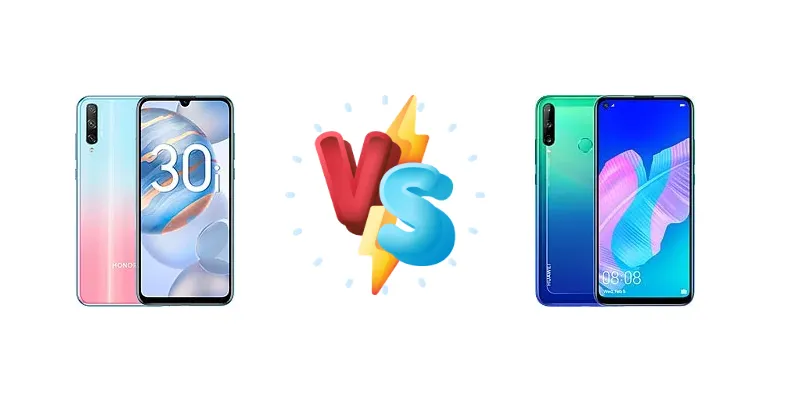
The Honor 30i and Huawei P40 lite E represent a fascinating case study in brand segmentation. Both devices launched with nearly identical hardware, centered around the Kirin 710F chipset. This comparison dissects the nuances between these two phones, helping you determine if the branding difference justifies a purchase decision.
🏆 Quick Verdict
For the average user, the choice between the Honor 30i and Huawei P40 lite E comes down to price and software preference. Given their identical core specifications, the device available at the lower price point represents the better value. The Honor 30i often appears more readily available, making it the slight winner.
| Network |
|---|
| 2G bands | GSM 900 / 1800 / 1900 | GSM 850 / 900 / 1800 / 1900 |
| 3G bands | HSDPA 850 / 900 / 1900 / 2100 | HSDPA 850 / 900 / 1700(AWS) / 1900 / 2100 |
| 4G bands | 1, 2, 3, 4, 5, 7, 8, 19, 20, 26, 28, 34, 38, 39, 40, 41 | 1, 2, 3, 4, 5, 7, 8, 20, 34, 38, 39, 40, 41 - ART-L29 |
| Speed | HSPA, LTE | HSPA 42.2/5.76 Mbps, LTE (2CA) Cat6 400/50 Mbps |
| Technology | GSM / CDMA / HSPA / LTE | GSM / HSPA / LTE |
| | CDMA 800 & TD-SCDMA | 1, 2, 3, 4, 5, 7, 8, 28, 34, 38, 39, 40, 41 - ART-L28 |
| Launch |
|---|
| Announced | 2020, September 11. Released 2020, September 12 | 2020, March 04. Released 2020, March 12 |
| Status | Discontinued | Discontinued |
| Body |
|---|
| Build | - | Glass front, plastic back, plastic frame |
| Dimensions | 157.2 x 73.2 x 7.7 mm (6.19 x 2.88 x 0.30 in) | 159.8 x 76.1 x 8.1 mm (6.29 x 3.00 x 0.32 in) |
| SIM | Nano-SIM + Nano-SIM | Nano-SIM + Nano-SIM |
| Weight | 171.5 g (6.07 oz) | 176 g (6.21 oz) |
| Display |
|---|
| Resolution | 1080 x 2400 pixels, 20:9 ratio (~418 ppi density) | 720 x 1560 pixels, 19.5:9 ratio (~269 ppi density) |
| Size | 6.3 inches, 95.8 cm2 (~83.3% screen-to-body ratio) | 6.39 inches, 100.2 cm2 (~82.4% screen-to-body ratio) |
| Type | AMOLED, 600 nits (typ) | IPS LCD |
| Platform |
|---|
| CPU | Octa-core (4x2.2 GHz Cortex-A73 & 4x1.7 GHz Cortex-A53) | Octa-core (4x2.2 GHz Cortex-A73 & 4x1.7 GHz Cortex-A53) |
| Chipset | Kirin 710F (12 nm) | Kirin 710F (12 nm) |
| GPU | Mali-G51 MP4 | Mali-G51 MP4 |
| OS | Android 10, Magic UI 2.1 | Android 9.0 (Pie), EMUI 9, no Google Play Services |
| Memory |
|---|
| Card slot | Nano Memory (uses shared SIM slot) | microSDXC (uses shared SIM slot) |
| Internal | 128GB 4GB RAM | 64GB 4GB RAM |
| | - | eMMC 5.1 |
| Main Camera |
|---|
| Features | LED flash, HDR, panorama | LED flash, HDR, panorama |
| Triple | 48 MP, f/1.8, 28mm (wide), 1/2.0", 0.8µm, PDAF
8 MP, f/2.4, 120˚ (ultrawide)
Auxiliary lens | 48 MP, f/1.8, 27mm (wide), 1/2.0", 0.8µm, PDAF
8 MP, f/2.4, (ultrawide), 1/4.0", 1.12µm
Auxiliary lens |
| Video | 1080p@30fps | 1080p@30fps |
| Selfie camera |
|---|
| Features | HDR | HDR |
| Single | 16 MP, f/2.0, 26mm (wide), 1/3.06", 1.0µm | 8 MP, f/2.0 |
| Video | 1080p@30fps | 1080p@30fps |
| Sound |
|---|
| 3.5mm jack | Yes | Yes |
| 35mm jack | Yes | Yes |
| Loudspeaker | Yes | Yes |
| Comms |
|---|
| Bluetooth | 5.1, A2DP, LE | 5.0, A2DP, LE |
| NFC | Yes | No |
| Positioning | GPS, GLONASS, BDS | GPS, GLONASS, GALILEO, BDS |
| Radio | FM radio | FM radio |
| USB | USB Type-C 2.0, OTG | microUSB 2.0 |
| WLAN | Wi-Fi 802.11 a/b/g/n/ac, dual-band, Wi-Fi Direct | Wi-Fi 802.11 b/g/n, Wi-Fi Direct |
| Features |
|---|
| Sensors | Fingerprint (under display, optical), accelerometer, gyro, proximity, compass | Fingerprint (rear-mounted), accelerometer, proximity, compass |
| Battery |
|---|
| Charging | 10W wired | 10W wired |
| Type | Li-Po 4000 mAh | Li-Po 4000 mAh |
| Misc |
|---|
| Colors | Ultraviolet Sunset, Turquoise, Midnight Black | Aurora Blue, , Midnight Black |
| Models | LRA-LX1 | ART-L28, ART-L29, ART-L29N |
| Price | About 200 EUR | About 150 EUR |
Honor 30i
- Potentially lower price point
- May offer a cleaner software experience
- Wider availability in some markets
- 10W charging is very slow
- Display specifications are likely basic
Huawei P40 lite E
- Integration with Huawei ecosystem
- Potential for unique Huawei software features
- May be available at a competitive price
- 10W charging is very slow
- Display specifications are likely basic
Display Comparison
Both the Honor 30i and Huawei P40 lite E lack detailed display specifications in the provided data. However, given their market segment, we can assume both utilize LCD panels with a 720p+ resolution. The absence of information regarding peak brightness, color gamut coverage, or refresh rate suggests neither device prioritizes display quality. Users seeking vibrant colors or smooth scrolling should consider alternatives.
Camera Comparison
Camera details are sparse. Both phones likely feature a multi-camera setup, but the provided data doesn't specify sensor sizes or lens apertures. The presence of a 2MP macro camera on either device is largely a marketing gimmick, offering limited practical benefit due to its low resolution and fixed focus. Image processing will likely differ slightly between the two brands, potentially resulting in variations in color accuracy and dynamic range, but the core imaging capabilities will be similar.
Performance
The core of both devices is the Kirin 710F (12 nm) chipset, featuring an octa-core CPU configuration with 4x2.2 GHz Cortex-A73 and 4x1.7 GHz Cortex-A53 cores. This means performance will be virtually identical in day-to-day tasks and even in moderately demanding games. The 12nm process node, while not cutting-edge, is adequate for sustained performance, but users should expect some throttling during extended gaming sessions. The lack of information on RAM configuration (size and speed) is a limitation, but it's likely both devices feature 4GB of RAM, sufficient for basic multitasking.
Battery Life
Both the Honor 30i and Huawei P40 lite E support 10W wired charging. This is a slow charging speed by modern standards, requiring several hours to fully charge the battery from 0 to 100%. The actual battery capacity remains unspecified, but it's reasonable to assume both devices feature a battery in the 3000-4000 mAh range. Users prioritizing fast charging should look elsewhere, as these phones offer a decidedly slow charging experience.
Buying Guide
Buy the Honor 30i if you prioritize finding the lowest possible price for a functional smartphone and prefer a potentially cleaner software experience, given Honor's increasing independence. Buy the Huawei P40 lite E if you are already invested in the Huawei ecosystem and appreciate its specific software features, or if it's available at a significantly lower price than the Honor 30i.
Frequently Asked Questions
❓ Will the Kirin 710F struggle with demanding games like PUBG Mobile?
The Kirin 710F can run PUBG Mobile, but you'll likely need to lower the graphics settings to medium or low to achieve a stable frame rate. Expect some frame drops during intense action sequences. It's not a gaming powerhouse, but it's capable of casual gaming.
❓ Is the 10W charging speed acceptable in 2024?
No, 10W charging is significantly slower than the charging speeds offered by most modern smartphones. Expect a full charge to take over 3 hours. This is a major drawback for users who need quick top-ups.
❓ What software updates can I expect on the Honor 30i and Huawei P40 lite E?
Software update support is limited for both devices. Huawei has faced restrictions impacting its ability to provide Google Mobile Services (GMS), and Honor, while now independent, may also have a slower update cadence than other brands. Expect limited major Android version updates.