
HMD Touch 4G vs Motorola Moto G Stylus 5G (2023): A Performance and Value Showdown
| Phones Images | |||||
|---|---|---|---|---|---|
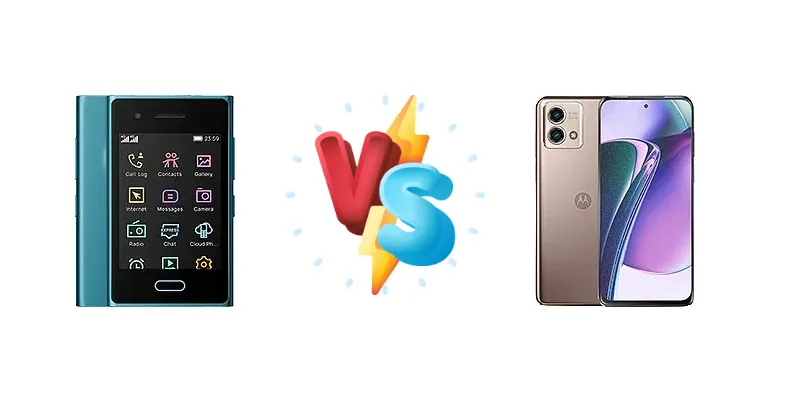
|
🏆 Quick Verdict
For the average user, the Motorola Moto G Stylus 5G (2023) is the clear winner. Its Qualcomm Snapdragon 6 Gen 1 chipset, built on a 4nm process, provides a substantial performance uplift over the HMD Touch 4G’s Unisoc T127, translating to smoother multitasking and a more responsive user experience. While the HMD offers basic functionality, the Motorola delivers a more future-proof and enjoyable daily driver.
| PHONES | ||
|---|---|---|
| Phone Names | HMD Touch 4G | Motorola Moto G Stylus 5G (2023) |
| Network | ||
|---|---|---|
| 2G bands | GSM 900 / 1800 | GSM 850 / 900 / 1800 / 1900 |
| 3G bands | HSDPA 850 / 900 / 2100 | HSDPA 850 / 900 / 1700(AWS) / 1900 / 2100 |
| 4G bands | 1, 3, 5, 7, 8, 20, 28, 38, 39, 40, 41 | 1, 2, 3, 4, 5, 7, 8, 12, 13, 14, 17, 18, 19, 20, 25, 26, 29, 30, 38, 39, 40, 41, 48, 66, 71 |
| 5G bands | - | 1, 2, 3, 5, 7, 12, 13, 14, 25, 26, 29, 30, 38, 41, 48, 66, 70, 71, 77, 78 SA/NSA |
| Speed | HSPA, LTE | HSPA, LTE, 5G |
| Technology | GSM / HSPA / LTE | GSM / HSPA / LTE / 5G |
| Launch | ||
|---|---|---|
| Announced | 2025, October 07 | 2023, May 30 |
| Status | Available. Released 2025, October 07 | Available. Released 2023, June 02 |
| Body | ||
|---|---|---|
| Build | - | Glass front, plastic frame, plastic back |
| Dimensions | 102.3 x 61.9 x 10.9 mm (4.03 x 2.44 x 0.43 in) | 162.8 x 73.8 x 9.2 mm (6.41 x 2.91 x 0.36 in) |
| SIM | Nano-SIM + Nano-SIM | Nano-SIM |
| Weight | 100 g (3.53 oz) | 202 g (7.13 oz) |
| Display | ||
|---|---|---|
| Resolution | 240 x 320 pixels, 4:3 ratio (~125 ppi density) | 1080 x 2400 pixels, 20:9 ratio (~399 ppi density) |
| Size | 3.2 inches, 31.7 cm2 (~50.1% screen-to-body ratio) | 6.6 inches, 105.2 cm2 (~87.5% screen-to-body ratio) |
| Type | TFT LCD | IPS LCD, 120Hz |
| Platform | ||
|---|---|---|
| CPU | - | Octa-core (4x2.2 GHz Cortex-A78 & 4x1.8 GHz Cortex-A55) |
| Chipset | Unisoc T127 | Qualcomm SM6450 Snapdragon 6 Gen 1 (4 nm) |
| GPU | - | Adreno 710 |
| OS | RTOS Touch | Android 13, planned upgrade to Android 14 |
| Memory | ||
|---|---|---|
| Card slot | microSDHC | microSDXC (dedicated slot) |
| Internal | 64MB 128MB RAM | 64GB 4GB RAM, 128GB 4GB RAM, 128GB 6GB RAM, 256GB 6GB RAM |
| Main Camera | ||
|---|---|---|
| Dual | - | 50 MP, f/1.9, (wide), 1.0µm, PDAF 8 MP, f/2.2, (ultrawide), 1/4.0", 1.12µm, AF |
| Features | LED flash | LED flash, HDR, panorama |
| Single | 2 MP | - |
| Video | Yes | 4K@30fps, 1080p@30/60fps |
| Selfie camera | ||
|---|---|---|
| Features | - | HDR |
| Single | - | 16 MP, f/2.5, (wide), 1.0µm |
| Video | - | 1080p@30fps |
| Sound | ||
|---|---|---|
| 35mm jack | Yes | Yes |
| Loudspeaker | Yes | Yes, with stereo speakers |
| Comms | ||
|---|---|---|
| Bluetooth | 5.0, A2DP | 5.1, A2DP, LE |
| NFC | No | Yes |
| Positioning | GPS, BDS | GPS (L1+L5), GALILEO |
| Radio | Wireless FM radio | FM radio |
| USB | USB Type-C | USB Type-C 2.0 |
| WLAN | Wi-Fi 802.11 b/g/n | Wi-Fi 802.11 a/b/g/n/ac, dual-band |
| Features | ||
|---|---|---|
| Sensors | - | Fingerprint (side-mounted), accelerometer, gyro, proximity, compass, barometer |
| Battery | ||
|---|---|---|
| Charging | - | 20W wired |
| Type | Li-Ion 1950 mAh | Li-Po 5000 mAh |
| Misc | ||
|---|---|---|
| Colors | Dark Blue, Cyan | Cosmic Black, Rose Champagne |
| Models | TA-1692 | XT2315-1, XT2315-4 |
| Price | About 40 EUR | $ 93.43 |
HMD Touch 4G
- Potentially the most affordable option
- Basic smartphone functionality
- May appeal to users with extremely limited needs
- Significantly weaker performance
- Likely limited software support
- Poor camera performance expected
Motorola Moto G Stylus 5G (2023)
- Superior performance with Snapdragon 6 Gen 1
- 5G connectivity for faster data speeds
- Integrated stylus for enhanced productivity
- Higher price point than the HMD Touch 4G
- May not be ideal for users who only need basic functionality
- Software updates may be limited, but likely better than HMD
Display Comparison
Detailed display specifications are absent for the HMD Touch 4G, making a direct comparison difficult. However, given its price point, it likely features a 720p LCD panel. The Moto G Stylus 5G (2023) benefits from a larger display, and while the panel type isn't specified, Motorola typically uses IPS LCDs. The key differentiator here is the processor's ability to drive a smoother experience on the Motorola, even if the panel resolution is similar. The lack of information on refresh rates for the HMD suggests a standard 60Hz experience, while the Motorola could potentially support a higher refresh rate for smoother scrolling.
Camera Comparison
Camera details for the HMD Touch 4G are scarce. The Motorola Moto G Stylus 5G (2023) likely features a more capable camera system, though specific sensor sizes and apertures are not provided. The presence of a 5G modem suggests a more modern image signal processor (ISP) within the Snapdragon 6 Gen 1, potentially leading to better image processing and low-light performance. While both phones likely include a standard rear camera setup, the Motorola’s chipset provides a clear advantage in image quality and processing speed.
Performance
The performance gap is significant. The HMD Touch 4G’s Unisoc T127 is an entry-level chipset designed for basic tasks. In contrast, the Motorola Moto G Stylus 5G (2023) boasts the Qualcomm Snapdragon 6 Gen 1 (4nm). This Snapdragon chip features an octa-core configuration with four Cortex-A78 cores clocked at 2.2 GHz, providing a substantial boost in CPU performance. The 4nm manufacturing process also contributes to improved power efficiency and reduced thermal throttling compared to the Unisoc T127. This translates to faster app loading times, smoother multitasking, and a more responsive overall experience on the Motorola, particularly for demanding applications.
Battery Life
Battery capacity details for the HMD Touch 4G are unavailable. The Motorola Moto G Stylus 5G (2023) supports 20W wired charging. While the battery capacity isn't specified, the Snapdragon 6 Gen 1’s 4nm efficiency contributes to better battery life compared to the Unisoc T127. The 20W charging on the Motorola allows for a reasonably quick top-up, while the HMD’s charging speed is likely slower, given its lower-end chipset and potentially smaller battery.
Buying Guide
Buy the HMD Touch 4G if you prioritize absolute minimal cost and only need a phone for basic communication – calls, texts, and light web browsing. Buy the Motorola Moto G Stylus 5G (2023) if you value performance, 5G connectivity, the convenience of a stylus for note-taking and creative tasks, and a more refined software experience.