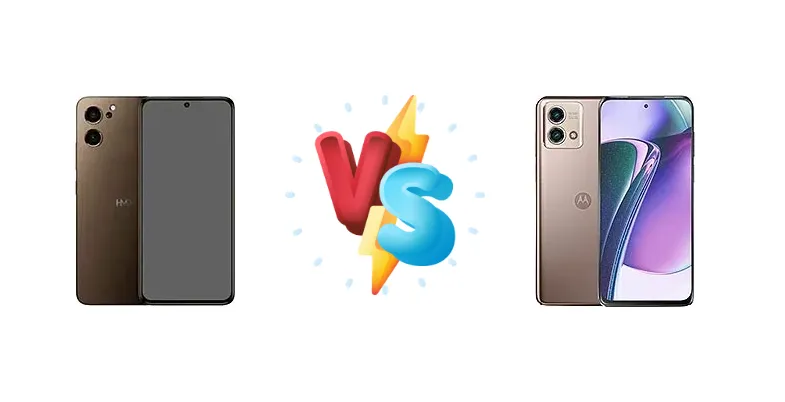
The HMD Ridge Pro and Motorola Moto G Stylus 5G (2023) represent compelling options in the increasingly competitive sub-$300 smartphone market. While both leverage Qualcomm's 4nm process technology, they target slightly different user priorities. The Ridge Pro focuses on a streamlined experience with a newer Snapdragon 4 Gen 2, while the Moto G Stylus 5G (2023) aims to balance performance with the added utility of a built-in stylus.
🏆 Quick Verdict
For the average user prioritizing sustained performance and future-proofing, the HMD Ridge Pro emerges as the better choice. Its Snapdragon 4 Gen 2, despite the naming convention, offers a more efficient architecture and slightly faster CPU speeds, translating to a smoother experience in demanding tasks. However, the Moto G Stylus 5G's stylus functionality remains a unique advantage for note-takers and artists.
| Network |
|---|
| 2G bands | GSM 850 / 900 / 1800 / 1900 | GSM 850 / 900 / 1800 / 1900 |
| 3G bands | HSDPA 850 / 900 / 2100 | HSDPA 850 / 900 / 1700(AWS) / 1900 / 2100 |
| 4G bands | LTE | 1, 2, 3, 4, 5, 7, 8, 12, 13, 14, 17, 18, 19, 20, 25, 26, 29, 30, 38, 39, 40, 41, 48, 66, 71 |
| 5G bands | SA/NSA | 1, 2, 3, 5, 7, 12, 13, 14, 25, 26, 29, 30, 38, 41, 48, 66, 70, 71, 77, 78 SA/NSA |
| Speed | HSPA, LTE, 5G | HSPA, LTE, 5G |
| Technology | GSM / HSPA / LTE / 5G | GSM / HSPA / LTE / 5G |
| Launch |
|---|
| Announced | Not announced yet | 2023, May 30 |
| Status | Cancelled | Available. Released 2023, June 02 |
| Body |
|---|
| Build | - | Glass front, plastic frame, plastic back |
| Dimensions | - | 162.8 x 73.8 x 9.2 mm (6.41 x 2.91 x 0.36 in) |
| SIM | Nano-SIM | Nano-SIM |
| Weight | - | 202 g (7.13 oz) |
| Display |
|---|
| Resolution | 1080 x 2400 pixels, 20:9 ratio (~396 ppi density) | 1080 x 2400 pixels, 20:9 ratio (~399 ppi density) |
| Size | 6.64 inches, 106.4 cm2 | 6.6 inches, 105.2 cm2 (~87.5% screen-to-body ratio) |
| Type | IPS LCD, 120Hz | IPS LCD, 120Hz |
| Platform |
|---|
| CPU | Octa-core (2x2.2 GHz Cortex-A78 & 6x1.95 GHz Cortex-A55) | Octa-core (4x2.2 GHz Cortex-A78 & 4x1.8 GHz Cortex-A55) |
| Chipset | Qualcomm SM4450 Snapdragon 4 Gen 2 (4 nm) | Qualcomm SM6450 Snapdragon 6 Gen 1 (4 nm) |
| GPU | Adreno 613 | Adreno 710 |
| OS | Android 14 | Android 13, planned upgrade to Android 14 |
| Memory |
|---|
| Card slot | microSDXC | microSDXC (dedicated slot) |
| Internal | 128GB 6GB RAM, 256GB 8GB RAM | 64GB 4GB RAM, 128GB 4GB RAM, 128GB 6GB RAM, 256GB 6GB RAM |
| Main Camera |
|---|
| Dual | - | 50 MP, f/1.9, (wide), 1.0µm, PDAF
8 MP, f/2.2, (ultrawide), 1/4.0", 1.12µm, AF |
| Features | LED flash, HDR | LED flash, HDR, panorama |
| Triple | 50 MP, (wide), PDAF
5 MP, (ultrawide)
Auxiliary lens | - |
| Video | 1080p@30fps | 4K@30fps, 1080p@30/60fps |
| Selfie camera |
|---|
| Features | - | HDR |
| Single | 50 MP | 16 MP, f/2.5, (wide), 1.0µm |
| Video | 1080p@30fps | 1080p@30fps |
| Sound |
|---|
| 35mm jack | Yes | Yes |
| Loudspeaker | Yes | Yes, with stereo speakers |
| Comms |
|---|
| Bluetooth | 5.1, A2DP, LE | 5.1, A2DP, LE |
| NFC | Yes | Yes |
| Positioning | GPS, GALILEO | GPS (L1+L5), GALILEO |
| Radio | Unspecified | FM radio |
| USB | USB Type-C 2.0, OTG | USB Type-C 2.0 |
| WLAN | Wi-Fi 802.11 a/b/g/n/ac | Wi-Fi 802.11 a/b/g/n/ac, dual-band |
| Features |
|---|
| Sensors | Fingerprint (side-mounted), accelerometer, proximity, compass | Fingerprint (side-mounted), accelerometer, gyro, proximity, compass, barometer |
| Battery |
|---|
| Charging | Wired, QC4 | 20W wired |
| Type | 5500 mAh | Li-Po 5000 mAh |
| Misc |
|---|
| Colors | Mocha, Snow, Glacier Green | Cosmic Black, Rose Champagne |
| Models | - | XT2315-1, XT2315-4 |
| Price | - | $ 93.43 |
HMD Ridge Pro
- More efficient Snapdragon 4 Gen 2 chipset
- Potentially faster charging with QC4 support
- Likely better sustained performance due to thermal efficiency
- Lacks the built-in stylus functionality
- Camera specifications unknown
Motorola Moto G Stylus 5G (2023)
- Integrated stylus for note-taking and drawing
- Motorola's image processing algorithms
- Established brand recognition
- Snapdragon 6 Gen 1 may throttle under heavy load
- Slower 20W charging
Display Comparison
Display specifications are not provided, so a direct comparison is limited. However, given the price points, both devices likely utilize LCD panels. The key differentiator will be color accuracy and peak brightness. Motorola historically prioritizes vibrant colors, while HMD often aims for more natural tones. Bezels are likely comparable, and neither device is expected to feature high refresh rate panels.
Camera Comparison
Camera details are absent, making a definitive comparison impossible. However, given the market segment, both phones likely feature a primary sensor around 50MP. The Moto G Stylus 5G (2023) may benefit from Motorola's image processing algorithms, which often prioritize vibrant colors and aggressive sharpening. The HMD Ridge Pro might lean towards a more natural look. Without knowing sensor sizes or aperture values, it's difficult to assess low-light performance. The presence or absence of Optical Image Stabilization (OIS) would be a significant advantage for either device.
Performance
The core difference lies in the chipsets. The Motorola Moto G Stylus 5G (2023) uses the Qualcomm SM6450 Snapdragon 6 Gen 1, featuring 4x2.2 GHz Cortex-A78 cores and 4x1.8 GHz Cortex-A55 cores. The HMD Ridge Pro, conversely, employs the SM4450 Snapdragon 4 Gen 2, with 2x2.2 GHz Cortex-A78 cores and 6x1.95 GHz Cortex-A55 cores. While the Moto G Stylus has more A78 cores, the Ridge Pro's newer architecture and 4nm process node provide a thermal advantage. This means the Ridge Pro is less likely to throttle under sustained load, offering more consistent performance during gaming or video editing. Both utilize an octa-core configuration, but the Ridge Pro's CPU architecture is more efficient.
Battery Life
Battery capacity is not specified. However, the Motorola Moto G Stylus 5G (2023) supports 20W wired charging, while the HMD Ridge Pro utilizes QC4, implying potentially faster charging speeds depending on the charger used. The Snapdragon 4 Gen 2 in the Ridge Pro is more power-efficient, potentially offsetting a smaller battery capacity. Real-world battery life will depend heavily on usage patterns, but the Ridge Pro's chipset gives it an edge in longevity.
Buying Guide
Buy the HMD Ridge Pro if you need a phone that feels responsive for everyday tasks and offers a more modern chipset for longer software support. It's ideal for users who value performance over niche features. Buy the Motorola Moto G Stylus 5G (2023) if you frequently take handwritten notes, sketch, or simply prefer the convenience of a built-in stylus, and are willing to accept a slightly less powerful processor.
Frequently Asked Questions
❓ Will the Snapdragon 4 Gen 2 in the HMD Ridge Pro handle demanding games like Genshin Impact?
While the Snapdragon 4 Gen 2 isn't a flagship chipset, its architecture and 4nm process allow for playable frame rates in less graphically intensive games. Genshin Impact will likely require lower graphics settings and may experience occasional frame drops, but it should be playable. The improved thermal efficiency compared to the Snapdragon 6 Gen 1 will help maintain performance for longer sessions.
❓ Is the stylus on the Motorola Moto G Stylus 5G (2023) compatible with all apps?
The stylus is compatible with most note-taking and drawing applications, but full integration varies. Motorola's pre-installed apps offer the best stylus support. Compatibility with third-party apps depends on whether the developers have implemented stylus input functionality. It won't function as a precision input device like an Apple Pencil across the entire OS.
❓ Does the HMD Ridge Pro support software updates for a long period?
HMD Global has historically provided decent software update support for its devices, but it's not on par with Google or Samsung. Expect at least two major Android updates and three years of security patches. The newer Snapdragon 4 Gen 2 chipset should help extend the device's usable lifespan.