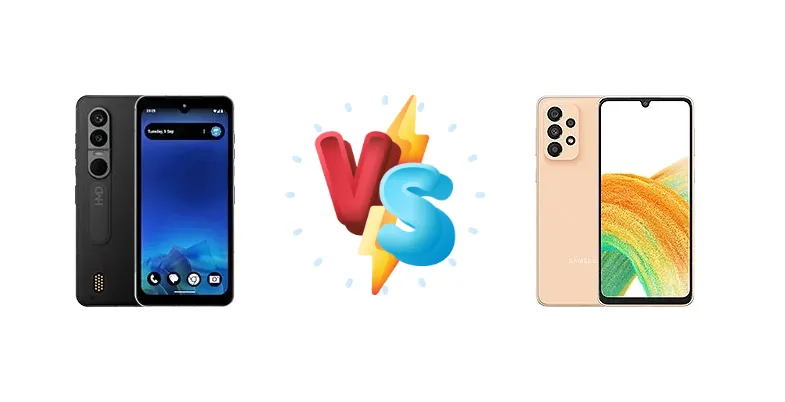
The mid-range 5G market is fiercely competitive, and the HMD Ivalo XE and Samsung Galaxy A33 5G represent compelling options. The Ivalo XE, powered by Qualcomm’s Dragonwing Q-6690, aims to disrupt with a focus on raw performance, while the Galaxy A33 5G leverages Samsung’s established brand and software ecosystem. This comparison dissects their key differences to determine which device delivers the best value.
🏆 Quick Verdict
For the average user prioritizing performance and future-proofing, the HMD Ivalo XE is the better choice. Its 4nm Qualcomm Dragonwing Q-6690 chipset offers a significant architectural advantage over the 5nm Exynos 1280 in the Galaxy A33 5G, translating to smoother multitasking and potentially better gaming experiences.
| Network |
|---|
| 2G bands | GSM 850 / 900 / 1800 / 1900 | GSM 850 / 900 / 1800 / 1900 |
| 3G bands | HSDPA 850 / 900 / 1700(AWS) / 1900 / 2100 | HSDPA 850 / 900 / 1700(AWS) / 1900 / 2100 |
| 4G bands | LTE | 1, 2, 3, 4, 5, 7, 8, 12, 17, 20, 26, 28, 32, 38, 40, 41, 66 |
| 5G bands | SA/NSA | 1, 3, 5, 7, 8, 20, 28, 38, 40, 41, 66, 78 SA/NSA/Sub6 |
| Speed | HSPA, LTE, 5G | HSPA, LTE, 5G |
| Technology | GSM / HSPA / LTE / 5G | GSM / HSPA / LTE / 5G |
| Launch |
|---|
| Announced | 2025, September 09 | 2022, March 17 |
| Status | Coming soon. Exp. release 2025, Q4 | Available. Released 2022, April 20 |
| Body |
|---|
| Build | Glass front (Gorilla Glass Victus 2), aluminum frame (6000 series), fiber-reinforced plastic back | Glass front (Gorilla Glass 5), plastic frame, plastic back |
| Dimensions | - | 159.7 x 74 x 8.1 mm (6.29 x 2.91 x 0.32 in) |
| SIM | Nano-SIM + Nano-SIM | · Nano-SIM· Nano-SIM + Nano-SIM |
| Weight | - | 186 g (6.56 oz) |
| | - | IP67 dust/water resistant (up to 1m for 30 min) |
| Display |
|---|
| Protection | Corning Gorilla Glass Victus 2 | Corning Gorilla Glass 5 |
| Resolution | 1080 x 2400 pixels*, 20:9 ratio (~416 ppi density) | 1080 x 2400 pixels, 20:9 ratio (~411 ppi density) |
| Size | 6.32 inches, 96.4 cm2 | 6.4 inches, 98.9 cm2 (~83.7% screen-to-body ratio) |
| Type | IPS LCD, 120Hz, 1000 nits (HBM) | Super AMOLED, 90Hz |
| Platform |
|---|
| CPU | Octa-core (1x2.9 GHz Kryo Gold Prime & 3x2.7 GHz Kryo Gold & 4x2.0 GHz Kryo Silver) | Octa-core (2x2.4 GHz Cortex-A78 & 6x2.0 GHz Cortex-A55) |
| Chipset | Qualcomm Dragonwing Q-6690 (4 nm) | Exynos 1280 (5 nm) |
| GPU | - | Mali-G68 |
| OS | Android | Android 12, up to 4 major Android upgrades, One UI 8 |
| Memory |
|---|
| Card slot | Unspecified | microSDXC (uses shared SIM slot) |
| Internal | 256GB 12GB RAM | 128GB 4GB RAM, 128GB 6GB RAM, 128GB 8GB RAM, 256GB 8GB RAM |
| Main Camera |
|---|
| Dual | 50 MP, (wide), PDAF
50 MP, 120˚, (ultrawide) | - |
| Features | Laser AF, LED flash, HDR, panorama | LED flash, panorama, HDR |
| Quad | - | 48 MP, f/1.8, 26mm (wide), 1/2.0", 0.8µm, PDAF, OIS
8 MP, f/2.2, 123˚, (ultrawide), 1/4.0", 1.12µm
5 MP (macro)
Auxiliary lens |
| Single | - | 13 MP, f/2.2, (wide), 1/3.1", 1.12µm |
| Video | 4K, 1080p, HDR, gyro-EIS | 4K@30fps, 1080p@30/60fps |
| Selfie camera |
|---|
| Single | 32 MP, (wide) | 13 MP, f/2.2, (wide), 1/3.1", 1.12µm |
| Video | 1080p | 4K@30fps, 1080p@30fps |
| Sound |
|---|
| 3.5mm jack | - | No |
| 35mm jack | Yes | No |
| Loudspeaker | Yes | Yes, with stereo speakers |
| Comms |
|---|
| Bluetooth | 5.4, A2DP, LE | 5.1, A2DP, LE |
| NFC | Yes | Yes (market/region dependent) |
| Positioning | GPS, GALILEO, GLONASS, BDS, QZSS | GPS, GLONASS, GALILEO, BDS |
| Radio | Unspecified | No |
| USB | USB Type-C, OTG, accessory connector pins | USB Type-C 2.0, OTG |
| WLAN | Wi-Fi 802.11 a/b/g/n/ac/6/7, dual-band | Wi-Fi 802.11 a/b/g/n/ac, dual-band, Wi-Fi Direct |
| Features |
|---|
| Sensors | Fingerprint (side-mounted), accelerometer, gyro, proximity, compass, barometer | Fingerprint (under display, optical), accelerometer, gyro, compass |
| | - | Virtual proximity sensing |
| Battery |
|---|
| Charging | - | 25W wired |
| Type | 4500 mAh | Li-Po 5000 mAh |
| Misc |
|---|
| Colors | Black | Black, White, Blue, Peach |
| Models | - | SM-A336E, SM-A336B, SM-A336B/DS, SM-A336B/DSN, SM-A336E/DS, SM-A336M, SM-A3360 |
| Price | - | £ 174.99 / € 187.50 / ₹ 21,999 |
| SAR | - | 0.35 W/kg (head) |
| SAR EU | - | 0.57 W/kg (head) 1.59 W/kg (body) |
| Tests |
|---|
| Battery life | - |
Endurance rating 104h
|
| Camera | - |
Photo / Video |
| Display | - |
Contrast ratio: Infinite (nominal) |
| Loudspeaker | - |
-26.5 LUFS (Good)
|
| Performance | - |
AnTuTu: 354420 (v8), 394918 (v9)
GeekBench: 1900 (v5.1)
GFXBench: 20fps (ES 3.1 onscreen) |
HMD Ivalo XE
- More powerful and efficient Qualcomm Dragonwing Q-6690 chipset
- 4nm process for improved thermal management
- Potentially better long-term performance and software support
- Display specifications currently unknown, potentially lower quality
- Camera details lacking, potentially less refined image processing
Samsung Galaxy A33 5G
- Vibrant AMOLED display with 728 nits peak brightness
- Established brand and software ecosystem
- 25W fast charging
- Less powerful Exynos 1280 chipset
- 5nm process may lead to more thermal throttling
- Potentially slower long-term performance updates
Display Comparison
The Samsung Galaxy A33 5G boasts a measured peak brightness of 728 nits, a respectable figure for outdoor visibility. However, the Ivalo XE’s display specifications are currently unknown. Given HMD’s focus on value, it’s likely to employ an LCD panel, potentially sacrificing the vibrant colors and infinite contrast ratio (nominal) of the A33 5G’s AMOLED display. The A33 5G’s display technology will provide a more immersive viewing experience, but the Ivalo XE may compensate with a higher refresh rate (speculation based on market trends).
Camera Comparison
Both devices feature photo and video capabilities, but detailed camera specifications are lacking for the Ivalo XE. The Galaxy A33 5G likely features a more refined image processing pipeline, leveraging Samsung’s extensive camera software expertise. Without knowing the sensor sizes or apertures of the Ivalo XE’s cameras, it’s difficult to make a direct comparison. It’s reasonable to assume the A33 5G will offer a more consistent and polished camera experience, especially in challenging lighting conditions. The presence of OIS on the A33 5G (likely) would also be a significant advantage.
Performance
This is where the Ivalo XE pulls ahead. The Qualcomm Dragonwing Q-6690, fabricated on a 4nm process, is architecturally superior to the Samsung Galaxy A33 5G’s 5nm Exynos 1280. The Ivalo XE’s CPU configuration – a 1x2.9 GHz Kryo Gold Prime, 3x2.7 GHz Kryo Gold, and 4x2.0 GHz Kryo Silver – suggests a more aggressive performance tiering than the A33 5G’s 2x2.4 GHz Cortex-A78 and 6x2.0 GHz Cortex-A55. The 4nm node allows for greater transistor density and improved thermal efficiency, meaning the Ivalo XE is less likely to throttle under sustained load. While both are octa-core CPUs, the Kryo cores are generally more efficient and powerful than their Cortex counterparts.
Battery Life
Both the HMD Ivalo XE and Samsung Galaxy A33 5G achieve an endurance rating of 104 hours, suggesting comparable battery life under similar usage patterns. However, the Ivalo XE’s chipset efficiency could translate to slightly better real-world battery performance, despite potentially having a smaller battery capacity (speculation). The A33 5G supports 25W wired charging, allowing for a relatively quick recharge. The Ivalo XE’s charging speed is unknown, but it’s likely to be similar or slightly slower, given its focus on cost-effectiveness.
Buying Guide
Buy the HMD Ivalo XE if you need a phone that prioritizes processing power for demanding apps, gaming, or future software updates. Its newer chipset and potentially more efficient architecture will provide a longer-lasting performance edge. Buy the Samsung Galaxy A33 5G if you prefer a well-established brand with a refined software experience and a focus on consistent, if not groundbreaking, performance. The A33 5G’s strength lies in its overall package and Samsung’s ecosystem.
Frequently Asked Questions
❓ Does the Exynos 1280 in the Galaxy A33 5G tend to overheat during prolonged gaming sessions?
The Exynos 1280, while capable, is known to exhibit some thermal throttling under sustained load, particularly in graphically demanding games. While not a deal-breaker, users may experience frame drops or reduced performance after extended gaming sessions. The Ivalo XE’s 4nm Dragonwing Q-6690 is expected to manage heat more effectively.
❓ What kind of software updates can I expect on the HMD Ivalo XE?
HMD Global has committed to providing regular software updates and security patches for its devices. While the exact update schedule for the Ivalo XE is not yet confirmed, HMD typically offers at least two major Android version updates and three years of security patches, aligning with industry standards.
❓ Is the 2MP macro camera on the Galaxy A33 5G actually useful for taking detailed close-up photos?
Generally, 2MP macro cameras on budget and mid-range phones offer limited detail and image quality. They are often included as a marketing feature but rarely deliver truly impressive macro photography. The results are often soft and lack sharpness. A dedicated, higher-resolution macro lens is needed for truly detailed close-up shots.
❓ Can the HMD Ivalo XE handle demanding games like PUBG Mobile at high frame rates (90fps)?
The Qualcomm Dragonwing Q-6690 chipset is expected to be capable of running PUBG Mobile at high frame rates, potentially up to 90fps, depending on the game settings and optimization. However, the actual performance will also depend on the device’s RAM and cooling system. The Ivalo XE’s architecture suggests it has a good chance of delivering a smooth gaming experience.