
HMD Aura 2 vs. OnePlus Nord N30 SE: A Deep Dive into Budget Smartphone Performance
| Phones Images | |||||
|---|---|---|---|---|---|
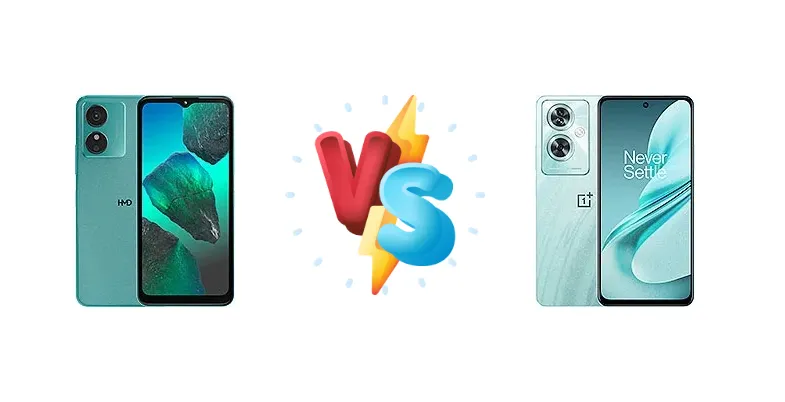
|
🏆 Quick Verdict
For most users, the OnePlus Nord N30 SE is the superior choice. Its Mediatek Dimensity 6020 chipset, fabricated on a 7nm process, provides a significant performance advantage over the HMD Aura 2’s 28nm Unisoc SC9863A. The 33W charging is a game-changer, drastically reducing downtime compared to the Aura 2’s slow 10W charging.
| PHONES | ||
|---|---|---|
| Phone Names | HMD Aura 2 | OnePlus Nord N30 SE |
| Network | ||
|---|---|---|
| 2G bands | GSM 850 / 900 / 1800 / 1900 | GSM 850 / 900 / 1800 / 1900 |
| 3G bands | HSDPA 850 / 900 / 2100 | HSDPA 850 / 900 / 1700(AWS) / 1900 / 2100 |
| 4G bands | 1, 3, 5, 7, 8, 20, 28, 38, 40, 41 | 1, 2, 3, 4, 5, 7, 8, 12, 13, 17, 18, 19, 20, 26, 28, 38, 39, 40, 41, 66 |
| 5G bands | - | 1, 3, 5, 7, 8, 20, 28, 38, 40, 41, 66, 77, 78 SA/NSA |
| Speed | HSPA, LTE | HSPA, LTE, 5G |
| Technology | GSM / HSPA / LTE | GSM / HSPA / LTE / 5G |
| Launch | ||
|---|---|---|
| Announced | 2025, February 11 | 2024, January 29 |
| Status | Available. Released 2025, March 13 | Available. Released 2024, January 31 |
| Body | ||
|---|---|---|
| Build | - | Glass front, plastic frame, plastic back |
| Dimensions | 166.4 x 76.9 x 9 mm (6.55 x 3.03 x 0.35 in) | 165.6 x 76 x 8 mm (6.52 x 2.99 x 0.31 in) |
| SIM | Nano-SIM | Nano-SIM + Nano-SIM |
| Weight | 185.4 g (6.53 oz) | 193 g (6.81 oz) |
| Display | ||
|---|---|---|
| Resolution | 576 x 1280 pixels, 20:9 ratio (~215 ppi density) | 1080 x 2400 pixels, 20:9 ratio (~392 ppi density) |
| Size | 6.52 inches, 102.6 cm2 (~80.2% screen-to-body ratio) | 6.72 inches, 109.0 cm2 (~86.6% screen-to-body ratio) |
| Type | IPS LCD, 460 nits (peak) | IPS LCD |
| Platform | ||
|---|---|---|
| CPU | Octa-core (4x1.6 GHz Cortex-A55 & 4x1.2 GHz Cortex-A55) | Octa-core (2x2.2 GHz Cortex-A76 & 6x2.0 GHz Cortex-A55) |
| Chipset | Unisoc SC9863A (28 nm) | Mediatek Dimensity 6020 (7 nm) |
| GPU | IMG8322 | Mali-G57 MC2 |
| OS | Android 14 (Go edition) | Android 13, OxygenOS 13.1 |
| Memory | ||
|---|---|---|
| Card slot | microSDXC | No |
| Internal | 256GB 4GB RAM | 128GB 4GB RAM |
| Main Camera | ||
|---|---|---|
| Dual | - | 50 MP, f/1.8, (wide), 1/2.76", 0.64µm, PDAF Auxiliary lens |
| Features | LED flash, panorama | LED flash, HDR, panorama |
| Single | 13 MP, (wide), AF | - |
| Video | Yes | 1080p@30fps |
| Selfie camera | ||
|---|---|---|
| Single | 5 MP | 8 MP, f/2.0, (wide), 1/4.0", 1.12µm |
| Video | Yes | 1080p@30fps |
| Sound | ||
|---|---|---|
| 35mm jack | Yes | Yes |
| Loudspeaker | Yes | Yes, with stereo speakers |
| Comms | ||
|---|---|---|
| Bluetooth | 5.2, A2DP, LE | 5.3, A2DP, LE |
| NFC | No | Yes |
| Positioning | GPS, GALILEO | GPS, GALILEO, GLONASS, BDS |
| Radio | FM radio | No |
| USB | USB Type-C | USB Type-C 2.0, OTG |
| WLAN | Wi-Fi 802.11 b/g/n | Wi-Fi 802.11 a/b/g/n/ac, dual-band |
| Features | ||
|---|---|---|
| Sensors | Fingerprint (side-mounted), accelerometer, proximity | Fingerprint (side-mounted), accelerometer, gyro, proximity, compass |
| Battery | ||
|---|---|---|
| Charging | 10W wired | 33W wired, 51% in 30 min |
| Type | 5000 mAh | 5000 mAh |
| Misc | ||
|---|---|---|
| Colors | Midnight Black, Icy Blue, Electric Purple | Black Satin, Cyan |
| Models | - | CPH2605 |
| Price | About 100 EUR | About 510 EUR |
HMD Aura 2
- Extremely affordable price point
- Potentially longer battery life due to efficient processor (though slow charging)
- Simple and straightforward user experience
- Significantly slower performance compared to the Nord N30 SE
- Extremely slow 10W charging
- Outdated 28nm chipset
OnePlus Nord N30 SE
- Faster and more responsive performance thanks to the Dimensity 6020
- Rapid 33W charging with 51% in 30 minutes
- More efficient 7nm chipset
- Slightly higher price compared to the HMD Aura 2
- May require more frequent charging depending on usage
- Likely similar camera performance to the Aura 2
Display Comparison
Neither device boasts a standout display. Both likely utilize LCD panels, common in this price bracket. However, the lack of detailed display specs (resolution, brightness) makes a direct comparison difficult. The focus here is on the underlying performance, as display quality is often a secondary concern for budget buyers. We can assume both will offer adequate, but not exceptional, viewing experiences.
Camera Comparison
Camera performance is likely to be similar, relying heavily on software processing. Both phones likely feature a primary camera and depth/macro sensors. Without detailed sensor size or aperture information, it’s difficult to assess image quality. However, the processing power of the Dimensity 6020 in the Nord N30 SE will likely allow for more sophisticated image processing algorithms, potentially resulting in better dynamic range and low-light performance. The Aura 2’s weaker processor may struggle with complex image processing tasks.
Performance
The performance gap is the most significant differentiator. The OnePlus Nord N30 SE’s Mediatek Dimensity 6020, built on a 7nm process, is substantially more efficient and powerful than the HMD Aura 2’s Unisoc SC9863A (28nm). The Dimensity 6020’s octa-core configuration, featuring two high-performance Cortex-A76 cores clocked at 2.2 GHz, provides a noticeable boost in CPU-intensive tasks and gaming. The Aura 2’s Cortex-A55 cores, while efficient, are significantly less capable. This translates to slower app launches, more noticeable lag during multitasking, and a less responsive overall experience. The 7nm fabrication process of the Dimensity 6020 also contributes to better thermal management, reducing the likelihood of performance throttling under sustained load.
Battery Life
While battery capacity isn’t specified, the charging speeds tell a crucial story. The OnePlus Nord N30 SE’s 33W wired charging, capable of delivering 51% charge in 30 minutes, is a massive advantage. The HMD Aura 2’s 10W charging is painfully slow by comparison. Even with a potentially larger battery, the Aura 2 will require significantly more time to fully recharge, impacting usability for power users. The faster charging of the Nord N30 SE offers greater convenience and reduces range anxiety.
Buying Guide
Buy the HMD Aura 2 if your primary need is an extremely affordable smartphone for basic tasks like calls, texts, and light social media use, and battery life is paramount over speed. Buy the OnePlus Nord N30 SE if you prioritize a smoother user experience, faster app loading times, and the convenience of rapid charging, even if it means a slightly higher upfront cost.