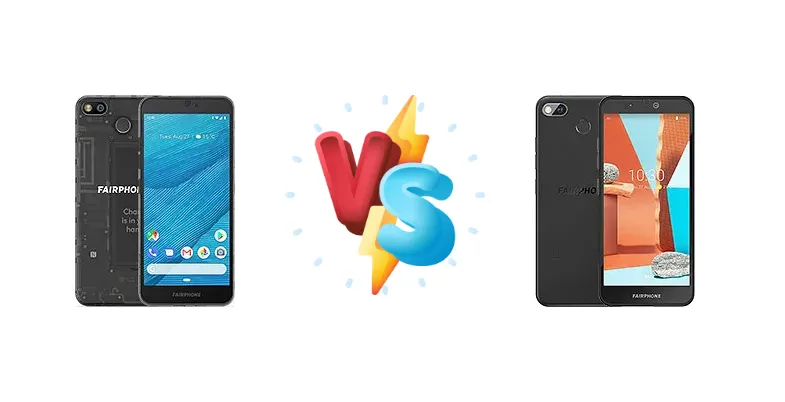
The Fairphone 3 and 3+ represent a unique proposition in the smartphone market: a focus on longevity, repairability, and ethical sourcing. With nearly identical core specifications, the 3+ is less a generational leap and more a refinement of the original vision. This comparison dissects the subtle differences to determine if the 3+ justifies its price premium over the increasingly affordable 3.
🏆 Quick Verdict
For most users, the Fairphone 3 remains the better value. The 3+’s improvements in component sourcing and software support are incremental, primarily benefiting those deeply invested in the Fairphone ecosystem or requiring guaranteed long-term updates. The core user experience remains virtually unchanged.
| Network |
|---|
| 2G bands | GSM 850 / 900 / 1800 / 1900 | GSM 850 / 900 / 1800 / 1900 |
| 3G bands | HSDPA 800 / 850 / 900 / 1700(AWS) / 1900 / 2100 | HSDPA 800 / 850 / 900 / 1700(AWS) / 1900 / 2100 |
| 4G bands | 1, 2, 3, 4, 5, 7, 8, 13, 20, 26 | 1, 2, 3, 4, 5, 7, 8, 13, 20, 26 |
| Speed | HSPA 42.2/5.76 Mbps, LTE (2CA) Cat6 300/150 Mbps | HSPA 42.2/5.76 Mbps, LTE (2CA) Cat6 300/150 Mbps |
| Technology | GSM / HSPA / LTE | GSM / HSPA / LTE |
| Launch |
|---|
| Announced | 2019, August 27. Released 2019, September 03 | 2020, August 27. Released 2020, September 14 |
| Status | Discontinued | Discontinued |
| Body |
|---|
| Build | - | Glass front (Gorilla Glass 5), plastic back, plastic frame |
| Dimensions | 158 x 71.8 x 9.9 mm (6.22 x 2.83 x 0.39 in) | 158 x 71.8 x 9.9 mm (6.22 x 2.83 x 0.39 in) |
| SIM | Nano-SIM + Nano-SIM | Nano-SIM + Nano-SIM |
| Weight | 189 g (6.67 oz) | 189 g (6.67 oz) |
| Display |
|---|
| Protection | Corning Gorilla Glass 5 | Corning Gorilla Glass 5 |
| Resolution | 1080 x 2160 pixels, 18:9 ratio (~427 ppi density) | 1080 x 2160 pixels, 18:9 ratio (~427 ppi density) |
| Size | 5.65 inches, 82.4 cm2 (~72.6% screen-to-body ratio) | 5.65 inches, 82.4 cm2 (~72.6% screen-to-body ratio) |
| Type | IPS LCD | IPS LCD |
| Platform |
|---|
| CPU | Octa-core (4x1.8 GHz Kryo 250 Gold & 4x1.8 GHz Kryo 250 Silver) | Octa-core (4x1.8 GHz Kryo 250 Gold & 4x1.8 GHz Kryo 250 Silver) |
| Chipset | Qualcomm SDM632 Snapdragon 632 (14 nm) | Qualcomm SDM632 Snapdragon 632 (14 nm) |
| GPU | Adreno 506 | Adreno 506 |
| OS | Android 9.0 (Pie), upgradable to Android 13 | Android 10, upgradable to Android 13 |
| Memory |
|---|
| Card slot | microSDXC (dedicated slot) | microSDXC (dedicated slot) |
| Internal | 64GB 4GB RAM | 64GB 4GB RAM |
| | eMMC 5.1 | eMMC 5.1 |
| Main Camera |
|---|
| Features | Dual-LED dual-tone flash, HDR, panorama | Dual-LED dual-tone flash, HDR, panorama |
| Single | 12 MP, f/1.8, (wide), 1/2.55", 1.4µm, dual pixel PDAF | 48 MP, f/1.8, (wide), 1/2.0", 0.8µm, PDAF |
| Video | 4K@30fps, 1080p@30fps, gyro-EIS | 4K@30fps, 1080p@30fps, gyro-EIS |
| Selfie camera |
|---|
| Features | - | HDR |
| Single | 8 MP, f/2.0, (wide), 1/4.0" | 16 MP, f/2.0, (wide), 1/3.1" |
| Video | 1080p@30fps, gyro-EIS | 1080p@30fps, gyro-EIS |
| Sound |
|---|
| 3.5mm jack | Yes | Yes |
| 35mm jack | Yes | Yes |
| Loudspeaker | Yes | Yes |
| Comms |
|---|
| Bluetooth | 5.0, A2DP, LE | 5.0, A2DP, LE |
| NFC | Yes | Yes |
| Positioning | GPS, GLONASS, GALILEO | GPS, GLONASS, GALILEO |
| Radio | No | No |
| USB | USB Type-C 2.0 | USB Type-C 2.0 |
| WLAN | Wi-Fi 802.11 a/b/g/n/ac, dual-band, Wi-Fi Direct | Wi-Fi 802.11 a/b/g/n/ac, dual-band, Wi-Fi Direct |
| Features |
|---|
| Sensors | Fingerprint (rear-mounted), accelerometer, gyro, proximity, compass | Fingerprint (rear-mounted), accelerometer, gyro, proximity, compass |
| Battery |
|---|
| Type | Li-Ion 3040 mAh, removable | Li-Ion 3040 mAh, removable |
| Misc |
|---|
| Colors | Black | Black |
| Price | About 400 EUR | About 440 EUR |
| SAR EU | 0.39 W/kg (head) 1.41 W/kg (body) | 0.41 W/kg (head) 1.41 W/kg (body) |
Fairphone 3
- More affordable price point.
- Excellent repairability and modularity.
- Strong commitment to ethical sourcing.
- Slightly shorter guaranteed software support.
- Component sourcing may not be as refined as the 3+.
Fairphone 3+
- Longest possible software support from Fairphone.
- Improved component sourcing for potentially greater longevity.
- Excellent repairability and modularity.
- Higher price compared to the Fairphone 3.
- Performance is identical to the Fairphone 3.
Display Comparison
Both the Fairphone 3 and 3+ feature a 5.65-inch IPS LCD display. While the resolution (1080 x 2160) is consistent, detailed panel characteristics like peak brightness and color accuracy are not specified in the provided data. Given the market segment, we can infer a focus on color accuracy over extreme brightness, prioritizing readability over HDR content. The lack of a high refresh rate is consistent with the emphasis on power efficiency and longevity.
Camera Comparison
Camera specifications are not detailed beyond the chipset. Given the Fairphone’s focus on modularity, the camera module is a key upgrade path. Without specific sensor size or aperture information, it’s difficult to assess image quality differences. However, the emphasis is likely on providing a functional and reliable camera experience rather than competing with flagship smartphone photography. The modularity allows users to upgrade the camera module independently, extending the phone’s lifespan.
Performance
The heart of both devices is the Qualcomm Snapdragon 632 (14nm). The octa-core CPU configuration – 4x1.8 GHz Kryo 250 Gold & 4x1.8 GHz Kryo 250 Silver – is identical. This means real-world performance, encompassing app launch times and multitasking, will be indistinguishable between the two. The 14nm process node, while not cutting-edge, offers a reasonable balance between performance and power consumption, crucial for a device designed for long-term use. Thermal management will likely be similar, with the Snapdragon 632 not being a particularly power-hungry chip.
Battery Life
Battery capacity isn’t specified, but both phones are designed for all-day battery life with moderate usage. The Snapdragon 632’s efficiency contributes to this. Charging wattage is also unspecified, but the Fairphone’s design prioritizes slow, deliberate charging to maximize battery health over rapid charging speeds. The modularity extends to the battery, allowing users to easily replace a degraded battery, further extending the phone’s usable life.
Buying Guide
Buy the Fairphone 3 if you prioritize affordability and are comfortable with a slightly shorter guaranteed software support window. It’s an excellent entry point into the world of repairable smartphones. Buy the Fairphone 3+ if you demand the longest possible software support, appreciate the improved component sourcing for potentially greater longevity, and are willing to pay a premium for these refinements.
Frequently Asked Questions
❓ Does the Fairphone 3+ offer significantly improved performance over the Fairphone 3?
No. Both devices utilize the same Qualcomm Snapdragon 632 chipset and CPU configuration. Real-world performance will be virtually identical for everyday tasks and app usage. The 3+’s improvements lie in component sourcing and software support, not raw processing power.
❓ How does the Fairphone 3+’s component sourcing differ from the Fairphone 3, and why does it matter?
Fairphone states the 3+ utilizes more responsibly sourced materials and components. This means a greater focus on ethical mining practices and reducing the environmental impact of production. While not directly impacting performance, this contributes to the overall sustainability goals of the Fairphone ecosystem and potentially increases the device’s longevity by using higher-quality components.
❓ Is it worth upgrading from the Fairphone 3 to the Fairphone 3+ if I already own one?
For most users, the upgrade isn’t essential. Unless you are deeply committed to supporting Fairphone’s ethical sourcing initiatives or require the longest possible software support window, the incremental improvements of the 3+ don’t justify the cost. The modularity of the Fairphone allows you to upgrade individual components like the camera module instead.