
Essential PH-1 vs. Google Pixel 7a: A Detailed Showdown
| Phones Images | |||||
|---|---|---|---|---|---|
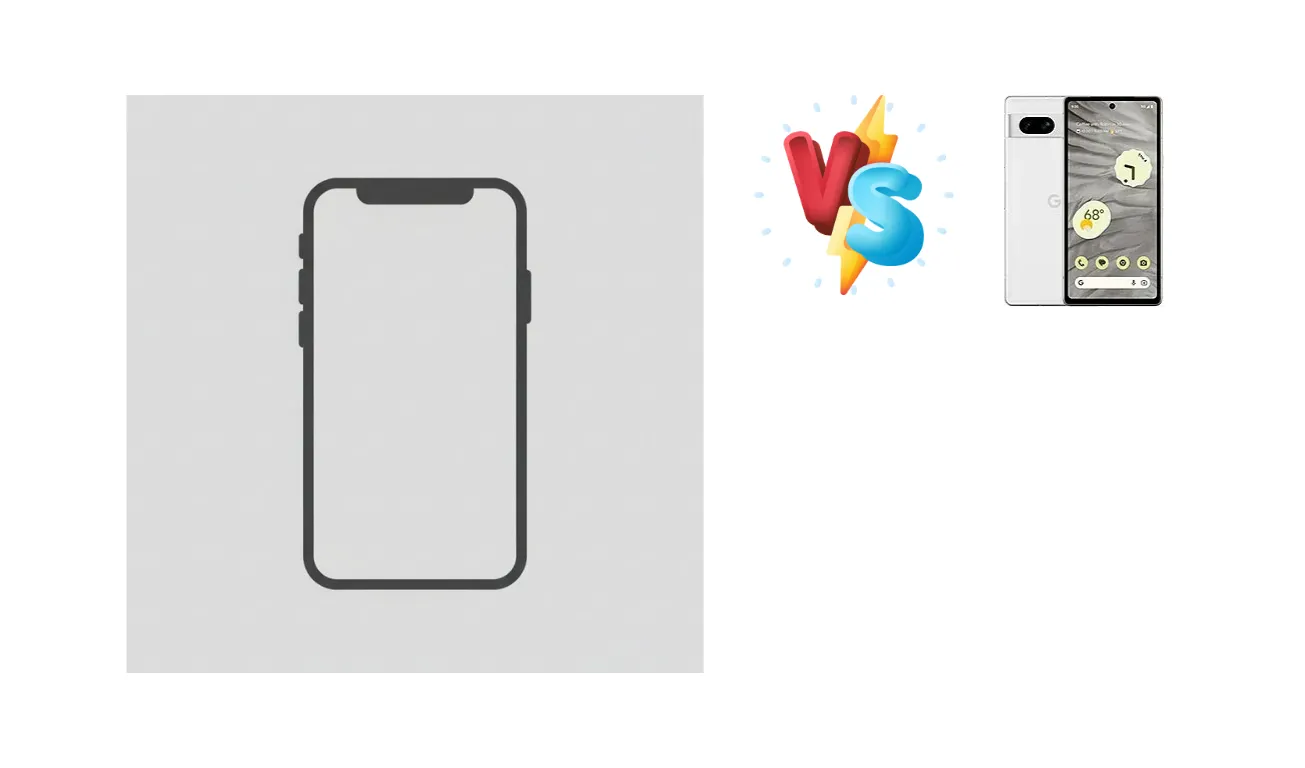
|
🏆 Quick Verdict
The Google Pixel 7a emerges as the clear winner. While the Essential PH-1 boasts a powerful Snapdragon 835, the Pixel 7a’s Tensor G2 chip, superior camera, brighter display, and longer software support make it the more compelling choice for most users.
| PHONES | ||
|---|---|---|
| Phone Names | Essential PH-1 | Google Pixel 7a |
| Network | ||
|---|---|---|
| 2G bands | GSM 850 / 900 / 1800 / 1900 | GSM 850 / 900 / 1800 / 1900 |
| 3G bands | HSDPA 850 / 900 / 1700(AWS) / 1900 / 2100 & TD-SCDMA | HSDPA 800 / 850 / 900 / 1700(AWS) / 1900 / 2100 |
| 4G bands | 1, 2, 3, 4, 5, 7, 8, 11, 12, 13, 17, 20, 21, 25, 26, 28, 29, 30, 38, 39, 40, 41, 42, 43, 66 | 1, 2, 3, 4, 5, 7, 8, 12, 13, 14, 17, 20, 25, 26, 28, 29, 30, 38, 40, 41, 48, 66, 71 - GWKK3, G0DZQ |
| 5G bands | - | 1, 2, 3, 5, 7, 8, 12, 14, 20, 25, 28, 30, 38, 41, 48, 66, 71, 77, 78 SA/NSA/Sub6 - GWKK3 |
| Speed | HSPA 42.2/5.76 Mbps, LTE-A (4CA) Cat16 1024/150 Mbps, EV-DO Rev.A 3.1 Mbps | HSPA, LTE, 5G |
| Technology | GSM / CDMA / HSPA / EVDO / LTE | GSM / HSPA / LTE / 5G |
| CDMA2000 1xEV-DO | 1, 2, 3, 5, 7, 8, 12, 20, 25, 28, 38, 40, 41, 66, 75, 76, 77, 78, 79 SA/NSA/Sub6 - GHL1X, G82U8 | |
| Launch | ||
|---|---|---|
| Announced | 2017, May | 2023, May 10 |
| Status | Available. Released 2017, August | Available. Released 2023, May 10 |
| Body | ||
|---|---|---|
| Build | Glass front (Gorilla Glass 5), ceramic back, titanium frame | Glass front (Gorilla Glass 3), aluminum frame, plastic back |
| Dimensions | 141.5 x 71.1 x 7.8 mm (5.57 x 2.80 x 0.31 in) | 152 x 72.9 x 9 mm (5.98 x 2.87 x 0.35 in) |
| SIM | Nano-SIM | Nano-SIM + eSIM |
| Weight | 185 g (6.53 oz) | 193.5 g (6.84 oz) |
| - | IP67 dust/water resistant (up to 1m for 30 min) | |
| Display | ||
|---|---|---|
| Protection | Corning Gorilla Glass 5 | Corning Gorilla Glass 3 |
| Resolution | 1312 x 2560 pixels (~504 ppi density) | 1080 x 2400 pixels, 20:9 ratio (~429 ppi density) |
| Size | 5.71 inches, 85.4 cm2 (~84.9% screen-to-body ratio) | 6.1 inches, 90.7 cm2 (~81.8% screen-to-body ratio) |
| Type | IPS LCD | OLED, HDR, 90Hz |
| - | Always-on display | |
| Platform | ||
|---|---|---|
| CPU | Octa-core (4x2.45 GHz Kryo & 4x1.9 GHz Kryo) | Octa-core (2x2.85 GHz Cortex-X1 & 2x2.35 GHz Cortex-A78 & 4x1.80 GHz Cortex-A55) |
| Chipset | Qualcomm MSM8998 Snapdragon 835 (10 nm) | Google Tensor G2 (5 nm) |
| GPU | Adreno 540 | Mali-G710 MP7 |
| OS | Android 7.1 (Nougat), upgradable to Android 10 | Android 13, upgradable to Android 15, up to 5 major Android upgrades |
| Memory | ||
|---|---|---|
| Card slot | No | No |
| Internal | 128GB 4GB RAM | 128GB 8GB RAM |
| - | UFS 3.1 | |
| Main Camera | ||
|---|---|---|
| Dual | 13 MP, f/1.9, 1/3.1", PDAF, Laser AF 13 MP B/W, f/1.9, 1/3.1" | 64 MP, f/1.9, 26mm (wide), 1/1.73", 0.8µm, dual pixel PDAF, OIS 13 MP, f/2.2, 120˚ (ultrawide), 1.12µm |
| Features | LED flash, HDR | Dual-LED flash, Pixel Shift, Auto-HDR, panorama |
| Video | 4K@30fps, 1080p@60fps, 720p@120fps | 4K@30/60fps, 1080p@30/60/120/240fps, OIS |
| Selfie camera | ||
|---|---|---|
| Features | - | HDR, panorama |
| Single | 8 MP, f/2.2 | 13 MP, f/2.2, 20mm (ultrawide), 1.12µm |
| Video | 4K@30fps | 4K@30fps, 1080p@30fps |
| Sound | ||
|---|---|---|
| 3.5mm jack | No | No |
| 35mm jack | - | No |
| Loudspeaker | Yes, with dual speakers | Yes, with stereo speakers |
| Comms | ||
|---|---|---|
| Bluetooth | 5.0, A2DP, EDR, LE | 5.3, A2DP, LE |
| NFC | Yes | Yes |
| Positioning | GPS, GLONASS | GPS, GLONASS, GALILEO, BDS, QZSS, NavIC |
| Radio | No | No |
| USB | USB Type-C 2.0 | USB Type-C 3.2 |
| WLAN | Wi-Fi 802.11 a/b/g/n/ac, dual-band, Wi-Fi Direct | Wi-Fi 802.11 a/b/g/n/ac/6e, tri-band |
| Features | ||
|---|---|---|
| Sensors | Fingerprint (rear-mounted), accelerometer, gyro, proximity, compass, barometer | Fingerprint (under display, optical), accelerometer, gyro, proximity, compass, barometer |
| Snap-on accessories (optional) | - | |
| Battery | ||
|---|---|---|
| Charging | 27W wired, PD2.0 | 18W wired, PD3.0 7.5W wireless |
| Type | Li-Ion 3040 mAh, non-removable | Li-Po 4385 mAh |
| Misc | ||
|---|---|---|
| Colors | Stellar Gray, Ocean Depths, Black Moon, Pure White | Charcoal, Snow, Sea, Coral |
| Models | PH-1 | GWKK3, GHL1X, G0DZQ, G82U8 |
| Price | About 330 EUR | € 179.90 / $ 150.00 / £ 170.00 / ₹ 25,980 |
| Tests | ||
|---|---|---|
| Performance | GeekBench: 6490 (v4.4) GFXBench: 16fps (ES 3.1 onscreen) | - |
Essential PH-1
- Unique design
- Powerful Snapdragon 835 (for its time)
- 27W wired charging
- No longer receiving software updates
- Outdated camera
- Lower battery life
- Modular design limitations
Google Pixel 7a
- Excellent camera
- Clean Android experience
- Bright and vibrant display
- Long software support
- Wireless charging
- 18W wired charging is slower than some competitors
- Tensor G2 can occasionally exhibit performance quirks
Display Comparison
The Pixel 7a’s display is significantly brighter (1070 nits) than the Essential PH-1’s, offering better visibility outdoors. While the PH-1 had a unique aspect ratio, the Pixel 7a’s OLED panel provides richer colors and deeper blacks. The Pixel 7a also has a higher resolution, resulting in a sharper image.
Camera Comparison
This is where the Pixel 7a truly shines. Google's computational photography is unmatched, delivering stunning images with excellent dynamic range and detail. The Essential PH-1’s camera was decent for its era, but it simply can't compete with the Pixel 7a’s capabilities, especially in low light. The Pixel 7a also offers video recording advantages.
Performance
The Snapdragon 835 in the Essential PH-1 was a powerhouse in its time, but the Google Tensor G2 in the Pixel 7a offers a more modern and efficient performance. The Tensor G2’s custom cores are optimized for machine learning tasks, enhancing camera features and overall responsiveness. While the PH-1 can still handle everyday tasks, the Pixel 7a feels snappier and more future-proof.
Battery Life
The Pixel 7a boasts an impressive endurance rating of 76 hours, significantly outperforming the Essential PH-1. While the PH-1 supported 27W charging, the Pixel 7a offers both 18W wired and 7.5W wireless charging, providing more flexibility.
Buying Guide
The Essential PH-1 is for enthusiasts seeking a unique design and a taste of what modular phones *could* have been, and who are comfortable with a device that's no longer receiving updates. The Google Pixel 7a is ideal for anyone prioritizing a fantastic camera, clean Android experience, and reliable performance in a compact and affordable package.