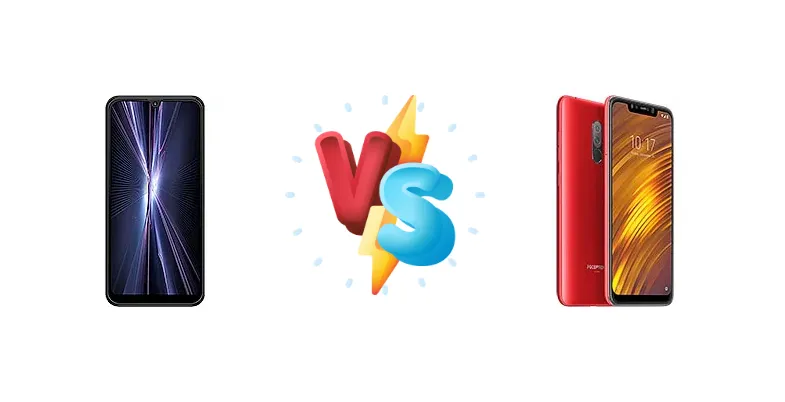
Looking for a fantastic smartphone without breaking the bank? The Energizer Ultimate U608s and the Xiaomi Pocophone F1 both promise incredible value, but which one delivers the best experience? We're diving deep into a head-to-head comparison to help you choose.
🏆 Quick Verdict
The Pocophone F1 is the clear winner. While the U608s boasts a massive battery, the F1's superior processor, better camera, and faster charging make it the more compelling choice for most users seeking a budget powerhouse.
| Network |
|---|
| 2G bands | GSM 850 / 900 / 1800 / 1900 | GSM 850 / 900 / 1800 / 1900 |
| 3G bands | HSDPA 850 / 900 / 2100 | HSDPA 850 / 900 / 1900 / 2100 |
| 4G bands | LTE | 1, 3, 5, 7, 8, 20, 38, 40, 41 |
| Speed | HSPA, LTE | HSPA 42.2/5.76 Mbps, LTE (4CA) Cat16 1024/150 Mbps |
| Technology | GSM / HSPA / LTE | GSM / HSPA / LTE |
| Launch |
|---|
| Announced | 2022, June | 2018, August 22. Released 2018, August 27 |
| Status | Available. Released 2022, July | Discontinued |
| Body |
|---|
| Build | - | Glass front (Gorilla Glass), plastic back, plastic frame |
| Dimensions | 155.4 x 73.3 x 9.8 mm (6.12 x 2.89 x 0.39 in) | 155.5 x 75.3 x 8.8 mm (6.12 x 2.96 x 0.35 in) |
| SIM | Nano-SIM + Nano-SIM | Nano-SIM + Nano-SIM |
| Weight | 156.8 g (5.54 oz) | 182 g (6.42 oz) |
| Display |
|---|
| Protection | - | Corning Gorilla Glass (unspecified version) |
| Resolution | 720 x 1520 pixels, 19:9 ratio (~277 ppi density) | 1080 x 2246 pixels, 18.7:9 ratio (~403 ppi density) |
| Size | 6.08 inches, 92.3 cm2 (~81.0% screen-to-body ratio) | 6.18 inches, 96.2 cm2 (~82.2% screen-to-body ratio) |
| Type | LCD | IPS LCD |
| Platform |
|---|
| CPU | Quad-core 2.0 GHz Cortex-A53 | Octa-core (4x2.8 GHz Kryo 385 Gold & 4x1.8 GHz Kryo 385 Silver) |
| Chipset | Mediatek MT6761 Helio A22 (12 nm) | Qualcomm SDM845 Snapdragon 845 (10 nm) |
| GPU | PowerVR GE8320 | Adreno 630 |
| OS | Android 12 (Go edition) | Android 8.1 (Oreo), upgradable to Android 10, MIUI 12 |
| Memory |
|---|
| Card slot | microSDXC | microSDXC (uses shared SIM slot) |
| Internal | 32GB 2GB RAM | 64GB 6GB RAM, 128GB 6GB RAM, 256GB 8GB RAM |
| | eMMC 5.1 | UFS 2.1 |
| Main Camera |
|---|
| Dual | - | 12 MP, f/1.9, 1/2.55", 1.4µm, dual pixel PDAF
Auxiliary lens |
| Features | LED flash | Dual-LED flash, HDR, panorama |
| Single | 5 MP | - |
| Video | 1080p@30/60fps | 4K@30/60fps, 1080p@30fps (gyro-EIS), 1080p@240fps, 720p@960fps |
| Selfie camera |
|---|
| Features | - | HDR |
| Single | 5 MP | 20 MP, f/2.0, (wide), 1/3", 0.9µm |
| Video | 720p | 1080p@30fps |
| Sound |
|---|
| 3.5mm jack | Yes | Yes |
| 35mm jack | Yes | Yes |
| Loudspeaker | Yes | Yes, with stereo speakers |
| Comms |
|---|
| Bluetooth | 4.2, A2DP | 5.0, A2DP, LE, aptX HD |
| NFC | No | No |
| Positioning | GPS | GPS, GLONASS, BDS |
| Radio | FM radio | FM radio, recording |
| USB | microUSB | USB Type-C 2.0, OTG |
| WLAN | Wi-Fi 802.11 b/g/n | Wi-Fi 802.11 a/b/g/n/ac, dual-band, Wi-Fi Direct, DLNA |
| Features |
|---|
| Sensors | - | Infrared Face ID, fingerprint (rear-mounted), accelerometer, gyro, proximity, compass |
| Battery |
|---|
| Charging | - | 18W wired, QC3 |
| Type | Li-Ion 3000 mAh | Li-Po 4000 mAh, non-removable |
| Misc |
|---|
| Colors | Black | Graphite Black, Steel Blue, Rosso Red, Armored Edition with Kevlar |
| Models | - | M1805E10A, POCO F1 |
| Price | About 90 EUR | About 360 EUR |
| SAR | - | 0.66 W/kg (head) 1.18 W/kg (body) |
| SAR EU | - | 0.54 W/kg (head) 1.58 W/kg (body) |
| Tests |
|---|
| Audio quality | - |
Noise -93.6dB / Crosstalk -93.8dB |
| Battery life | - |
Endurance rating 94h
|
| Camera | - |
Photo / Video |
| Display | - |
Contrast ratio: 1468:1 (nominal), 3.059 (sunlight) |
| Loudspeaker | - |
Voice 72dB / Noise 74dB / Ring 86dB
|
| Performance | - |
AnTuTu: 265314 (v7)
GeekBench: 9003 (v4.4)
GFXBench: 31fps (ES 3.1 onscreen) |
Energizer Ultimate U608s
- Exceptional battery life
- Durable build
- Large battery capacity
- Weak processor
- Mediocre camera
- Slow charging
- Basic design
Xiaomi Pocophone F1
- Powerful Snapdragon 845 processor
- Excellent camera
- Fast charging (QC3)
- Premium design
- Good display
- Older model
- Battery life not as exceptional as U608s
Display Comparison
Both phones feature displays with a respectable contrast ratio of 1468:1 and excellent sunlight readability (3.059). However, the Pocophone F1 typically has a slightly brighter display and a more vibrant color profile, offering a more enjoyable viewing experience. The U608s may have a slightly larger screen, but the F1's overall display quality is superior.
Camera Comparison
The Pocophone F1's camera system is noticeably better. While both offer decent photo and video capabilities, the F1 captures more detail, has better dynamic range, and performs better in low-light conditions. The U608s camera is acceptable for casual snapshots, but lacks the F1's versatility and image quality.
Performance
This is where the Pocophone F1 truly shines. Its Snapdragon 845 chipset is significantly more powerful than the U608s' Helio A22. Expect smoother multitasking, faster app loading times, and a much better gaming experience on the F1. The U608s is adequate for basic tasks, but struggles with demanding applications.
Battery Life
The Energizer U608s is marketed for its exceptional battery life, and it delivers. While both phones have endurance ratings of 94h, the U608s' larger battery capacity contributes to longer real-world usage between charges. However, the Pocophone F1's 18W fast charging significantly reduces charging times.
Buying Guide
The Energizer Ultimate U608s is ideal for users prioritizing extreme battery life above all else and who don't need high-end performance. The Xiaomi Pocophone F1 is perfect for those wanting a fast, capable phone with a good camera and a premium feel, all at an affordable price.
Frequently Asked Questions
❓ Is the Energizer U608s good for gaming?
The U608s' processor is not ideal for demanding games. You'll likely experience lag and reduced frame rates.
❓ How does the Pocophone F1's age affect its performance?
While it's an older model, the Snapdragon 845 remains a capable processor, and the Pocophone F1 still offers excellent value for its price.
❓ Which phone has better software support?
Xiaomi generally provides better software updates and support for its devices than Energizer.