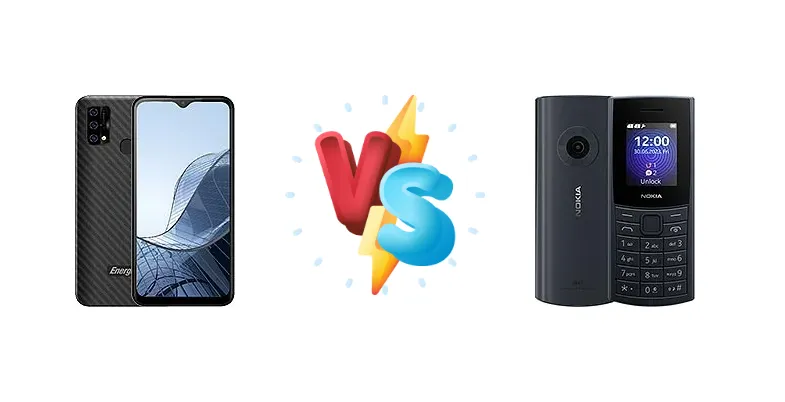
The feature phone market is experiencing a resurgence, offering reliable connectivity and extended battery life without the complexities of a smartphone. We pit the Energizer U683S, boasting a modern Mediatek chipset, against the Nokia 110 4G 2nd Edition, a stalwart of the basic phone world, to determine which best suits your needs.
🏆 Quick Verdict
For users prioritizing performance and access to apps, the Energizer U683S is the clear winner thanks to its Mediatek MT6762CB processor. However, the Nokia 110 4G 2nd Edition remains a compelling option for those seeking ultimate simplicity and potentially longer standby times, given its likely lower power consumption.
| Network |
|---|
| 2G bands | GSM 850 / 900 / 1800 / 1900 | GSM 900 / 1800 |
| 3G bands | HSDPA 850 / 900 / 2100 | HSDPA 850 / 900 / 1700(AWS) / 1900 / 2100 |
| 4G bands | 1, 2, 3, 4, 5, 7, 8, 20, 28, 38, 40, 41, 66 | LTE |
| Speed | HSPA, LTE | HSPA, LTE |
| Technology | GSM / HSPA / LTE | GSM / HSPA / LTE |
| Launch |
|---|
| Announced | 2024, January | 2024, December |
| Status | Available. Released 2024, February | Available. Released 2024, December |
| Body |
|---|
| Dimensions | 172.8 x 78.5 x 9.7 mm (6.80 x 3.09 x 0.38 in) | 121.5 x 50 x 14.4 mm (4.78 x 1.97 x 0.57 in) |
| SIM | Nano-SIM + Nano-SIM | · Nano-SIM· Nano-SIM + Nano-SIM |
| Weight | 210 g (7.41 oz) | 94.5 g (3.35 oz) |
| Display |
|---|
| Resolution | 720 x 1640 pixels (~263 ppi density) | 120 x 160 pixels, 4:3 ratio (~111 ppi density) |
| Size | 6.82 inches, 110.5 cm2 (~81.4% screen-to-body ratio) | 1.8 inches, 10.0 cm2 (~16.5% screen-to-body ratio) |
| Type | IPS LCD | IPS LCD |
| Platform |
|---|
| CPU | Octa-core 2.0 GHz | - |
| Chipset | Mediatek MT6762CB | - |
| GPU | PowerVR GE8320 | - |
| OS | Android 13 (Go edition) | - |
| Memory |
|---|
| Call records | - | Yes |
| Card slot | microSDXC | microSDHC |
| Internal | 64GB 2GB RAM | 48MB 128MB RAM |
| Phonebook | - | Yes |
| Main Camera |
|---|
| Features | LED flash | - |
| Single | - | QVGA |
| Triple | 8 MP, (wide), AF
0.08 MP (macro)
Auxiliary lens | - |
| Video | 1080p@30fps | Yes |
| Selfie camera |
|---|
| Single | 5 MP, (wide) | - |
| Video | 1080p@30fps | - |
| Sound |
|---|
| 35mm jack | Yes | Yes |
| Loudspeaker | Yes | Yes |
| Comms |
|---|
| Bluetooth | 5.0, A2DP, LE | 5.0, A2DP |
| NFC | No | No |
| Positioning | GPS | No |
| Radio | No | Wireless FM radio |
| USB | USB Type-C 2.0 | USB Type-C |
| WLAN | Wi-Fi 802.11 a/b/g/n/ac, dual-band | No |
| Features |
|---|
| Games | - | Yes |
| Java | - | No |
| Messaging | - | SMS |
| Sensors | Fingerprint (rear-mounted), accelerometer, proximity | - |
| Battery |
|---|
| Type | Li-Po 4900 mAh | Li-Ion 1450 mAh, removable |
| Misc |
|---|
| Colors | Black, Gold, Pink | Midnight Blue, Arctic Purple |
| Price | About 80 EUR | About 60 EUR |
Energizer U683S
- Significantly faster processor for app usage
- 4G connectivity for faster data speeds
- Potential for more features and customization
- Likely shorter battery life than Nokia 110 4G
- More complex user interface
- Potentially higher price point
Nokia 110 4G 2nd Edition
- Exceptional standby time
- Extreme simplicity and ease of use
- Very affordable price
- Limited functionality and app support
- Slow data speeds (depending on network)
- Basic display and camera
Display Comparison
Specific display details for the Nokia 110 4G 2nd Edition are unavailable. However, given its market positioning, it likely features a basic color LCD with a low resolution. The Energizer U683S, while also likely utilizing a basic LCD, benefits from the processing power to potentially support a slightly larger display and more vibrant colors. The absence of detailed specs on the Nokia 110 4G 2nd Edition suggests a focus on cost reduction over display quality.
Camera Comparison
Camera specifications for both devices are limited. It's reasonable to assume the Nokia 110 4G 2nd Edition features a very basic camera, likely with a low megapixel count and limited functionality. The Energizer U683S, while not positioned as a camera phone, likely has a slightly more capable sensor due to the processing power available. However, neither device should be considered for serious photography.
Performance
The Energizer U683S’s Mediatek MT6762CB chipset, with its octa-core 2.0 GHz CPU, represents a significant leap in performance compared to what is expected in the Nokia 110 4G 2nd Edition. The MT6762CB allows for running applications, web browsing, and potentially even light multitasking. The Nokia 110 4G 2nd Edition, lacking specific chipset information, likely relies on a very basic processor designed solely for call functionality and SMS messaging. This difference translates to a vastly different user experience, with the Energizer offering a smartphone-lite experience.
Battery Life
The Nokia 110 4G 2nd Edition is known for its exceptional standby time, a hallmark of basic feature phones. While the Energizer U683S’s Mediatek chipset offers more functionality, it also consumes more power. The Nokia 110 4G 2nd Edition likely prioritizes maximizing battery life through software optimization and a less power-hungry processor. The Energizer U683S will likely require more frequent charging, but the trade-off is increased usability.
Buying Guide
Buy the Energizer U683S if you need a feature phone capable of running apps like WhatsApp, browsing the web, and enjoying a smoother user experience. It's ideal for users who want more than just calls and texts. Buy the Nokia 110 4G 2nd Edition if you prioritize extreme simplicity, long standby times, and a durable, no-frills device for essential communication. It's perfect as a backup phone or for users unfamiliar with smartphones.
Frequently Asked Questions
❓ Can I use WhatsApp on the Energizer U683S?
Yes, the Energizer U683S's Mediatek MT6762CB chipset and 4G connectivity allow it to run applications like WhatsApp, making it a viable option for staying connected with friends and family.
❓ Is the Nokia 110 4G 2nd Edition a good choice for elderly users?
Absolutely. The Nokia 110 4G 2nd Edition's simplicity, large buttons, and long battery life make it an excellent choice for elderly users who need a reliable phone for calls and texts without the complexities of a smartphone.
❓ How much faster is the Energizer U683S compared to a standard feature phone?
The Energizer U683S is significantly faster due to its octa-core processor. This allows for quicker app loading, smoother web browsing, and a more responsive user interface compared to the basic processors found in traditional feature phones.