
Motorola Defy 2 vs. Energizer Hardcase H620S: A Deep Dive into Rugged Smartphone Choices
| Phones Images | |||||
|---|---|---|---|---|---|
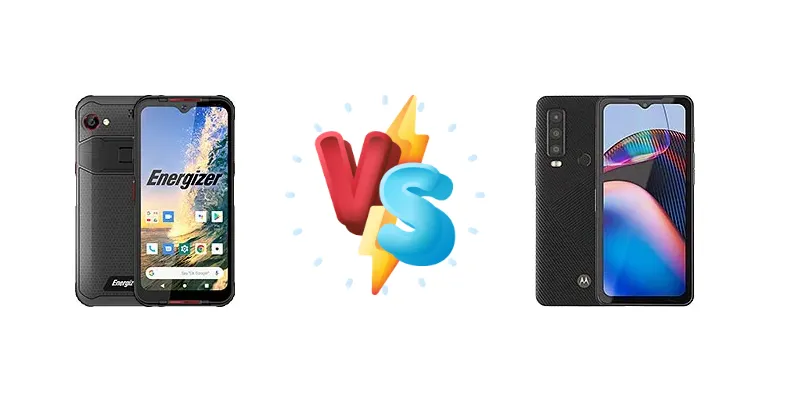
|
🏆 Quick Verdict
For the average user prioritizing performance and future-proofing, the Motorola Defy 2 is the clear winner. Its Dimensity 930 chipset offers a significant leap in processing power and efficiency compared to the Energizer H620S’s Helio P22. However, the H620S remains a viable option for those on a strict budget needing basic smartphone functionality in a durable package.
| PHONES | ||
|---|---|---|
| Phone Names | Energizer Hardcase H620S | Motorola Defy 2 |
| Network | ||
|---|---|---|
| 2G bands | GSM 850 / 900 / 1800 / 1900 | GSM 850 / 900 / 1800 / 1900 |
| 3G bands | HSDPA 850 / 900 / 1900 / 2100 | HSDPA 850 / 900 / 1700(AWS) / 1900 / 2100 |
| 4G bands | 1, 3, 5, 7, 8, 20, 28, 34, 38, 39, 40, 41 | 1, 2, 3, 4, 5, 7, 8, 12, 13, 14, 17, 20, 25, 26, 28, 30, 38, 40, 41, 46, 48, 66, 71 |
| 5G bands | - | 2, 5, 23, 25, 26, 28, 38, 41, 48, 66, 70, 71, 77, 78, 255, 256 SA/NSA/Sub6/mmWave |
| Speed | HSPA, LTE | HSPA, LTE, 5G |
| Technology | GSM / HSPA / LTE | GSM / HSPA / LTE / 5G |
| Launch | ||
|---|---|---|
| Announced | 2020, December. Released 2021, February 09 | 2023, February 24 |
| Status | Discontinued | Available. Released 2023, October |
| Body | ||
|---|---|---|
| Build | - | Glass front (Gorilla Glass Victus), plastic back, aluminum frame |
| Dimensions | 163 x 78.2 x 12 mm (6.42 x 3.08 x 0.47 in) | 171 x 80 x 11.9 mm (6.73 x 3.15 x 0.47 in) |
| SIM | Nano-SIM + Nano-SIM | Nano-SIM + Nano-SIM |
| Weight | 250 g (8.82 oz) | 268 g (9.45 oz) |
| IP69 dust/water resistant (up to 1.2m for 30 min) Drop-to-concrete resistance from up to 1.2m | IP68/IP69 dust/water resistant (up to 5m for 35 min) Drop-to-concrete resistance from up to 1.8m MIL-STD-810H compliant | |
| Display | ||
|---|---|---|
| Protection | - | Corning Gorilla Glass Victus |
| Resolution | 720 x 1440 pixels, 18:9 ratio (~260 ppi density) | 1080 x 2408 pixels, 20:9 ratio (~400 ppi density) |
| Size | 6.2 inches, 99.2 cm2 (~77.8% screen-to-body ratio) | 6.6 inches, 104.9 cm2 (~76.7% screen-to-body ratio) |
| Type | IPS LCD | IPS LCD, 120Hz |
| Platform | ||
|---|---|---|
| CPU | Octa-core 2.0 GHz Cortex-A53 | Octa-core (2x2.2 GHz Cortex-A78 & 6x2.0 GHz Cortex-A55) |
| Chipset | Mediatek MT6762 Helio P22 (12 nm) | Mediatek Dimensity 930 (6 nm) |
| GPU | PowerVR GE8320 | IMG BXM-8-256 |
| OS | Android 10 | Android 12 |
| Memory | ||
|---|---|---|
| Card slot | microSDHC (uses shared SIM slot) | microSDXC (uses shared SIM slot) |
| Internal | 64GB 4GB RAM | 128GB 6GB RAM |
| eMMC 5.1 | - | |
| Main Camera | ||
|---|---|---|
| Features | Dual-LED flash | Dual-LED flash, HDR, panorama |
| Single | 48 MP, PDAF | - |
| Triple | - | 50 MP, f/1.8, (wide), PDAF 8 MP, f/2.2, (ultrawide) 2 MP (macro) |
| Video | 1080p@30fps | 1080p@30fps |
| Selfie camera | ||
|---|---|---|
| Single | 8 MP | 8 MP, f/2.0, (wide) |
| Video | 1080p@30fps | 1080p@30fps |
| Sound | ||
|---|---|---|
| 3.5mm jack | Yes | No |
| 35mm jack | Yes | No |
| Loudspeaker | Yes | Yes |
| Comms | ||
|---|---|---|
| Bluetooth | 5.0, A2DP, LE | 5.1, A2DP, LE |
| NFC | Yes | Yes |
| Positioning | GPS | GPS (L1+L5), GLONASS, GALILEO, BDS |
| Radio | FM radio | Unspecified |
| USB | USB Type-C 2.0 | USB Type-C 2.0, OTG |
| WLAN | Wi-Fi 802.11 b/g/n, Wi-Fi Direct | Wi-Fi 802.11 a/b/g/n/ac, dual-band |
| Features | ||
|---|---|---|
| Sensors | Fingerprint (rear-mounted), accelerometer, proximity | Fingerprint (rear-mounted), accelerometer, gyro, proximity, compass |
| - | Emergency SOS via satellite (Bullitt Satellite Connect service) | |
| Battery | ||
|---|---|---|
| Charging | - | 15W wireless |
| Type | Li-Ion 5000 mAh | Li-Po 5000 mAh |
| Misc | ||
|---|---|---|
| Colors | Black | Black |
| Models | - | BM1S1B |
| Price | About 300 EUR | About 570 EUR |
Energizer Hardcase H620S
- Extremely affordable price point
- Ruggedized design for durability
- Simple and easy-to-use interface
- Outdated and underpowered chipset
- Poor performance for demanding tasks
- Likely limited software support
Motorola Defy 2
- Powerful Dimensity 930 chipset
- Wireless charging capability
- Improved camera performance
- Higher price compared to the H620S
- Rugged design may add bulk
- Software updates may be limited
Display Comparison
Neither device boasts a cutting-edge display. The Energizer H620S’s display specifications are unavailable, but given its price point, it likely utilizes a standard LCD panel. The Motorola Defy 2, while also likely LCD, benefits from the processing power of its Dimensity 930 to potentially offer better image processing. The lack of high refresh rates on either device suggests a focus on power conservation rather than visual fluidity. Bezels are expected to be substantial on both, prioritizing structural integrity over a modern, edge-to-edge design.
Camera Comparison
Camera details for the Energizer H620S are sparse, suggesting a basic imaging experience. The Motorola Defy 2’s camera specifications are also limited in available data, but the Dimensity 930’s image signal processor (ISP) is far more capable than the one found in the Helio P22. This translates to better image processing, noise reduction, and dynamic range. While neither phone is likely to compete with flagship camera phones, the Defy 2 will deliver noticeably better photos and videos, especially in challenging lighting conditions. The presence of 15W wireless charging on the Defy 2 suggests a more premium overall experience, hinting at potentially better camera software features.
Performance
The performance gap between these two devices is substantial. The Energizer H620S’s MediaTek Helio P22 (12nm) with its Cortex-A53 cores is a budget-oriented chipset designed for basic tasks. The Motorola Defy 2’s Dimensity 930 (6nm) is a completely different beast, featuring a combination of Cortex-A78 and A55 cores. The 6nm process node of the Dimensity 930 translates to significantly improved power efficiency and thermal management, allowing for sustained performance under load. This means the Defy 2 will handle multitasking, gaming, and demanding apps with ease, while the H620S will struggle. The Defy 2’s CPU architecture is also more modern, offering better instructions-per-clock (IPC) performance.
Battery Life
Battery capacity for both devices is unknown. However, the Dimensity 930’s superior power efficiency in the Motorola Defy 2 means it will likely achieve comparable or better battery life despite potentially having a smaller battery than the Energizer H620S. The Defy 2’s 15W wireless charging is a significant advantage, offering convenient top-ups without needing a cable. The H620S likely relies solely on wired charging, and its charging speed is expected to be slower.
Buying Guide
Buy the Energizer Hardcase H620S if you need a highly affordable, extremely durable phone for basic communication and light tasks – think construction workers needing a reliable call device. Buy the Motorola Defy 2 if you prefer a rugged phone that can handle demanding applications, streaming, and gaming, and if wireless charging is a must-have feature. The Defy 2 is for users who want a phone that won't slow down after a year of use.