
Energizer Hard Case P28K vs. Doogee S98 Pro: A Deep Dive into Rugged Smartphone Performance
| Phones Images | |||||
|---|---|---|---|---|---|
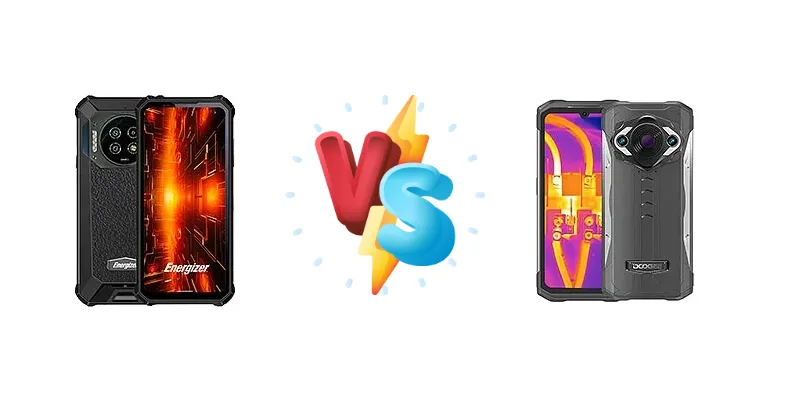
|
🏆 Quick Verdict
For the average user prioritizing sustained performance and future-proofing, the Energizer Hard Case P28K emerges as the better choice. Its newer Mediatek Helio G99 chipset, built on a 6nm process, offers a tangible advantage in efficiency and processing power over the Doogee S98 Pro’s older 12nm Helio G96, despite similar CPU core configurations.
| PHONES | ||
|---|---|---|
| Phone Names | Energizer Hard Case P28K | Doogee S98 Pro |
| Network | ||
|---|---|---|
| 2G bands | GSM 850 / 900 / 1800 / 1900 | GSM 850 / 900 / 1800 / 1900 |
| 3G bands | HSDPA 850 / 900 / 1700(AWS) / 1900 / 2100 | HSDPA 800 / 850 / 900 / 1700(AWS) / 1900 / 2100 |
| 4G bands | 1, 2, 3, 4, 5, 7, 8, 12, 13, 17, 18, 19, 20, 25, 26, 28, 38, 40, 41, 66 | 1, 2, 3, 4, 5, 7, 8, 12, 13, 17, 18, 19, 20, 25, 26, 28, 34, 38, 39, 40, 41, 66 |
| Speed | HSPA, LTE | HSPA, LTE |
| Technology | GSM / HSPA / LTE | GSM / CDMA / HSPA / LTE |
| Launch | ||
|---|---|---|
| Announced | 2024, February 25 | 2022, May 27 |
| Status | Available. Released 2024, October | Available. Released 2022, June 06 |
| Body | ||
|---|---|---|
| Dimensions | 178.1 x 84 x 27.8 mm (7.01 x 3.31 x 1.09 in) | 172 x 82 x 15.5 mm (6.77 x 3.23 x 0.61 in) |
| SIM | Nano-SIM + Nano-SIM | Nano-SIM + Nano-SIM |
| Weight | 570 g (1.26 lb) | 320 g (11.29 oz) |
| Display | ||
|---|---|---|
| Protection | - | Corning Gorilla Glass |
| Resolution | 1080 x 2460 pixels (~396 ppi density) | 1080 x 2340 pixels, 19.5:9 ratio (~409 ppi density) |
| Size | 6.78 inches, 109.2 cm2 (~73.0% screen-to-body ratio) | 6.3 inches, 97.4 cm2 (~69.1% screen-to-body ratio) |
| Type | IPS LCD | IPS LCD, 500 nits (peak) |
| Platform | ||
|---|---|---|
| CPU | Octa-core (2x2.2 GHz Cortex-A76 & 6x2.0 GHz Cortex-A55) | Octa-core (2x2.05 GHz Cortex-A76 & 6x2.0 GHz Cortex-A55) |
| Chipset | Mediatek Helio G99 (6 nm) | Mediatek MT6781 Helio G96 (12 nm) |
| GPU | Mali-G57 MC2 | Mali-G57 MC2 |
| OS | Android 14 | Android 12 |
| Memory | ||
|---|---|---|
| Card slot | microSDXC (uses shared SIM slot) | microSDXC (dedicated slot) |
| Internal | 256GB 8GB RAM | 256GB 8GB RAM |
| Main Camera | ||
|---|---|---|
| Features | LED flash, HDR, panorama | Dual-LED flash, HDR, panorama |
| Triple | 64 MP, (wide), PDAF 20 MP 2 MP | 48 MP, f/1.8, (wide), PDAF 20 MP, f/1.8, (night vision), 2 infrared night vision lights Thermal imaging camera |
| Video | 4K@30fps, 1080p@30fps | 1440p, 1080p |
| Selfie camera | ||
|---|---|---|
| Single | 16 MP, (wide) | 16 MP, f/2.0, (wide) |
| Video | 1080p@30fps | 1080p |
| Sound | ||
|---|---|---|
| 35mm jack | No | Unspecified |
| Loudspeaker | Yes | Yes |
| Comms | ||
|---|---|---|
| Bluetooth | 5.2, A2DP, LE | 5.1, A2DP, LE |
| NFC | Yes | Yes |
| Positioning | GPS, GALILEO, GLONASS, BDS | GPS, GLONASS, BDS, GALILEO |
| Radio | No | FM radio |
| USB | USB Type-C 2.0 | USB Type-C 2.0, OTG |
| WLAN | Wi-Fi 802.11 a/b/g/n/ac, dual-band | Wi-Fi 802.11 a/b/g/n/ac, dual-band |
| Features | ||
|---|---|---|
| Sensors | Accelerometer, gyro, proximity, compass | Fingerprint (side-mounted), accelerometer, gyro, proximity, compass |
| Battery | ||
|---|---|---|
| Charging | 33W wired | 33W wired 15W wireless |
| Type | 28000 mAh | 6000 mAh |
| Misc | ||
|---|---|---|
| Colors | Black | Black |
| Price | About 250 EUR | About 470 EUR |
Energizer Hard Case P28K
- More efficient Mediatek Helio G99 chipset
- Potentially better sustained performance
- Likely longer battery life due to 6nm process
- Lacks wireless charging
- Display specifications are unknown
Doogee S98 Pro
- Convenience of 15W wireless charging
- Established rugged phone brand
- Potentially more readily available accessories
- Less efficient Mediatek Helio G96 chipset
- Older 12nm process leads to higher power consumption
- Potentially more thermal throttling
Display Comparison
Neither device boasts a standout display. Both likely utilize IPS LCD panels, common in this price segment. The key difference lies under the hood. While specific display specs are unavailable, the P28K’s newer chipset suggests potential for better image processing and color calibration. The absence of high refresh rates on either device indicates a focus on battery conservation rather than visual fluidity.
Camera Comparison
Without detailed camera specifications, a direct comparison is challenging. However, the rugged phone market often prioritizes durability over camera quality. Both devices likely feature a multi-camera setup, but the emphasis will be on practicality rather than high-end photography. The presence of a 2MP macro camera on either device is largely a marketing tactic, offering limited real-world benefit. Image processing will likely be similar, focusing on enhancing contrast and saturation for outdoor shots. The larger sensor size, if present on either device, will be the most significant factor in image quality.
Performance
The core difference between these two phones is the chipset. The Energizer P28K’s Mediatek Helio G99 (6nm) represents a significant leap in efficiency compared to the Doogee S98 Pro’s Helio G96 (12nm). The 6nm process allows for higher transistor density and lower power consumption at the same performance level. While both CPUs feature the same core configuration – 2x2.2 GHz Cortex-A76 and 6x2.0 GHz Cortex-A55 – the G99’s architecture benefits from improvements in CPU and GPU design. This translates to better sustained performance and less thermal throttling during intensive tasks. The G99 also supports faster memory speeds, potentially utilizing LPDDR4X RAM, further enhancing responsiveness.
Battery Life
Both phones offer 33W wired charging, providing a reasonable charging speed for their battery capacities (which are not specified in the provided data). The Doogee S98 Pro adds the convenience of 15W wireless charging, a feature absent on the P28K. However, wireless charging is inherently less efficient than wired charging, resulting in longer charging times. The actual battery life will depend on usage patterns, but the P28K’s more efficient chipset should translate to longer runtimes, especially during demanding tasks. The 6nm process of the G99 will reduce power draw, extending battery life between charges.
Buying Guide
Buy the Energizer Hard Case P28K if you need a rugged phone with a focus on efficient performance for extended use, particularly if you anticipate demanding tasks like prolonged gaming or video editing. Buy the Doogee S98 Pro if you prioritize the convenience of wireless charging and are less concerned with maximizing raw processing power or long-term chipset efficiency. The S98 Pro is a solid option for users who value added features over peak performance.