
Doogee V31GT vs Cat S75: A Deep Dive into Rugged Smartphone Performance
| Phones Images | |||||
|---|---|---|---|---|---|
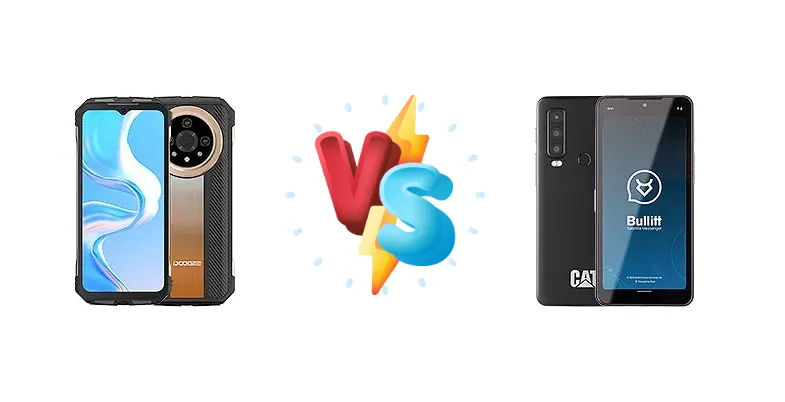
|
🏆 Quick Verdict
For users prioritizing performance and rapid charging, the Doogee V31GT is the clear winner. Its Dimensity 1080 chipset offers a noticeable performance edge over the Cat S75’s Dimensity 930, and the 66W wired charging is significantly faster. However, those valuing wireless charging and a potentially more refined software experience may prefer the Cat S75.
| PHONES | ||
|---|---|---|
| Phone Names | Doogee V31GT | Cat S75 |
| Network | ||
|---|---|---|
| 2G bands | GSM 850 / 900 / 1800 / 1900 | GSM 850 / 900 / 1800 / 1900 |
| 3G bands | HSDPA 800 / 850 / 900 / 1700(AWS) / 1900 / 2100 | HSDPA 850 / 900 / 1700(AWS) / 1900 / 2100 |
| 4G bands | 1, 2, 3, 4, 5, 7, 8, 12, 17, 18, 19, 20, 25, 26, 28, 34, 38, 39, 40, 41, 66 | 1, 2, 3, 4, 5, 7, 8, 20, 28, 32, 38, 39, 40, 41 |
| 5G bands | 1, 3, 7, 28, 38, 41, 77, 78, 79 SA/NSA | 1, 2, 3, 5, 7, 8, 20, 23, 28, 38, 40, 41, 75, 77, 78, 255, 256 SA/NSA/Sub6/mmWave |
| Speed | HSPA, LTE, 5G | HSPA, LTE, 5G |
| Technology | GSM / CDMA / HSPA / LTE / 5G | GSM / HSPA / LTE / 5G |
| Launch | ||
|---|---|---|
| Announced | 2023, September | 2023, February 24 |
| Status | Available. Released 2023, September | Available. Released 2023, July |
| Body | ||
|---|---|---|
| Build | - | Glass front (Gorilla Glass Victus), plastic back, aluminum frame |
| Dimensions | 178.5 x 83.1 x 17.9 mm (7.03 x 3.27 x 0.70 in) | 171 x 80 x 11.9 mm (6.73 x 3.15 x 0.47 in) |
| SIM | Nano-SIM + Nano-SIM | Nano-SIM + Nano-SIM |
| Weight | 390 g (13.76 oz) | 268 g (9.45 oz) |
| - | IP68/IP69 dust/water resistant (up to 5m for 35 min) Drop-to-concrete resistance from up to 1.8m MIL-STD-810H compliant | |
| Display | ||
|---|---|---|
| Protection | Corning Gorilla Glass 5 | Corning Gorilla Glass Victus |
| Resolution | 1080 x 2400 pixels, 20:9 ratio (~400 ppi density) | 1080 x 2408 pixels, 20:9 ratio (~400 ppi density) |
| Size | 6.58 inches, 104.5 cm2 (~70.5% screen-to-body ratio) | 6.6 inches, 104.9 cm2 (~76.7% screen-to-body ratio) |
| Type | IPS LCD, 120Hz | IPS LCD, 120Hz |
| Platform | ||
|---|---|---|
| CPU | Octa-core (2x2.6 GHz Cortex-A78 & 6x2.0 GHz Cortex-A55) | Octa-core (2x2.2 GHz Cortex-A78 & 6x2.0 GHz Cortex-A55) |
| Chipset | Mediatek Dimensity 1080 (6 nm) | Mediatek Dimensity 930 (6 nm) |
| GPU | Mali-G68 MC4 | IMG BXM-8-256 |
| OS | Android 13 | Android 12 |
| Memory | ||
|---|---|---|
| Card slot | microSDXC (uses shared SIM slot) | microSDXC (uses shared SIM slot) |
| Internal | 256GB 12GB RAM | 128GB 6GB RAM |
| Main Camera | ||
|---|---|---|
| Features | LED flash, HDR, panorama | Dual-LED flash, HDR, panorama |
| Quad | 50 MP, f/1.8, (wide), 1/1.56", 1.0µm, PDAF 24 MP, f/1.8, (night vision), 2 infrared night vision lights 8 MP, f/1.8, (wide) 256×192 pixels thermal camera | - |
| Single | - | 8 MP, f/2.0, (wide) |
| Triple | - | 50 MP, f/1.8, (wide), PDAF 8 MP, f/2.2, (ultrawide) 2 MP (macro) |
| Video | 4K@30fps, 1080p@30fps | 1080p@30fps |
| Selfie camera | ||
|---|---|---|
| Single | 32 MP, f/1.8, (wide), 1/2.8", 0.8µm | 8 MP, f/2.0, (wide) |
| Video | 1080p@30fps | 1080p@30fps |
| Sound | ||
|---|---|---|
| 3.5mm jack | - | No |
| 35mm jack | No | No |
| Loudspeaker | Yes, with stereo speakers | Yes |
| Comms | ||
|---|---|---|
| Bluetooth | 5.2, A2DP, LE | 5.1, A2DP, LE |
| NFC | Yes (market/region dependent) | Yes |
| Positioning | GPS (L1+L5), GLONASS, GALILEO, BDS | GPS (L1+L5), GALILEO, GLONASS, BDS |
| Radio | FM radio | Unspecified |
| USB | USB Type-C 2.0, OTG | USB Type-C 2.0, OTG |
| WLAN | Wi-Fi 802.11 a/b/g/n/ac/6, dual-band | Wi-Fi 802.11 a/b/g/n/ac, dual-band |
| Features | ||
|---|---|---|
| Sensors | Fingerprint (side-mounted), accelerometer, gyro, proximity, compass | Fingerprint (rear-mounted), accelerometer, gyro, proximity, compass |
| - | Emergency SOS via satellite (Bullitt Satellite Connect service) | |
| Battery | ||
|---|---|---|
| Charging | 66W wired, 55% in 30 min Reverse wired | 15W wireless |
| Type | 10800 mAh | Li-Po 5000 mAh |
| Misc | ||
|---|---|---|
| Colors | Black, Gold, Silver | Black |
| Models | - | BM1S1B |
| Price | - | About 600 EUR |
Doogee V31GT
- Faster processor for demanding tasks
- Significantly faster 66W wired charging
- Potentially better image processing speed
- No wireless charging
- Potentially higher thermal throttling under sustained load
Cat S75
- Convenient 15W wireless charging
- Potentially more refined software experience
- Rugged design for durability
- Slower processor compared to the V31GT
- Significantly slower charging speeds
Display Comparison
Neither device’s display specifications are provided, so a direct comparison is limited. However, given the market segment, both likely utilize IPS LCD panels for durability and visibility in direct sunlight. The absence of LTPO technology suggests neither will offer adaptive refresh rates for power saving. Bezels are likely to be substantial on both to reinforce the rugged design. Color accuracy will likely be secondary to robustness.
Camera Comparison
Without detailed camera specifications, a comprehensive comparison is difficult. However, the chipset difference suggests the V31GT may have a slight edge in image processing speed. Both phones likely employ Mediatek’s Imagiq ISP, but the 1080’s more powerful CPU can handle more complex algorithms. The absence of information regarding sensor size and OIS makes it impossible to determine which phone captures better images in low light. It’s reasonable to assume both will include a standard wide, ultrawide, and potentially a macro lens, but the quality of these secondary sensors is often limited in rugged phones.
Performance
The Doogee V31GT’s Mediatek Dimensity 1080 (6nm) holds a clear advantage over the Cat S75’s Dimensity 930 (6nm). While both chips share an octa-core configuration with the same Cortex-A78 and A55 core arrangement, the 1080 boasts higher clock speeds (2.6 GHz vs 2.2 GHz for the A78 cores). This translates to faster application loading times, smoother multitasking, and improved gaming performance. The 6nm process node is identical, meaning thermal efficiency differences will be minimal, but the higher clock speeds of the V31GT will still generate more heat under sustained load. The V31GT will benefit users who frequently edit videos, play graphically demanding games, or run multiple apps simultaneously.
Battery Life
Battery capacity isn’t specified for either device, but the charging capabilities highlight a key difference. The Doogee V31GT’s 66W wired charging is significantly faster than the Cat S75’s 15W wireless charging. Doogee claims 55% charge in 30 minutes, suggesting a full charge in under an hour. The Cat S75, relying solely on wireless charging, will take considerably longer. While wireless charging offers convenience, it’s inherently less efficient than wired charging. Users prioritizing minimal downtime will strongly favor the V31GT’s rapid wired charging.
Buying Guide
Buy the Doogee V31GT if you need a rugged phone for demanding tasks like mobile gaming, running resource-intensive apps, or frequent data transfer, and value the fastest possible wired charging. Buy the Cat S75 if you prefer the convenience of wireless charging, anticipate using your phone primarily for communication and basic tasks, and appreciate a potentially more streamlined user experience focused on reliability over raw speed.