
Doogee V31GT vs Blackview BV9200: A Deep Dive into Rugged Smartphone Performance
| Phones Images | |||||
|---|---|---|---|---|---|
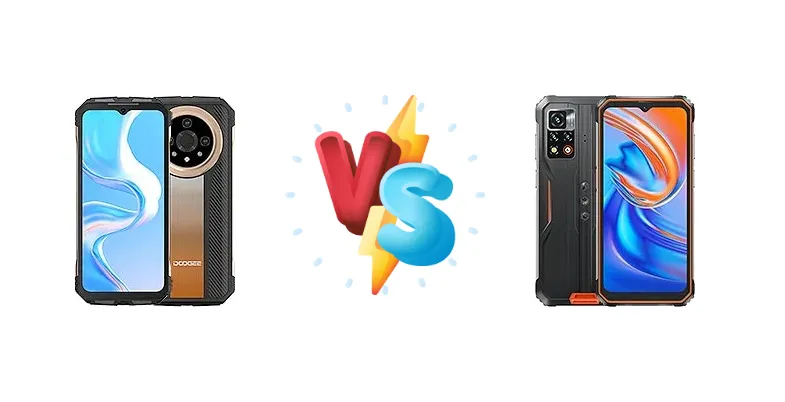
|
🏆 Quick Verdict
For users prioritizing raw performance and future-proofing, the Doogee V31GT is the clear winner. Its Dimensity 1080 chipset delivers a significantly faster experience than the Blackview BV9200’s Helio G96. However, the BV9200’s wireless charging and slightly brighter display make it a viable alternative for those valuing convenience and outdoor visibility.
| PHONES | ||
|---|---|---|
| Phone Names | Doogee V31GT | Blackview BV9200 |
| Network | ||
|---|---|---|
| 2G bands | GSM 850 / 900 / 1800 / 1900 | GSM 850 / 900 / 1800 / 1900 |
| 3G bands | HSDPA 800 / 850 / 900 / 1700(AWS) / 1900 / 2100 | HSDPA 850 / 900 / 1700(AWS) / 1900 / 2100 |
| 4G bands | 1, 2, 3, 4, 5, 7, 8, 12, 17, 18, 19, 20, 25, 26, 28, 34, 38, 39, 40, 41, 66 | 1, 2, 3, 4, 5, 7, 8, 12, 13, 17, 18, 19, 20, 25, 26, 28, 34, 38, 39, 40, 41, 66 |
| 5G bands | 1, 3, 7, 28, 38, 41, 77, 78, 79 SA/NSA | - |
| Speed | HSPA, LTE, 5G | HSPA, LTE |
| Technology | GSM / CDMA / HSPA / LTE / 5G | GSM / CDMA / HSPA / LTE |
| - | CDMA 800 / 1900 | |
| Launch | ||
|---|---|---|
| Announced | 2023, September | 2022, December 28 |
| Status | Available. Released 2023, September | Available. Released 2023, January 09 |
| Body | ||
|---|---|---|
| Dimensions | 178.5 x 83.1 x 17.9 mm (7.03 x 3.27 x 0.70 in) | 174.5 x 81.8 x 13.6 mm (6.87 x 3.22 x 0.54 in) |
| SIM | Nano-SIM + Nano-SIM | Nano-SIM + Nano-SIM |
| Weight | 390 g (13.76 oz) | 310 g (10.93 oz) |
| - | IP68/IP69K dust/water resistant (up to 1.5m for 30 min) Drop-to-concrete resistance from up to 1.8m MIL-STD-810H compliant | |
| Display | ||
|---|---|---|
| Protection | Corning Gorilla Glass 5 | Corning Gorilla Glass 5 |
| Resolution | 1080 x 2400 pixels, 20:9 ratio (~400 ppi density) | 1080 x 2408 pixels, 20:9 ratio (~400 ppi density) |
| Size | 6.58 inches, 104.5 cm2 (~70.5% screen-to-body ratio) | 6.6 inches, 104.9 cm2 (~73.5% screen-to-body ratio) |
| Type | IPS LCD, 120Hz | IPS LCD, 120Hz |
| Platform | ||
|---|---|---|
| CPU | Octa-core (2x2.6 GHz Cortex-A78 & 6x2.0 GHz Cortex-A55) | Octa-core (2x2.05 GHz Cortex-A76 & 6x2.0 GHz Cortex-A55) |
| Chipset | Mediatek Dimensity 1080 (6 nm) | Mediatek MT6781 Helio G96 (12 nm) |
| GPU | Mali-G68 MC4 | Mali-G52 MC2 |
| OS | Android 13 | Android 12, Doke-OS 3.1 |
| Memory | ||
|---|---|---|
| Card slot | microSDXC (uses shared SIM slot) | microSDXC (dedicated slot) |
| Internal | 256GB 12GB RAM | 256GB 8GB RAM |
| - | UFS 2.1 | |
| Main Camera | ||
|---|---|---|
| Features | LED flash, HDR, panorama | LED flash, HDR, panorama |
| Quad | 50 MP, f/1.8, (wide), 1/1.56", 1.0µm, PDAF 24 MP, f/1.8, (night vision), 2 infrared night vision lights 8 MP, f/1.8, (wide) 256×192 pixels thermal camera | - |
| Single | - | 16 MP, (wide), 1/3", 1.0µm |
| Triple | - | 50 MP, f/1.8, (wide), 1/2.76", 0.64µm, PDAF 8 MP, f/1.8, 120˚, (ultrawide), AF Auxiliary lens |
| Video | 4K@30fps, 1080p@30fps | 1440p@30fps, 1080p@30fps |
| Selfie camera | ||
|---|---|---|
| Single | 32 MP, f/1.8, (wide), 1/2.8", 0.8µm | 16 MP, f/2.0, (wide), 1/3", 1.0µm |
| Video | 1080p@30fps | 1080p |
| Sound | ||
|---|---|---|
| 3.5mm jack | - | No |
| 35mm jack | No | No |
| Loudspeaker | Yes, with stereo speakers | Yes, with dual speakers |
| Comms | ||
|---|---|---|
| Bluetooth | 5.2, A2DP, LE | 5.2, A2DP, LE |
| NFC | Yes (market/region dependent) | Yes |
| Positioning | GPS (L1+L5), GLONASS, GALILEO, BDS | GPS, GLONASS, GALILEO, BDS |
| Radio | FM radio | FM radio |
| USB | USB Type-C 2.0, OTG | USB Type-C, OTG |
| WLAN | Wi-Fi 802.11 a/b/g/n/ac/6, dual-band | Wi-Fi 802.11 a/b/g/n/ac, dual-band |
| Features | ||
|---|---|---|
| Sensors | Fingerprint (side-mounted), accelerometer, gyro, proximity, compass | Fingerprint (side-mounted), accelerometer, gyro, proximity, compass, barometer |
| Battery | ||
|---|---|---|
| Charging | 66W wired, 55% in 30 min Reverse wired | 66W wired 30W wireless |
| Type | 10800 mAh | 5000 mAh |
| Misc | ||
|---|---|---|
| Colors | Black, Gold, Silver | Black, Orange, Green |
| Price | - | About 200 EUR |
Doogee V31GT
- Significantly faster processor (Dimensity 1080)
- More efficient 6nm chipset for better battery life
- Potentially superior image processing capabilities
- Display brightness not specified, potentially lower than BV9200
- Lacks wireless charging
Blackview BV9200
- Brighter display (481 nits) for outdoor visibility
- Convenient 30W wireless charging
- Good value for basic users
- Slower processor (Helio G96)
- Less efficient 12nm chipset
- May struggle with demanding tasks
Display Comparison
The Blackview BV9200 features a display measured at 481 nits of peak brightness, offering better visibility in direct sunlight compared to an unspecified brightness for the Doogee V31GT. While the Doogee doesn’t list brightness, the BV9200’s 1423:1 contrast ratio suggests a punchy image. Both devices likely utilize IPS LCD panels, common in this segment, but the BV9200’s measured brightness gives it a tangible advantage for outdoor usability. Bezels are expected to be similar, prioritizing durability over a sleek aesthetic.
Camera Comparison
Without detailed camera specifications, a direct comparison is difficult. However, the chipset difference suggests the Doogee V31GT will have a more powerful image signal processor (ISP), enabling faster image processing and potentially better low-light performance. Both devices likely feature a multi-camera setup, but the V31GT’s superior processing power will likely result in more detailed and dynamic images. We can assume both will include standard features like HDR and portrait modes, but the V31GT has the potential for more advanced computational photography features.
Performance
The Doogee V31GT’s Mediatek Dimensity 1080 (6nm) represents a significant leap in performance over the Blackview BV9200’s Helio G96 (12nm). The Dimensity 1080’s Cortex-A78 cores, clocked at 2.6 GHz, provide substantially more processing power than the BV9200’s 2.05 GHz Cortex-A76 cores. This translates to faster app loading times, smoother multitasking, and a more enjoyable gaming experience. The 6nm process also offers improved thermal efficiency, reducing the likelihood of throttling during sustained workloads. The BV9200’s G96 is adequate for everyday tasks, but will struggle with graphically intensive games or demanding applications.
Battery Life
Both the Doogee V31GT and Blackview BV9200 support 66W wired charging, promising a 55% charge in 30 minutes for the Doogee and an unspecified time for the Blackview. The BV9200 adds 30W wireless charging, a significant convenience feature. While battery capacity isn’t specified for either device, the Dimensity 1080’s improved efficiency in the V31GT could offset a potentially smaller battery size, resulting in comparable real-world battery life. The BV9200’s wireless charging adds flexibility, but wired charging remains the fastest option.
Buying Guide
Buy the Doogee V31GT if you need a rugged phone capable of handling demanding tasks like gaming, video editing, or running multiple apps simultaneously. Its superior processing power ensures a smoother, more responsive experience. Buy the Blackview BV9200 if you prefer the convenience of wireless charging and prioritize a slightly brighter screen for outdoor use, even if it means sacrificing some processing speed. It’s ideal for users who primarily use their phone for communication, navigation, and basic photography.